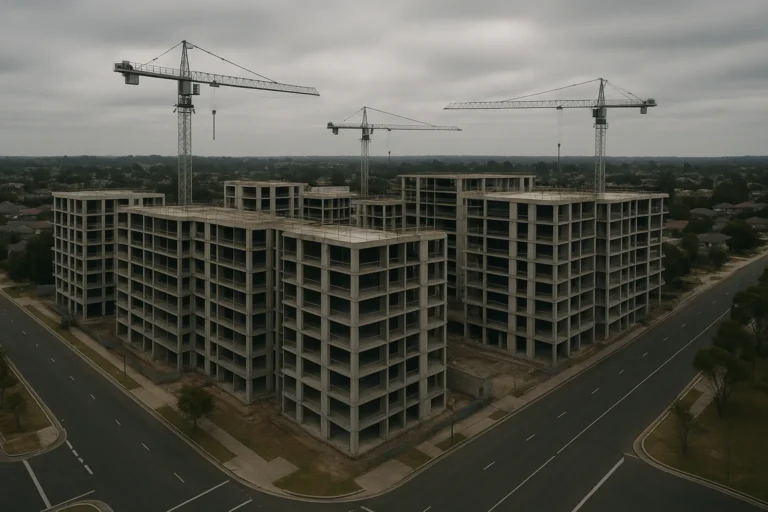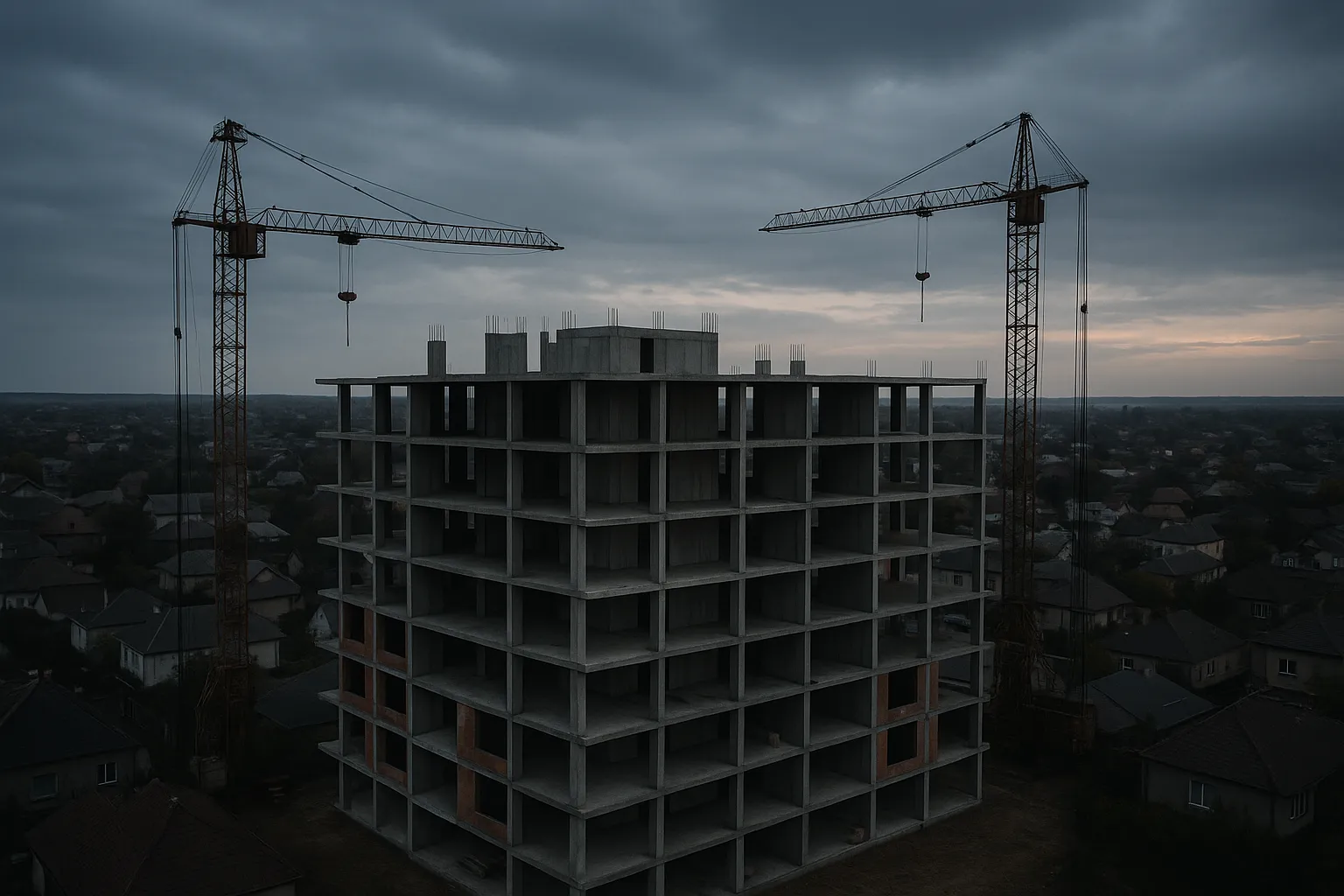
Centuria has suspended withdrawals from credit funds exposed to a collapsed residential developer, spotlighting the illiquidity risk baked into private debt structures backing Australian housing supply. The freeze isn’t unusual in wholesale credit vehicles, but the timing matters: tighter serviceability, slower pre-sales and stretched construction timelines mean more builders are hitting cashflow walls, and funds writing cheques to them are discovering how hard it is to exit when one domino tips.
Private credit has grown fast as an alternative to bank development finance, especially for mid-tier builders working outside the major lender appetite. Funds offer speed and flexibility, developers get capital without full bank covenants. The trade-off: higher rates, shorter tenors, and if the project stalls, the fund holds an illiquid loan against an unfinished asset with no ready secondary market.
How redemptions freeze in private credit
Most unlisted credit funds allow quarterly or six-monthly redemptions, subject to liquidity gates. If enough investors ask for their money back at once, or if underlying loans can’t be sold or refinanced quickly, the fund pauses withdrawals to protect remaining unitholders. It’s a feature, not a failure, but it traps capital.
Centuria’s pause follows exposure to a single builder whose projects have stalled. The fund now needs to either work out the loan (restructure, sell the debt at a discount, appoint receivers and wait for asset sales) or wait for the developer to stabilise. Neither happens fast. Redemptions stay closed until the fund rebuilds enough liquid assets or sells down problem loans.
Concentration risk across the sector
The Bathla exposure flags a broader question: how many private credit funds have outsized positions in one or two developers? Unlisted funds don’t publish loan books in real time. Investors often don’t know if 20 per cent of fund assets sit with a single counterparty until something breaks.
Development finance is lumpy by nature. A A$50 million fund might write three A$15 million facilities. If one developer halts, that’s 30 per cent of the portfolio stuck. Diversification is hard at smaller fund sizes, and the pressure to deploy capital quickly (to earn fees and returns) can override prudent concentration limits.
Across the sector, funds backing townhouse and apartment projects in Sydney and Melbourne’s middle ring have seen pre-sale rates slow and settlement risk rise. Builders who locked in fixed-price contracts 18 months ago are now facing cost blowouts and buyer walk-aways. The credit funds financing them are first in line when cashflow dries up, but being first doesn’t mean being liquid.
What needs to happen for redemptions to restart
Centuria must either recover enough cash from the stressed loan or refinance it off the fund’s books. Recovery paths:
- Restructure the loan: extend tenor, accept equity in the project, bring in a rescue capital partner. Buys time but doesn’t generate liquidity.
- Sell the debt: find another credit fund or private buyer willing to take on a distressed development loan, typically at a 20-40 per cent discount to face value. Crystallises a loss but frees up cash.
- Receiver sale: appoint receivers, sell the land or part-finished project. Slow (6-18 months), messy, and recovery is rarely full.
- Developer stabilises: new equity comes in, project completes, loan repays. Rare once a fund has frozen.
Until one of those plays out, existing investors wait. New capital often won’t flow into a frozen fund, so the liquidity problem compounds.
Key numbers
- Private credit funds typically allow redemptions quarterly or six-monthly, with 30-90 day notice
- Concentration limits vary: some funds cap single-borrower exposure at 15-20%, others have no formal limit
- Distressed development loan sales often trade at 60-80 cents in the dollar, depending on project stage and security position
- Workout timelines for stalled projects: 12-24 months on average, longer if receivers are appointed
Risks in the next 12 months
Interest rates have peaked but aren’t falling fast. Builders who bet on rate cuts to revive pre-sales or refinance mezzanine debt are running out of runway. More private credit funds will face redemption pressure if:
- Pre-sale rates stay below 70 per cent for medium-density projects in outer metro areas
- Construction cost inflation outpaces fixed-price contract buffers (still happening in trades-constrained markets)
- Mezzanine and second-ranking lenders (often private credit) get squeezed by senior bank lenders demanding more equity or pausing drawdowns
- Investor appetite for off-the-plan apartments stays weak, leaving developers holding unsold stock at practical completion
Funds with shorter weighted average loan tenors (12-18 months) face more refinancing events in 2026. Each one is a test: can the developer roll the debt, or does the fund have to extend (and accept more risk) or foreclose?
What it means for investors and the market
For wholesale investors in unlisted credit funds: liquidity is conditional, not absolute. The higher yield compensates for that risk, but only if you can afford to wait out a freeze. Retail investors via platforms or managed accounts often don’t see concentration risk until it’s disclosed post-freeze.
For the housing supply pipeline: private credit has filled a gap left by retreating bank development finance, but it’s expensive and short-term. If more funds freeze or pull back from new origination, mid-tier builders lose a funding source just as the policy focus swings to increasing supply. That could slow delivery of townhouses and medium-density projects that aren’t big enough for institutional equity but too complex for small builder balance sheets.
Redemption freezes are a feature of illiquid credit, not a crisis in themselves. The question is how many funds are carrying similar concentrations, and whether the next six months bring more developer stress or a stabilisation.
Subscribe to the newsletter for weekly updates on credit markets, development finance and what’s moving in Australian property.
General info, not financial advice.