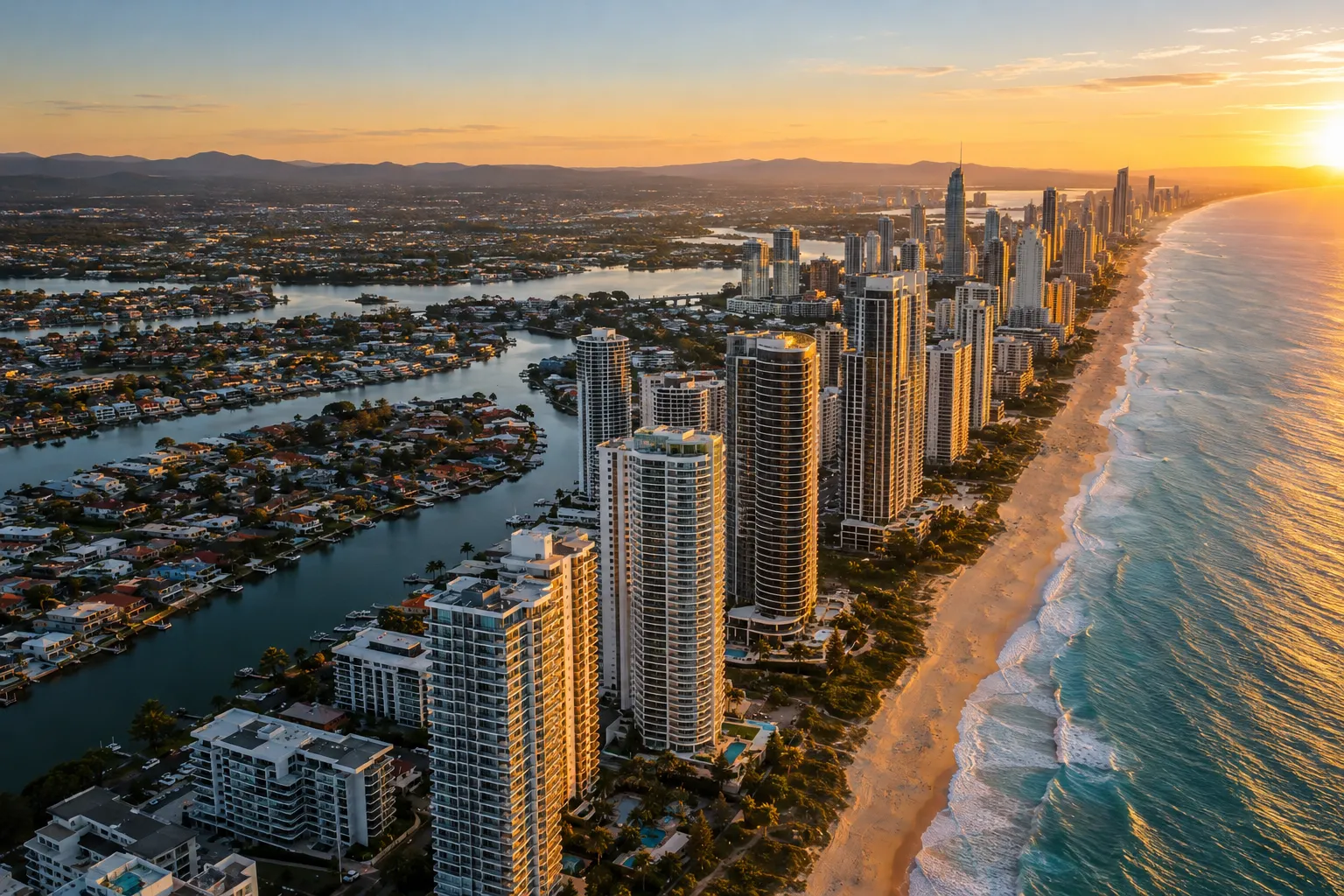
For years, the pitch to southern sellers was simple: sell in Sydney or Melbourne, buy in Queensland, pocket the difference. New analysis of thousands of interstate moves suggests that pitch has flipped in the state’s two biggest lifestyle markets.
The data comes from a removalist comparison platform, so treat it as a useful indicator rather than a census. It still points in one direction. People moving to the Gold Coast now end up in homes worth about $201,000 more than the ones they sold. On the Sunshine Coast, the gap is about $182,000. Only 31 per cent of Gold Coast arrivals bought down, and roughly a third did so on the Sunshine Coast.
The price-gap reversal, in numbers
The size of the premium depends heavily on where the buyer came from.
- Regional Victorians moving to regional Queensland pay about $222,000 more.
- Greater Melbourne households pay about $105,000 more.
- Brisbane residents moving to the Gold Coast pay $104,000 extra.
- Brisbane residents moving to the Sunshine Coast pay $58,000 extra.
The pattern makes sense. Regional Queensland house prices have climbed 53 per cent in three years to $825,000. Regional NSW rose 19 per cent to $830,000, and regional Victoria rose 11 per cent to $630,000. Queensland went from clear discount to roughly level with regional NSW, and well above regional Victoria.
Where the savings moved
The bargain did not vanish. It moved north. Buyers heading to Mackay-Isaac-Whitsunday save about $210,000 on average, Townsville $187,000, Central Queensland $166,000 and Cairns $164,000.
Here’s the catch for anyone reading this as a simple investment signal: cheaper markets are usually cheaper for a reason. Thinner job markets, smaller buyer pools and more volatile rents all matter when you are holding a property, not just buying one.
Is migration demand peaking?
One property analyst quoted in the coverage says net interstate inflows have dropped from pandemic peaks above 30,000 to about 19,000. Costlier housing and higher rents are the stated reasons. That is the core question for investors: if the price advantage that drove the movement has gone, what keeps the flow going?
There is still a supporting force. A Brisbane buyer’s agent points to Olympic-related infrastructure work continuing to attract higher-income interstate professionals. Those buyers are less price-sensitive, which can keep demand firm in specific pockets even as the broad migration story cools.
That suggests a base case of slower, more selective demand rather than a collapse. The upside case needs infrastructure jobs to keep pulling skilled workers in. The downside case is that affordability pushes would-be movers to stay put, or look elsewhere.
What it means for investor returns
The source summary points to falling Brisbane values and rising holding costs, and those two pressures work together. Lower or flat values reduce the capital growth that has covered thin yields. Higher costs, including rates, insurance and maintenance, squeeze cashflow while you wait.
For the Gold Coast and Sunshine Coast, the buy-in price has risen while the migration engine that justified it is slowing. That raises the bar on yield and rent growth to make the numbers stack up. It also means relying on interstate buyers to bid prices up further is a weaker assumption than it was two years ago.
A rule of thumb: if your return case depends on the next wave of southern sellers arriving with cheap equity, stress-test it. Many of them no longer have a price advantage to spend.
For more on how holding costs and rate pressure are playing out elsewhere, see our look at suburban rate rise pain in Sydney and Melbourne, and on how debt levels set the real risk, mortgage stress and loan size.
Key numbers
- $201,000: extra paid by buyers moving to the Gold Coast
- $182,000: extra paid by buyers moving to the Sunshine Coast
- 53 per cent: three-year rise in regional Queensland house prices, to $825,000
- About 19,000: current net interstate inflow, down from peaks above 30,000
What to do next
Before you commit to a Queensland purchase, price the property against local rents and your total holding costs, not against what Sydney or Melbourne buyers might pay. If the numbers only work with strong capital growth, treat that as a risk, not a plan. Subscribe to the newsletter for the weekly signal on where the data is moving.
General info, not financial advice.