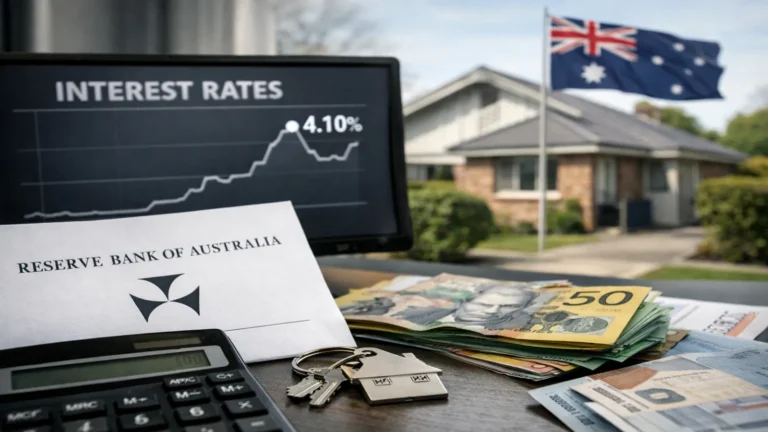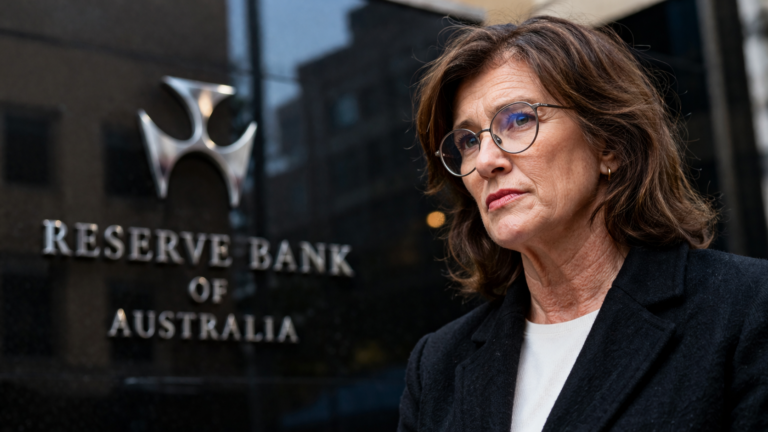
The Reserve Bank’s August board minutes confirm what many borrowers suspected: rate cuts aren’t part of the conversation yet. The central bank says higher rates are doing their job, dampening demand across the economy. But the board also made clear it will lift rates again if inflation pressure builds.
That assessment landed Tuesday, one day before July’s Consumer Price Index figures, the last inflation snapshot before the September meeting. The RBA interest rates inflation dynamic remains the same: the cash rate stays at 4.35% until price growth settles back inside the 2-3% target band, and the bank’s own forecasts don’t see that happening until mid-2027.
What the minutes reveal
The board did not discuss a rate cut at the August meeting. Instead, the minutes list several risks that could push inflation higher and force another increase. Top of the list: the Middle East conflict, which could lift fuel and grocery costs, and a surge in data centre construction that’s adding pressure to an already stretched building sector.
A deputy governor noted last week that the global artificial intelligence investment boom is pushing up the price of components like memory chips, and that domestic infrastructure spending tied to AI could lift construction costs and wages in sectors already short of workers.
The message: if upside risks materialise and inflation doesn’t ease, another rate hike is live.
The July inflation test
July’s CPI data, due Wednesday, will show whether the cooling trend from June held. Over the year to June, headline inflation came in at 3.8%, down from 4%, while trimmed mean inflation, which strips out volatile swings, stayed at 3.6%. Both figures remain above the target ceiling.
Major bank economists expect July’s number to land around 3.3%, but most of that drop reflects base effects: a spike in electricity costs from last year (when energy rebates ended) will fall out of the annual calculation. That means the improvement may be more optical than real.
If the July figure comes in hotter than forecast, or if trimmed mean inflation doesn’t move lower, the risk of another hike in September or November increases.
Housing’s double role
Housing sits at the centre of this inflation story in two ways. First, housing-related costs, rents, new dwelling construction, maintenance and utilities, make up roughly 16.5% of the CPI basket. Rents alone account for nearly 7%, and new dwelling costs over 7.5%.
Both have been rising quickly. Rent growth is starting to ease but remains elevated. Building costs surged during the pandemic, cooled through 2025, then picked up again in 2026 as global supply chain disruptions returned. The cost of building a new house is now more than 50% higher than it was at the end of 2019.
Second, falling property prices can dampen inflation indirectly. National home values have dropped for four consecutive months. While price movements don’t appear directly in the CPI, they influence household behaviour. Falling prices create a negative wealth effect, households feel less confident and spend less. They also reduce turnover, which means fewer people buying furniture, appliances and other goods tied to moving.
The RBA doesn’t target house prices, but it watches them because they shape the demand side of the inflation equation. A cooling property market takes pressure off inflation without the central bank needing to do anything further.
Key numbers
- Cash rate: 4.35%, held since the most recent move
- June headline inflation: 3.8% annually
- June trimmed mean inflation: 3.6% annually
- Forecast return to target: mid-2027
- Building cost increase since end-2019: over 50%
The split that matters
The phrase “working” in the RBA’s language means demand is cooling, but it doesn’t mean evenly. Some households, particularly those with larger mortgages or variable-rate loans, are under real pressure. Others, with fixed debt, offset accounts or no mortgage at all, are largely insulated.
That creates a policy tension. Rates high enough to slow inflation in aggregate may be placing disproportionate stress on a subset of borrowers, while leaving plenty of spending power elsewhere in the economy. The RBA’s job is to look at the whole picture, not individual circumstances, but that uneven impact is part of why the path back to target is taking longer than previous cycles.
For borrowers hoping for relief, the timeline hasn’t improved. All four major banks now forecast the cash rate has peaked, but none expect a cut until 2027 at the earliest. That view depends on inflation continuing to ease without new shocks, a scenario the RBA’s own watch list suggests is far from certain.
What could change the script
Three scenarios shift the outlook. First, if July and subsequent months show inflation cooling faster than forecast, particularly in services and trimmed mean, the case for an earlier cut strengthens. Second, if the labour market softens sharply, unemployment rising, wage growth stalling, the RBA may prioritise employment risk over residual inflation. Third, if another external shock (energy, supply chains, geopolitical disruption) lifts inflation again, another rate hike becomes likely.
Right now, the central case is unchanged: rates stay higher for longer, borrowers continue managing higher repayments, and the property market adjusts to a world where cheap credit isn’t coming back soon.
For context on how policy changes ripple through housing costs, see our analysis of negative gearing tax reform and supply risks and rent increase claims tested against data.
One practical step
If you’re carrying variable-rate debt, pressure-test your cashflow against the possibility that rates stay at 4.35% through 2027, or even tick higher. Model your repayments at 5%, check your offset balance, and identify where you’d cut spending if serviceability tightened further. If you’re on a fixed term expiring in the next 12 months, start comparing refinance options now, don’t wait until the month before rollover.
Subscribe to the newsletter for the signal when inflation data shifts the rate outlook.
General info, not financial advice.