A young couple bought a three-bedroom weatherboard bungalow in Newtown for $1.03 million, below the suburb’s $1.15 million median. The plan is classic: cosmetic renovation, then hold and let the market do the work. The property came in under the agent’s $1.05 million to $1.1 million price guide after two weeks on market. The seller had owned it since 2007, when they paid $480,000.
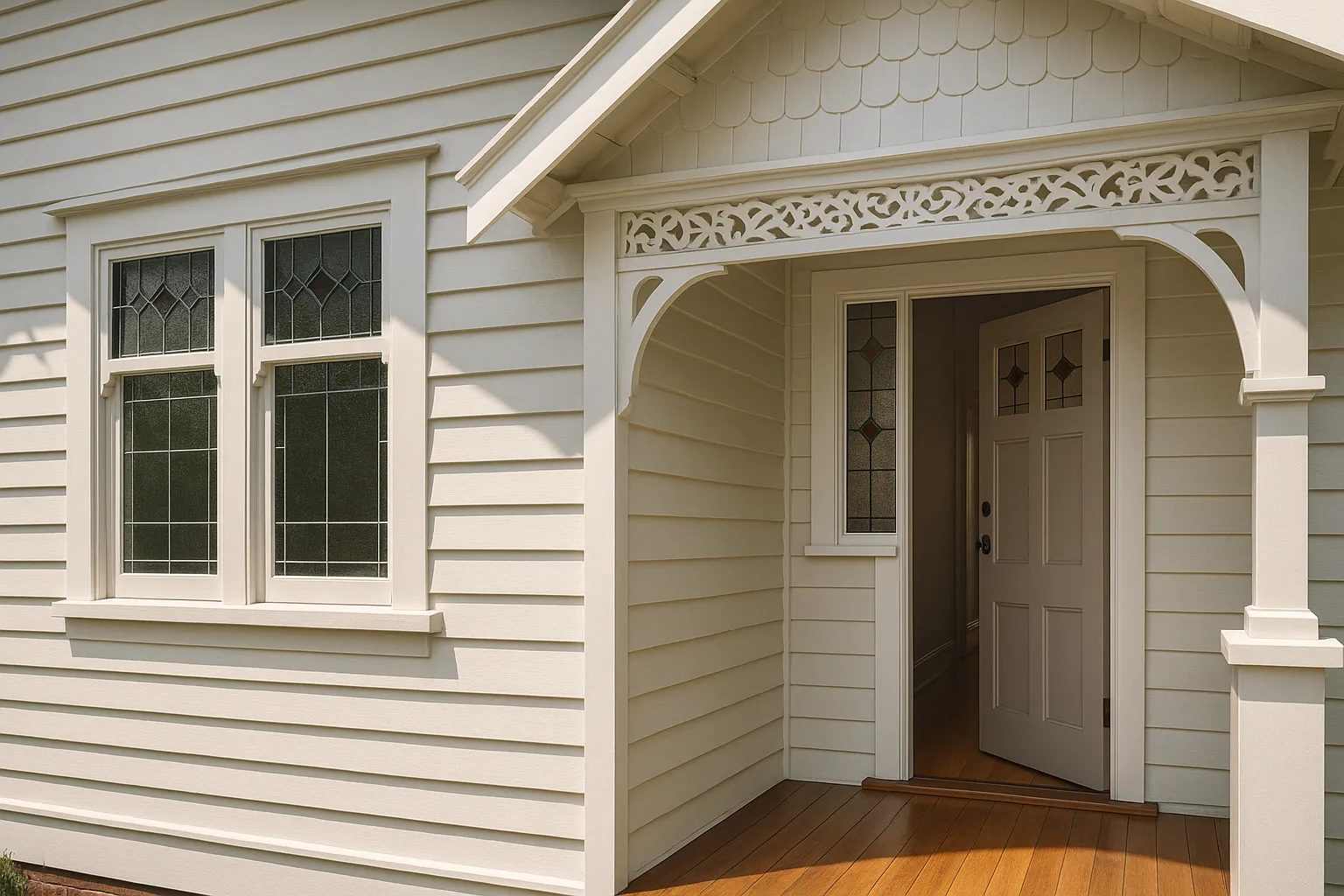
The appeal is clear. Original Californian bungalow features, 493 square metres of land, polished timber floors, leadlight windows, open-plan living opening to an outdoor area. The type of home that photographs well after a kitchen and bathroom update. But the question for any buyer following this playbook now is whether the renovation-and-hold strategy still delivers the returns it used to, or whether rising costs and softer price growth have changed the equation.
What the strategy assumes
The renovation-and-hold model relies on three things working in sequence. First, you buy below replacement cost in an established area where land value supports upside. Second, you add functional value through renovation without overcapitalising. Third, the market lifts while you hold, compounding your equity gain.
In this case, the buyer paid roughly $900,000 under the seller’s original purchase price adjusted for 18 years of compound growth at Newtown’s long-term average. That creates a margin. The suburb’s median is up 4.8 per cent year-on-year according to PropTrack, which suggests demand is holding despite broader market softness. The agent’s view was that anything near or just over $1 million moves quickly if presented well, which points to a liquid price band.
The risk is in the second and third steps. Renovation costs have climbed steeply since 2020. A mid-range kitchen and bathroom refresh that might have cost $60,000 to $80,000 five years ago now runs $90,000 to $120,000, sometimes more if trades are stretched or materials are imported. Labour availability remains patchy in regional Victoria, which can push timelines and quotes higher. If the buyer spends $120,000 and the market stays flat or dips 3 per cent over the next two years, they are underwater on the play before capital gains tax and holding costs.
The blue-chip protection question
Newtown sits in Geelong’s inner ring, historically seen as a downside-protected pocket due to proximity to the waterfront, period housing stock, and a tight supply of sub-$1.2 million family homes. The idea is that blue-chip suburbs hold their value even when outer areas correct. Geelong’s property market has shown resilience while national prices softened, which supports that view to a point.
But blue-chip is not a guarantee, it is a probability statement. These areas tend to fall less and recover faster because buyer depth is greater and distressed sellers are rarer. That does not mean they are immune. If unemployment rises or serviceability tightens further, even well-located suburbs see price pressure. The 2018 to 2019 correction hit inner Melbourne and Sydney harder than many expected, including suburbs with similar demographics and price points to Newtown.
The other factor is migration and internal demand. Geelong has benefited from Melbourne outflow since 2020, which pushed the median higher. If that reverses, or if financing conditions tighten and first-home buyers pull back, the sub-$1.2 million band could see less competition. The buyers here are renovating for themselves first, which reduces some risk, but the hold-and-wait-for-capital-growth piece still depends on demand returning or staying steady.
Renovation costs versus likely uplift
A useful benchmark is the 80 per cent rule: your total cost base, purchase price plus renovation, should sit at or below 80 per cent of the expected post-renovation value. That leaves room for selling costs, price volatility, and a margin if you need to exit.
If this couple spends $100,000 on a kitchen, bathroom, paint, and landscaping, their all-in cost is $1.13 million. For the math to work, the renovated home needs to be worth at least $1.41 million. That is $260,000 above the current suburb median. Possible if they add a second bathroom, improve layout, and present the home at the top end of the Californian bungalow market. Less likely if comparable sales in the street sit closer to $1.2 million to $1.3 million and the market stays flat.
Another angle is opportunity cost. If they hold for three years and the market grows 3 per cent per year, the unrenovated value would reach $1.12 million. With renovation, they might hit $1.35 million to $1.4 million, a gain of $230,000 to $280,000 before costs. Subtract $100,000 renovation spend, $30,000 in holding costs (rates, insurance, interest), and capital gains tax on the profit if they sell. The net gain drops to $100,000 to $150,000 over three years, or roughly 3 per cent to 4 per cent annual return on the capital tied up. That is acceptable if you are living in the home and building equity, less compelling if you are treating it as an investment play.
What would change the outcome
Callout: Risks to watch
Renovation blowouts, market correction of 5 per cent or more, capital gains tax changes if holding period is under 12 months, or serviceability tightening that reduces buyer pool in the $1.2 million to $1.5 million range.
Three scenarios shift the risk-reward.
Upside: Newtown’s median continues growing at 4 per cent to 5 per cent annually, driven by continued Melbourne outflow and limited stock in the sub-$1.2 million family-home segment. Renovation costs come in at $80,000 due to careful scoping and competitive quotes. The couple holds for five years, benefiting from the full capital gains tax discount. In that case, the play works well.
Base case: The market grows 2 per cent to 3 per cent annually, renovation costs hit $100,000 to $110,000, and the couple holds for three to four years. They build equity and enjoy the home, but the financial return is modest relative to the capital and effort involved. The blue-chip location protects downside but does not deliver outsized gains.
Downside: A broader correction sees Geelong prices fall 5 per cent to 8 per cent over two years, renovation costs blow out to $130,000 due to scope creep or trades stretching timelines, and the couple needs to sell within two years for personal or financial reasons. They take a loss after transaction costs and capital gains tax at the full rate.
The base case is most likely. The strategy is not broken, but the margin for error is thinner than it was five years ago. Buyers need to run conservative numbers, get fixed-price quotes where possible, and have a genuine long hold horizon.
What to do if you’re considering this play
First, pressure-test the 80 per cent rule with recent comparable sales in the immediate area, not the suburb median. Second, get three renovation quotes and budget for a 15 per cent to 20 per cent contingency. Third, model the scenario where the market stays flat for two years. If the numbers still work, the play has margin. If they rely on 5 per cent annual growth to break even, the risk is too high.
Fourth, check your holding timeline. If you might need to sell within 18 months, the capital gains tax and transaction cost drag can wipe out any gain. Finally, ask whether you would be happy living in the home if the market does not cooperate. If the answer is yes, the play is a lifestyle decision with some financial upside. If the answer is no, it is speculation, and the risk-reward may not justify it in the current environment.
Housing market forecasts through 2026 show investor retreat and softer price growth nationally, which puts more weight on local factors like Geelong’s affordability and migration dynamics.
Bottom line
The renovation-and-hold strategy still works in blue-chip pockets with tight supply and strong buyer depth, but the margin is narrower than it used to be. Renovation costs are high, price growth is uncertain, and the tax treatment penalises short holds. For buyers planning to live in the home and hold for at least four to five years, the play can deliver solid returns if scoped conservatively. For those chasing quick capital growth, the numbers are harder to justify unless the market turns decisively or renovation costs come in well below recent norms.
If this helped, share it with someone making a renovation decision this year. Want the weekly breakdown of what is shifting in Australian property? Subscribe to Australian Property Review.
General info, not financial advice.