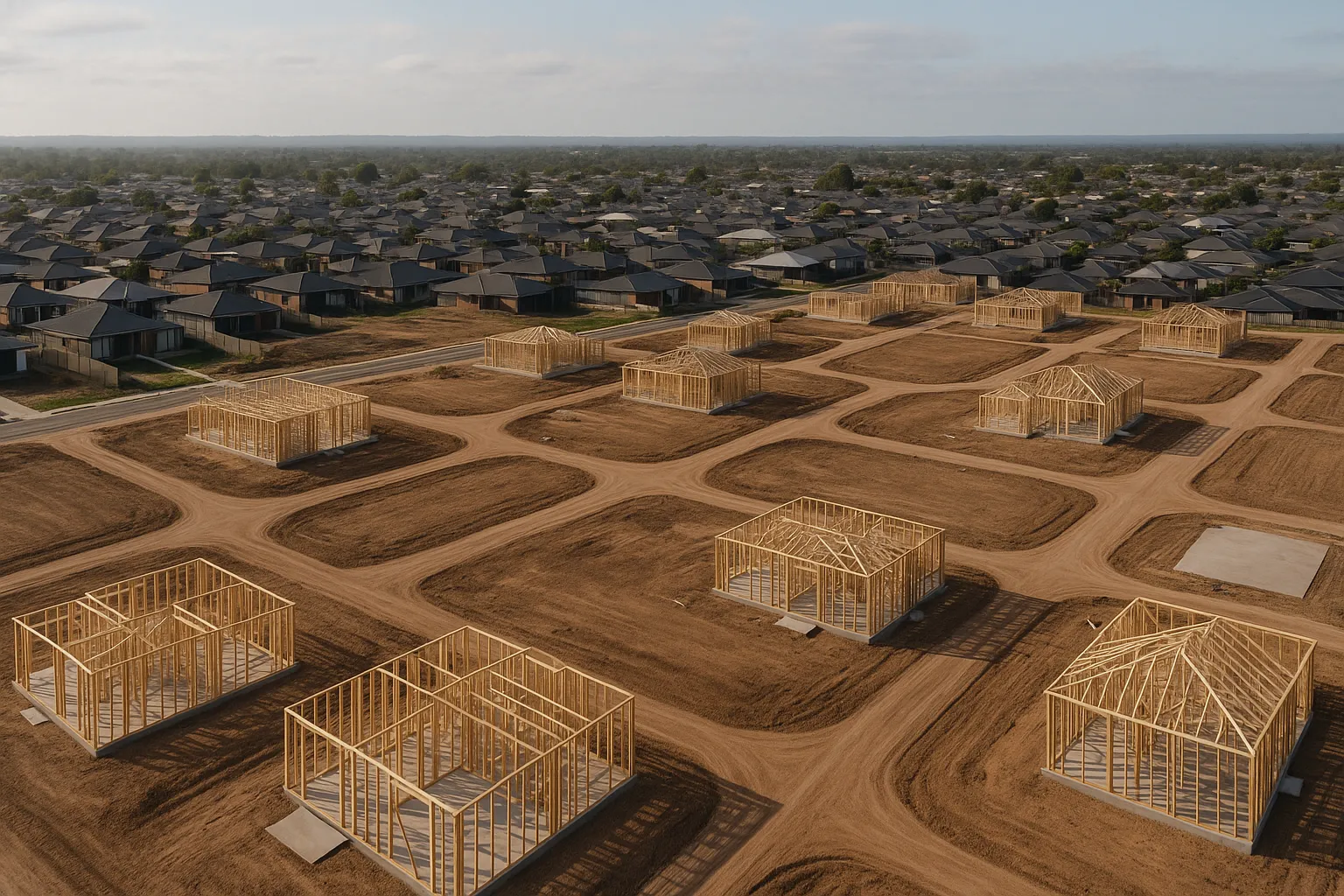
South Australia’s investor lending for new construction just broke three records in one quarter: 649 loan approvals, total value of $425.4 million, and an average loan size nudging $655,000. That’s 28 more approvals than last quarter and $34 million more in total lending. At the same time, loans to investors buying newly erected homes dropped to 82 approvals, the lowest since September 2025, worth $55.4 million.
The pattern is clear: investors are backing new builds at record pace while first-home buyers step back. Separate data from a national broker network showed SA investor loan applications fell 24 per cent between March and July 2026, but the buyers who stayed in are concentrating on new construction where the tax settings favour them.
The mechanics behind the surge
The federal tax changes delivered in the last budget tilted the playing field toward new builds. Investors building from the ground up can still access depreciation benefits and capital works deductions that don’t apply to established stock. When you combine that with tighter lending criteria for first-home buyers and falling house prices that make some buyers nervous about negative equity, you get a market where cashed-up investors willing to wait 12 to 18 months for completion can outbid first-timers on house-and-land packages.
Loan approvals tell you who’s getting finance, not who’s breaking ground. The construction pipeline is a separate question. If fewer homes are being started, and early signs suggest supply is stalling, then record loan approvals today could be positioning for a market that tightens further in 2027 and 2028.
First-home buyers are holding off
Banks have tightened serviceability buffers. Buyers who could borrow $600,000 a year ago might qualify for $540,000 now, even if interest rates have come down slightly. That cuts into purchasing power at the exact moment investors with larger deposits and stronger cashflow are competing for the same new stock.
Brokers report first-home buyers are pausing, worried about buying into a falling market. The logic: if prices drop another 5 per cent over the next six months, waiting feels safer than locking in today. The catch is that if supply tightens and building costs stabilise or tick up, the entry point six months from now might not be cheaper, just different.
The catch
- Investors who commit now lock in tax settings that might not last. Policy changes again in two years and the depreciation window could narrow.
- First-home buyers stepping back now risk missing the point where interest rate cuts improve serviceability but before supply constraints push new-build prices up again.
- Builders are competing harder for work as starts slow. That creates short-term price flexibility but raises questions about build quality and timelines if margins get squeezed too thin.
Who’s still building and where
SA’s new construction market is heavily weighted toward house-and-land estates in growth corridors north and south of Adelaide. Investors buying off-the-plan in these areas are banking on population growth, rental demand from priced-out renters, and capital appreciation once supply tightens.
The risk is timing. A property settling in late 2027 enters a market shaped by whatever interest rates, migration settings, and construction activity look like then, not now. If building costs fall because builders are desperate for work, that’s a win for the investor. If costs rise because materials or labour tighten, or if rental yields compress because too many investors flood the same postcodes, the equation changes.
Scenarios: base case and the tail risk
Base case: loan approvals stay elevated through mid-2026, construction starts pick up modestly in the second half of the year as builders adjust pricing, and properties settling in 2027-28 enter a market where rental demand is still strong and vacancy rates are low. Investors who bought in now do fine, first-home buyers who waited pay a bit more but get better serviceability.
Downside: construction starts keep falling, building costs don’t drop, and the properties approved this quarter compete for tenants in a softer rental market if migration slows or affordability improvements bring more buyers back into ownership. Investors who overpaid for off-the-plan deals in outer suburbs face yield compression and slower capital growth.
Upside: supply constraints bite harder than expected, new builds in well-located growth areas outperform, and investors who moved early capture appreciation that first-home buyers miss.
The trade-offs no one’s spelling out
Tax settings are pushing capital toward new construction. That’s the policy intent. But if those settings pull investment away from established stock and reduce overall transaction volume, first-home buyers lose twice: less stock to choose from and more competition on the stock that qualifies for the tax breaks.
The other trade-off is liquidity. Investors buying off-the-plan stay liquid for 12 to 18 months while the property is built, which is an advantage in a volatile rate environment. But that also means no rental income and exposure to construction risk, builder solvency, cost blowouts, settlement delays.
For more on how the national picture is playing out, see Property investor tax changes drive record new build loans, but will supply follow? and Living standards slip while housing policy targets demand, not supply.
What happens in the next four months
Watch construction commencement data from the ABS. If starts don’t pick up by September, that confirms supply is tightening and the properties being financed now will enter a constrained market. Watch serviceability changes: if banks ease buffers after another rate cut, first-home buyer activity could return faster than expected. And watch state government planning approvals, if SA accelerates rezoning or fast-tracks development applications to capitalise on investor appetite, that shifts the supply outlook.
If you’re an investor weighing an off-the-plan commitment, pressure-test the rent assumption and the settlement timeline. If you’re a first-home buyer sitting on the sideline, work out what changes your mind: a specific price level, a rate cut, or confirmation that supply is actually increasing. Waiting for perfect certainty means you never move.
Subscribe to the newsletter for the weekly signal on rates, supply, and what’s shifting in the SA market.
General info, not financial advice.