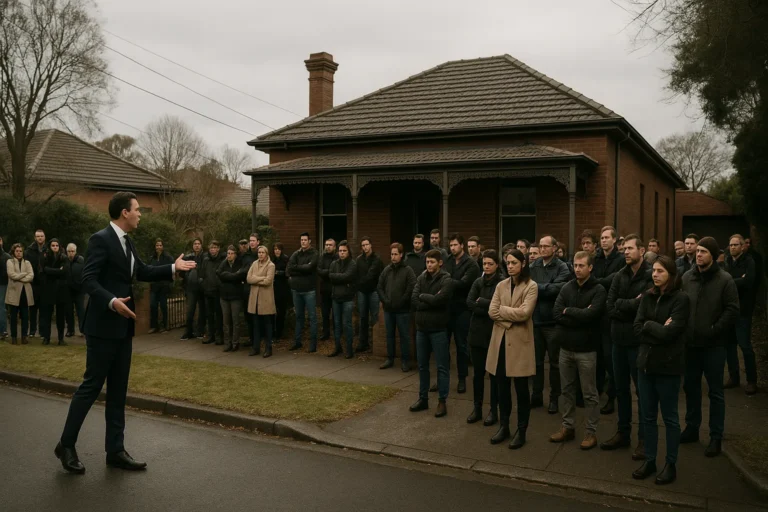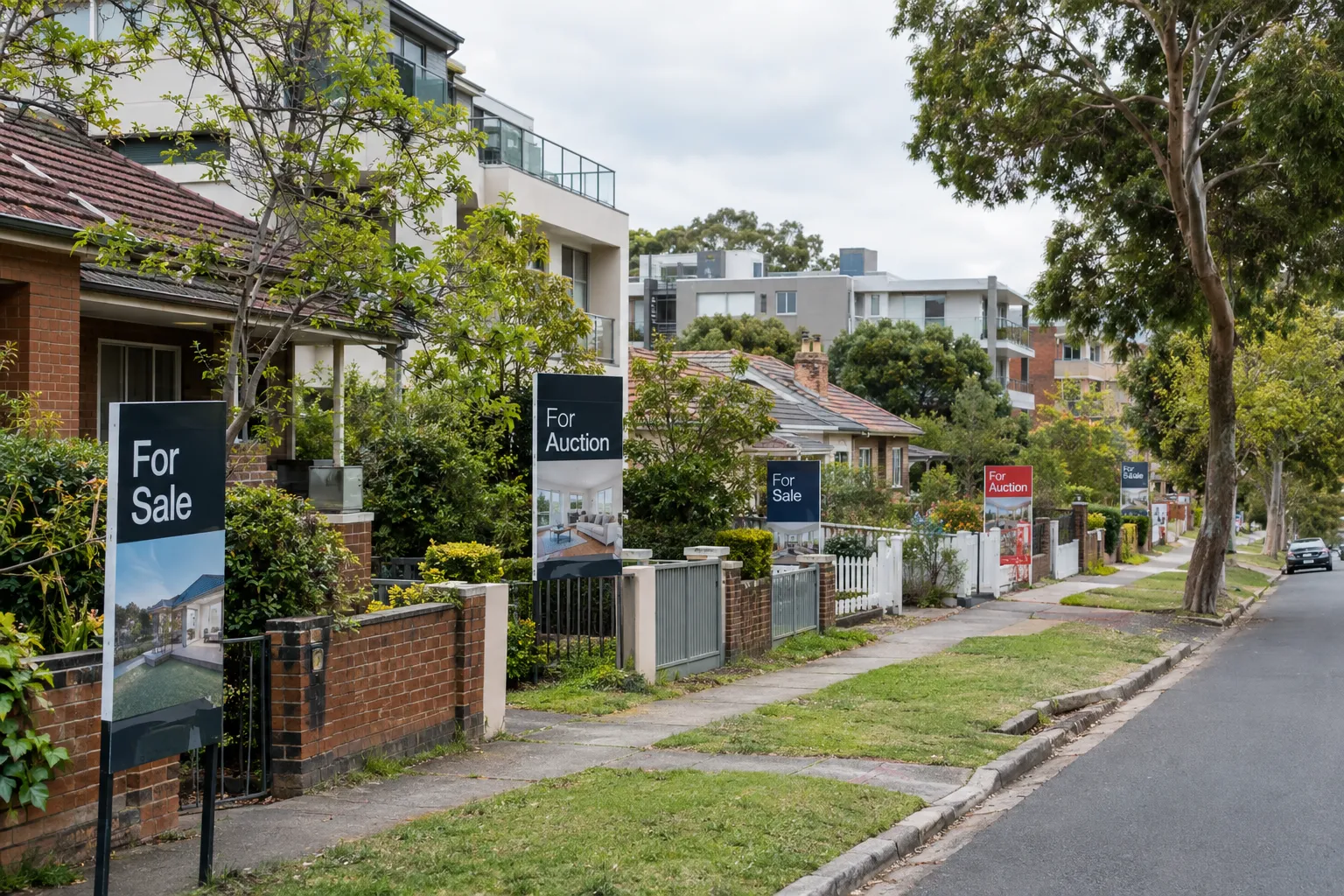
The spring property market 2026 is showing a different rhythm. Agents are reducing price guides mid-campaign, calling buyers back after passed-in auctions with lower numbers, and pushing for offers before auction day. It’s being framed as desperation, but the mechanics tell a more specific story.
Stock levels are up. Days on market are longer. Clearance rates in capital cities have dropped 8–12 percentage points from the same weeks last year. That combination changes the negotiation dynamic, but only for buyers who understand what’s actually driving it and where the limits are.
Why the shift is happening now
Three things are converging. First, listing volumes are running 15–18% higher than spring 2025 across Sydney and Melbourne, driven by vendors who delayed through winter hoping rates would drop. Second, auction clearance rates have stalled in the low 60s instead of climbing into the usual spring 70s, meaning more properties are passing in or withdrawn. Third, days on market have stretched from an average of 28 days (spring 2025) to 35–42 days now, particularly in the $1.2m–$2m band where upgraders and investors overlap.
That’s not desperation, it’s a mismatch between vendor expectations set in a tighter market and current buyer willingness to pay. Agents are adjusting pricing and tactics mid-campaign because waiting another week costs the vendor more than a 3–5% reduction now.
The question is whether this is structural (buyer power persists through summer) or tactical (vendors testing spring, then pulling stock if it doesn’t clear). The answer depends on what happens to rates and credit.
The catch buyers need to understand
This isn’t a distressed market. Serviceability is still tight, banks haven’t loosened buffers, and most buyers stretching into the next price bracket are hitting limits at pre-approval. Vendors pulling stock if they don’t get their number is common, and relisting in January with the same price guide happens more often than capitulation.
The buyer advantage is real but narrow: it shows up in the negotiation window between listing and auction, and in the week after a property passes in. It disappears the moment a second serious buyer appears or rates drop.
Key numbers
- Listing volumes up 15–18% year-on-year in Sydney and Melbourne
- Clearance rates in the low 60s vs usual spring 70s
- Days on market stretched to 35–42 days from 28 days last spring
- Price guide reductions mid-campaign most common in the $1.2m–$2m band
What buyers can actually do with this
If you’re looking now, focus on properties that have been listed 4+ weeks without an offer, especially those with price guide reductions already visible. That’s where the vendor has accepted the market reality and the agent has room to negotiate.
Make offers before auction day, agents are taking them to vendors earlier because passing in costs time and credibility. Don’t expect 10–15% discounts; the realistic range in this market is 3–6% below the revised guide, and only where the property genuinely isn’t attracting competition.
Avoid overreading one agent’s behaviour. Some are genuinely under pressure from vendors who need to sell; others are testing buyer appetite with low opening bids to manufacture competition. The difference shows up in how they respond when you ask for contract terms before auction.
Internal links worth checking: Sydney’s clearance rate drop is forcing price cuts in pockets like Enmore, and days on market data shows where leverage is actually shifting. If a property passes in, here’s what actually happens next and what it costs the vendor.
What could reverse this quickly
A rate cut changes everything. If the RBA moves in November or February, buyer urgency returns and clearance rates lift within two weeks. Vendors who pulled stock will relist, and the negotiation window closes.
Supply could also tighten if vendors decide to wait rather than sell into this spring. Listing volumes in October will tell you whether this is a sustained shift or a short-term spike that doesn’t hold through summer.
The other risk is serviceability. If banks tighten buffers or APRA adjusts lending rules, the buyer pool shrinks and competition drops further, but so does your own borrowing capacity, so the advantage becomes theoretical unless you’re cashed up.
Bottom line for decision-making
This spring gives buyers more time and slightly more room to negotiate than the past two years. Use it on properties that have been on the market long enough for the vendor to adjust expectations, and make offers before auction day where the agent signals flexibility.
Don’t mistake this for a buyer’s market, it’s a rebalancing, not a reversal. The advantage lasts until rates drop, stock tightens, or your own serviceability changes. If you’re ready to buy and a property fits your budget with a 3–5% reduction, that’s the play. If you’re waiting for 10–15% off, you’re betting on a scenario the data doesn’t support yet.
Subscribe to the newsletter for the weekly signal on clearance rates, stock levels and what moves next.
General info, not financial advice.