A 2.6 hectare parcel of Victorian government land, 30km northwest of Melbourne, has just changed hands for $1m. That works out at about $38 per sq metre. Nearby land has sold for many multiples of that, and the gap is now a political problem for the state government.
This surplus government land sale is worth a closer look, and not because of the television angle. The bigger question is how public land is valued, who gets first call on it, and whether the process helps or hinders housing supply.
The numbers behind the $38 a sq metre price
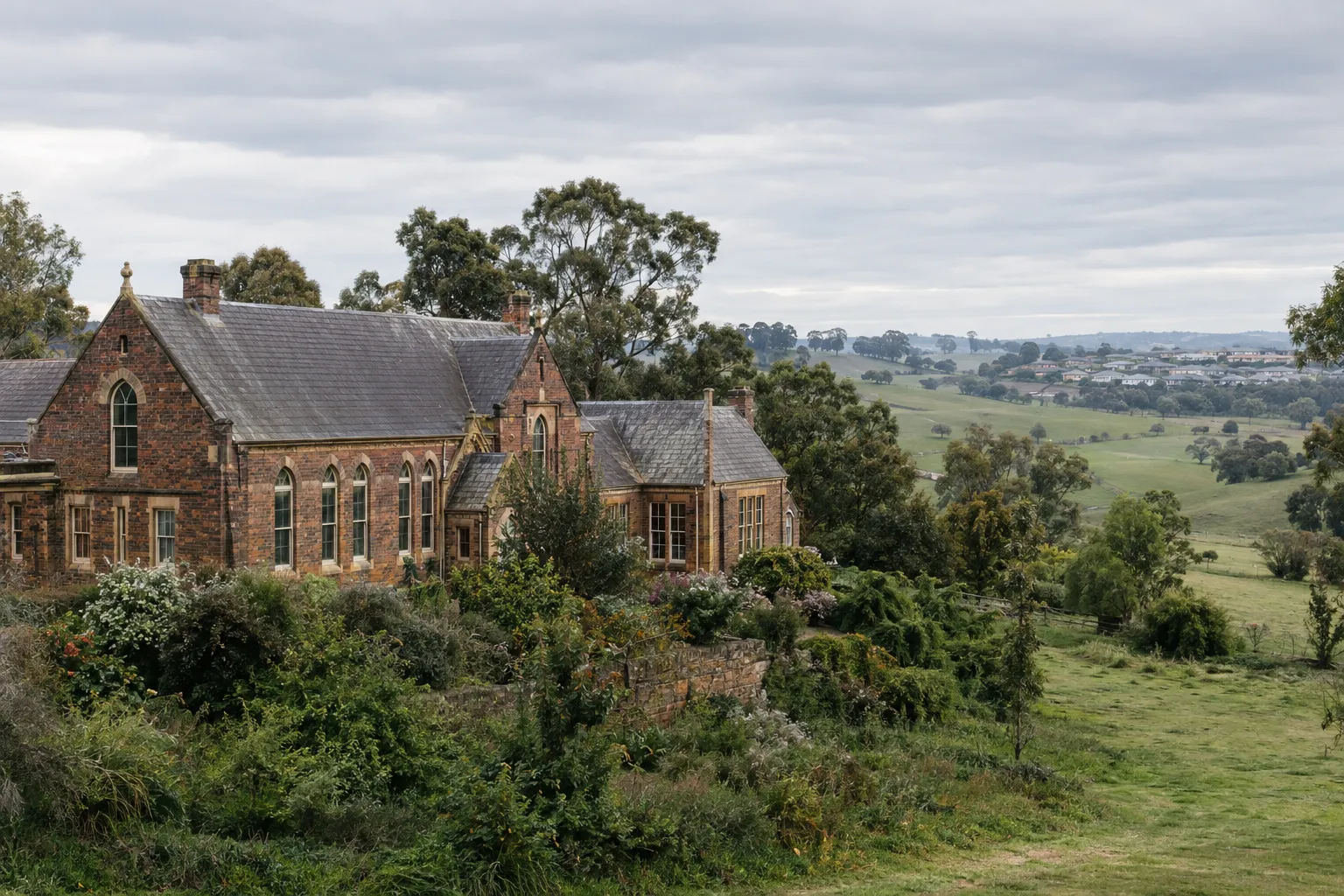
The parcel sits in Sunbury and includes a disused psychiatric hospital with heritage protection. The buyer, a television network, plans to convert three buildings into five homes as part of a renovation series.
The comparison points are stark:
- Median land price in the Hume region: about $1,145 per sq metre.
- A 2,020 sq metre lot in the area sold for about $890,000 in 2024.
- A 2,880 sq metre lot recently sold for $3m.
- The state bought the wider 33-hectare site for about $20m in 2018.
A local agent called the price “eyebrow-raising”. Fair enough. But a raw per-metre comparison flatters the case for outrage, and it is worth being clear about why.
Key numbers
- Sale price: $1m for 2.6 hectares
- Implied rate: about $38 per sq metre
- Hume median land price: about $1,145 per sq metre
- State purchase of the wider site (2018): about $20m
Why heritage and decay muddy the valuation
Standard residential lots are serviced, titled and ready to build on. This parcel is different. Heritage listing limits what can be demolished, altered or subdivided. Decaying buildings carry large remediation costs. Both factors push the value of the land down, sometimes sharply.
So a low price is not automatically a bad one. The government says independent valuers set it and the valuer general certified it. That is the proper process.
The catch is transparency. A crossbench MP has called it the “bargain of the year” and wants the calculation published. Without the working, nobody outside government can test whether the discount reflects genuine heritage constraints or something softer. Publishing the valuation basis is a cheap way to settle that.
Is surplus public land helping housing supply?
This is the more useful question. Five homes from a $1m parcel is a modest outcome. The site is a small piece of a much larger problem, with Victoria needing far more dwellings than it is currently delivering.
If surplus land is sold at a steep discount, there are two ways to see it:
- A fair trade-off. The buyer takes on remediation risk and heritage obligations, and the public gets homes and a reported community project on the site.
- A missed opportunity. The same land could have been packaged for social, affordable or key-worker housing, or sold in a way that captured more of its value for reinvestment.
The evidence in the public record does not settle this. What it does show is that the outcome was driven by a media deal rather than a housing brief. That is the part policymakers should be uncomfortable with.
The neighbouring asylum request
A community alliance that wants a cultural hub has asked to buy the adjoining former men’s asylum at the same $38 rate. It is a smart move politically, because it forces a consistency test.
If the government agrees, it concedes the price is a template. If it declines, it needs a clear reason why one buyer got the rate and another did not. Either answer shapes how the remaining land on the 33-hectare site is handled.
What could derail the case for outrage
A few things temper the criticism:
- The valuation was independent and certified, so the process was followed.
- Heritage and condition genuinely lower value, and the true discount is unknown.
- The buyer reportedly committed to a separate community project.
- The renovation work will still cost the buyer significant money on top of the $1m.
On the other side, the lack of a competitive process is the weak point. When public land moves without open tender, the burden of proof sits with the seller.
What it means for readers
For investors and buyers, this single sale is not a pricing signal for Sunbury. The discount is specific to a heritage asset with unusual constraints, and it should not be read across to ordinary residential land in the area.
The broader lesson is about policy. Watch how Victoria treats its remaining surplus land. Disclosure of valuations, open sale processes and a clear link to housing targets would build trust. Quiet one-off deals will not.
Start here: if you follow local land releases, check whether the sale process was open and whether the valuation basis was published before reading anything into the price. If you want more analysis like this, subscribe to the newsletter.
General info, not financial advice.