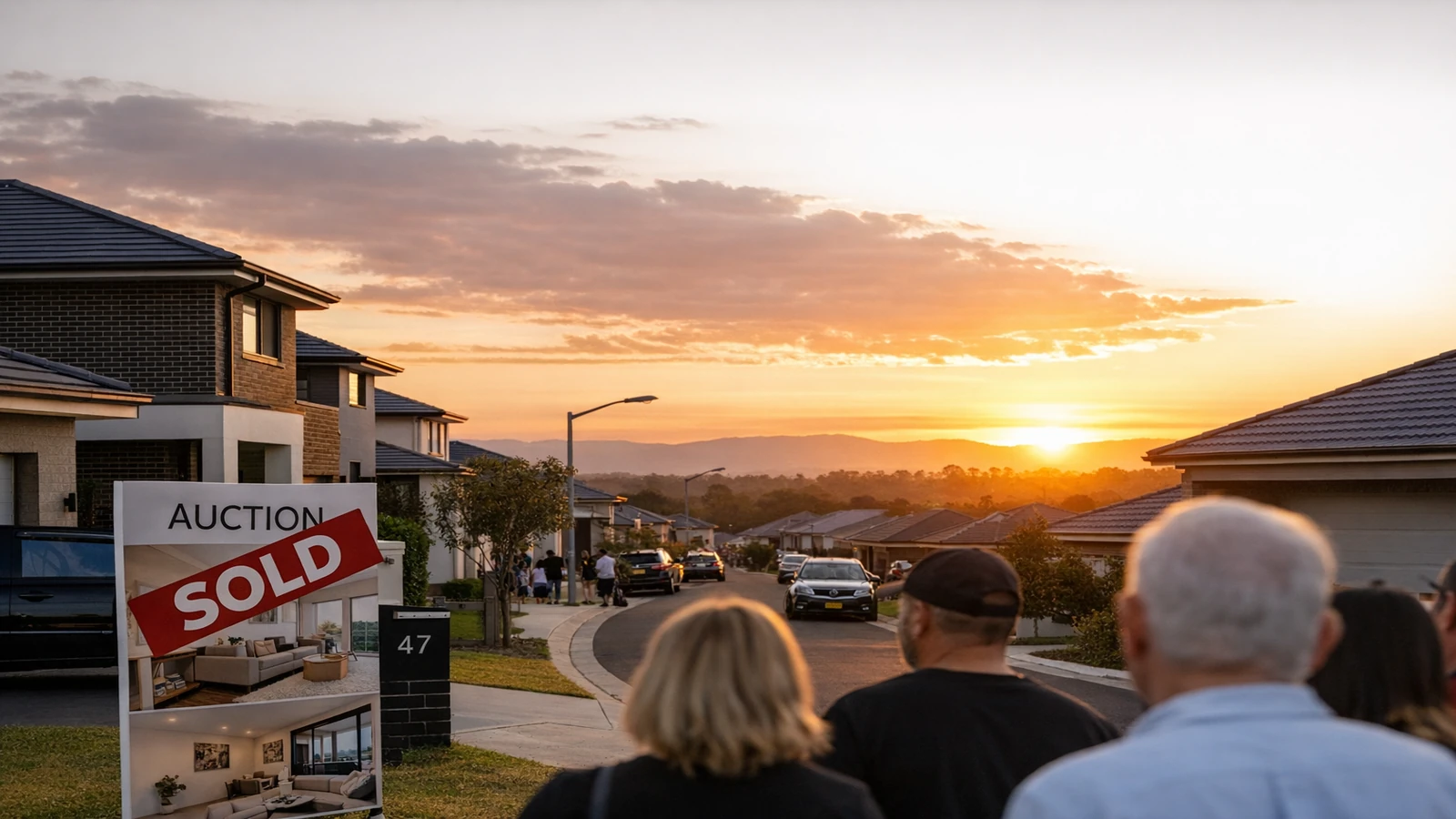
In parts of Western Sydney, buying a home is starting to look less like a search and more like a contest.
The pattern is simple enough. Stock is tight, demand is broad, and affordable options inside Sydney’s orbit are still limited. That is leaving buyers to compete hard for a small pool of homes, especially in suburbs where the numbers still look reachable compared with inner-city prices.
That does not mean every pocket in the west is booming in the same way. But in places like Glenmore Park, Jamisontown and Penrith, the imbalance between listings and buyer interest is becoming hard to ignore. When a suburb has only a handful of homes available and thousands of people are watching, hesitation gets expensive very quickly.
Why the pressure is building in the west
Western Sydney is benefiting from a familiar housing-market trade-off.
Buyers priced out of more expensive parts of Sydney do not disappear. They move outward. That pushes attention into suburbs where the entry price still feels possible, even if it no longer feels cheap.
Recent reporting and market data suggest that this affordability shift is colliding with thin supply at the same time broader housing pressures remain unresolved. APReview has already covered how demand-side support can add heat to lower-priced markets and how the national supply pipeline still looks more fragile than the headline numbers suggest. In plain English, more people are competing for stock before enough new supply arrives to ease the strain.
That is the part most buyers feel on the ground before they see it in a chart.
You turn up to an inspection and there are more groups than expected. The guide looks soft. The agent says interest is strong. A property that felt worth pursuing on Wednesday is under offer by the weekend.
The numbers are telling the same story
The supplied market snapshot points to some extreme competition.
In Glenmore Park, 4,321 buyers were reportedly tracking just 74 houses over the past month. That works out to 58.4 interested buyers per listing. Homes there were lasting a median 24 days on market.
Jamisontown looked even tighter in one respect. Only seven houses were listed over the month, with homes selling a median day faster than Glenmore Park.
Penrith showed the same squeeze at a bigger scale. Around 2,200 buyers were recorded against just 28 listed houses, with a median house price of about $1.1 million and a median time on market of 31 days.
No serious buyer should read those figures as a reason to panic. But they do tell you what kind of market this is. It is a market where good stock gets absorbed fast, where negotiation power is limited, and where waiting for a perfect setup can mean missing multiple chances in a row.
What changed and what didn’t
What changed is the level of competition.
What did not change is the engine driving it.
Property still runs on borrowing capacity, supply and confidence. Western Sydney is not immune to rate pressure, serviceability checks or economic uncertainty. But relative affordability still matters. When buyers cannot make the maths work closer in, they widen the search radius. That keeps demand alive in outer and middle-ring areas that still offer some price relief compared with the rest of Sydney.
There is also a second-order effect here. Investors are watching the same suburbs as first-home buyers. When owner-occupiers and investors both target the same stock, entry-level markets can get crowded quickly. APReview has already noted similar pressure in lower-priced segments where policy support and limited listings combine to compress choice.
The catch for buyers chasing “affordable” Sydney
Here’s the catch.
A suburb can be more affordable than the inner city and still be fiercely unaffordable in practice.
That sounds contradictory, but it is not. Relative affordability brings demand. Demand without supply creates competition. Competition pushes buyers to stretch, either on price, timing, or quality.
So a buyer who enters Western Sydney expecting relief can still end up in a market where they have to move faster, compromise harder, and accept thinner buffers than planned.
That is where mistakes creep in.
People anchor to the idea that they are buying in a “cheaper” market, then start bidding like they are in a desperate one. The suburb may still be better value than alternatives, but that does not automatically make the purchase safe.
What would change the picture
A material lift in quality supply would help.
Not just more approvals on paper, but more homes actually reaching market in the price bands buyers are chasing. That is why the supply story matters so much. APReview recently noted that approvals have improved in headline terms, but the pipeline still looks uneven and vulnerable to delivery risk. For buyers, that means relying on a quick easing in competition is still a weak base case.
In other words, the west may stay competitive for longer than many would like.
That does not mean prices move in a straight line from here. It does mean buyers should not assume a softer national mood will automatically hand them better local conditions.
Western Sydney is doing what constrained, relatively affordable markets often do.
It is absorbing displaced demand from more expensive areas, while struggling to produce enough immediate stock to satisfy it.
That makes it attractive, but hard.
What buyers should do next
If you are trying to buy in this part of Sydney, treat speed as part of the process, not a sign to abandon discipline.
Get your finance position sorted before you start making offers. Know your ceiling before an agent starts talking up competition. And be honest about what matters most: land size, school catchment, commute, renovation risk, or long-term hold quality.
A good rule of thumb is simple. If the deal only works when everything goes right, it is too tight.
For readers weighing first-home options, serviceability pressure and supply risk, these APReview pieces are natural follow-ons:
Read more:
- How to Buy Your First Home in Australia
- The 5% deposit trap pushing first-home prices even higher
- Dwelling approvals jumped, but Australia’s housing fix still looks shaky
- Why you still can’t afford to buy in Australia
Western Sydney still offers a path into the Sydney market for many households. The problem is that plenty of other buyers know it too.