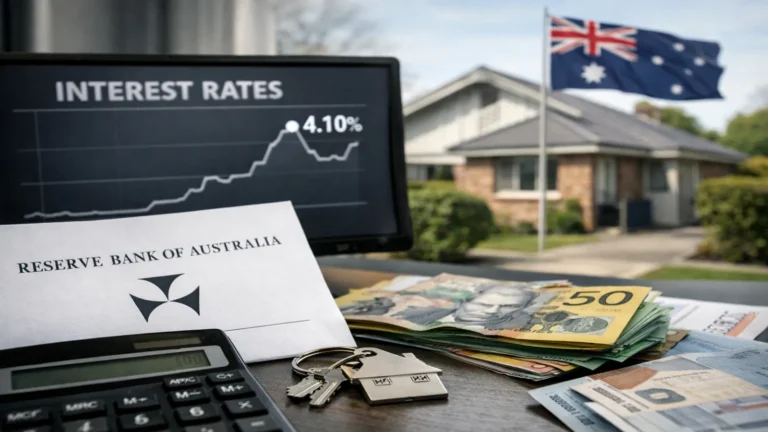
Australia’s interest rate debate has moved into more dangerous territory.
The Reserve Bank is no longer dealing with a clean inflation problem. It is facing a messier one: price pressure that could rise again just as growth slows.
That is the kind of setup central banks hate. Raise rates and you risk squeezing households harder. Hold rates and you risk letting inflation expectations drift. Cut too early and the RBA may look like it has lost patience with its own inflation target.
For borrowers, investors and buyers watching from the sidelines, the point is simple. The next move in rates is not just about one inflation print. It is about whether the RBA believes the inflation problem is becoming harder to contain.
Australian Property Review has covered this pressure before in its analysis of the RBA’s split rate rise and Australia’s inflation problem. The latest market tension adds another layer: the economy may be slowing, but the inflation risk has not gone away.
The uncomfortable choice facing the RBA
The RBA’s problem is that inflation shocks do not always stay in one place.
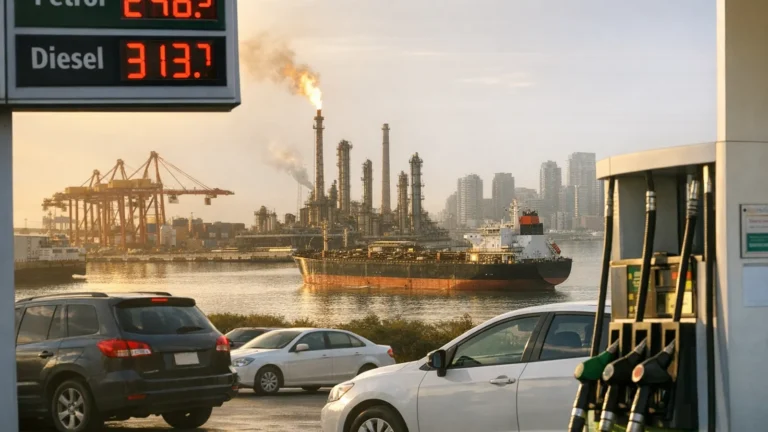
A jump in oil prices first shows up in fuel. Then it can flow into freight, food distribution, construction inputs, supplier costs and household budgets. That second stage is where central banks start paying closer attention.
In plain English, the first hit is the petrol bowser. The second hit is everything that needs fuel, transport, energy or imported inputs to reach the consumer.
That matters for property because housing is already rate-sensitive. Buyers do not need a huge move in the cash rate to feel it. Even a small shift in expectations can change borrowing power, auction behaviour and investor cash flow.
The market is already alert to that risk. If traders price in more rate hikes, lenders can move fixed rates and funding assumptions before the RBA has even made its next decision. For households trying to buy or refinance, the cycle can tighten before the official announcement lands.
This is why the fixed-rate decision has become harder. As Australian Property Review explained in Should You Lock Your Mortgage Before Rates Climb?, the cheapest-looking loan is not always the best loan once flexibility, refinancing plans and household buffers are included.
Why holding rates is not automatically safe
At first glance, leaving rates unchanged can look like the safer option.
Growth is slowing. Households are already under pressure. Consumer spending is fragile. A weaker economy usually argues for patience.
Here’s the catch.
If inflation rises while the cash rate stays still, the inflation-adjusted interest rate can fall. That can make monetary policy less restrictive in real terms, even when the headline cash rate has not moved.
That is the risk for the RBA. Holding steady might look cautious, but it could accidentally loosen conditions if inflation keeps pushing higher.
The bank’s credibility sits in the middle of this. Once households and businesses start believing inflation will stay high, behaviour can change. Workers ask for higher wages. Suppliers pass on costs more quickly. Businesses become less hesitant about price rises. That does not guarantee a 1970s-style inflation problem, but it is exactly the kind of risk central banks try to stop early.
What this means for property
Property does not respond to inflation in a straight line.
Higher inflation can sometimes support nominal asset prices over time. But higher interest rates usually hit borrowing capacity first. In the short run, the rate channel is often stronger than the inflation hedge story.
For buyers, the issue is serviceability. Banks assess borrowers using buffers above the actual loan rate. If rates rise, or lenders become more cautious, the same income supports less debt.
For investors, the issue is cash flow. Higher mortgage costs can collide with higher insurance, maintenance, strata, land tax and vacancy risk. Rental growth can help, but it does not always arrive where or when the investor needs it.
For vendors, the issue is demand depth. A home can still attract interest, but fewer buyers may be able or willing to stretch. That is when campaigns take longer, reserves get tested and price expectations need to adjust.
Australian Property Review made a similar point in its piece on auction buyers stepping back as vendors face pressure: weaker demand does not always mean buyers disappear. Often, it means they stop chasing.
Quick take:
The RBA can look through one-off price shocks. It has a harder time looking through second-round inflation if fuel, freight, food and wages start reinforcing each other.
The oil shock is the slow-burn risk
The obvious story is oil. The property story is slower.
If oil prices spike briefly, the damage may be limited. Households absorb some pain, headline inflation bumps higher, and markets move on.
If oil stays elevated for months, the picture changes. Builders face higher input and transport costs. Households lose savings buffers. Businesses pass on costs. The RBA has less room to sound relaxed.
That is where property can feel the pressure from several directions at once.
Borrowers face higher repayments or delayed rate relief. Buyers face tighter borrowing power. Developers face weaker feasibility. Investors face higher holding costs. Tenants may face pressure too, although rental markets still depend heavily on local vacancy, wage growth and supply.
This is why an oil shock is not just a fuel story. Australian Property Review has already explored that chain reaction in Oil Shock and Australia’s Property Reckoning.
Sydney and Melbourne look more exposed
The rate impact is unlikely to land evenly.
Sydney and Melbourne usually feel borrowing-power pressure faster because prices are higher and buyers are more stretched. When the cost of debt rises, the same repayment limit buys less property. That does not mean prices must fall sharply, but it does make growth harder to sustain.
Outer and more affordable markets can hold up better for a while, especially where population growth, low vacancy and limited stock support demand. But they are not immune. If unemployment rises or lending conditions tighten further, the pressure spreads.
The practical point is not “avoid Sydney” or “buy Perth”. It is that rate sensitivity matters more when buyers are already close to their limit.
For more on that split, see Australian Property Review’s analysis of Sydney and Melbourne slipping as the housing divide widens.
What could derail the rate-hike case
There is still a case for caution.
If growth slows faster than expected, unemployment rises and inflation expectations stay contained, the RBA may decide that more tightening would do unnecessary damage. Central banks do not want to crush demand if supply shocks are already fading.
A sharp fall in oil prices would also change the picture. So would softer wages growth, weaker retail spending, falling business confidence or clearer evidence that households are pulling back.
The federal budget adds another complication. If fiscal spending remains strong while inflation is still elevated, the RBA may feel it has to do more of the cooling work itself. If the budget leans more restrained, that pressure may ease.
Now, the part most people miss: the RBA is not just choosing between “hike” and “hold”. It is choosing what message to send.
A hike says inflation credibility comes first. A hold says growth risks are becoming harder to ignore. Either message will move markets.
The practical take for borrowers and investors
This is not the moment to build a property decision around one expected rate move.
A better rule of thumb is to pressure-test the next 12 months against three scenarios:
- Base case: rates stay higher for longer and cuts are delayed.
- Upside case: inflation cools and rate relief returns sooner.
- Downside case: inflation rises again, growth slows and unemployment lifts.
For owner-occupiers, that means checking repayments at a higher rate before committing. For investors, it means reviewing cash flow after insurance, strata, maintenance, land tax and vacancy assumptions, not just the headline rent.
For buyers, the next step is simple: get your borrowing capacity updated using today’s rates, not last month’s expectations.
The property market can handle uncertainty. What it struggles with is borrowers assuming the best-case rate path and leaving no room for the cycle to turn against them.
General info, not financial advice.