Australia’s labour market has started to flash a warning light at exactly the moment the Reserve Bank is trying to decide how much more pressure households can take.
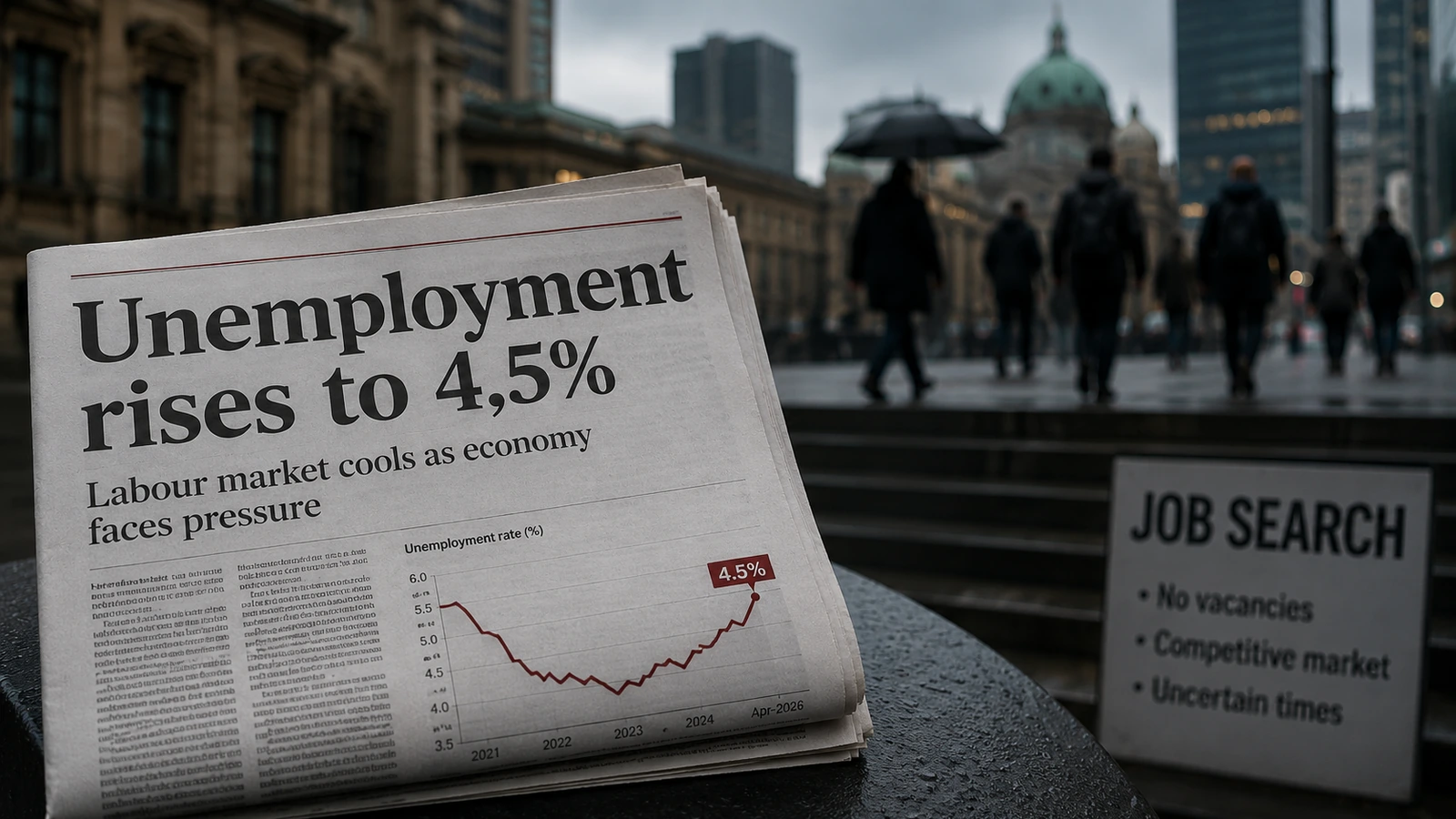
The unemployment rate rose to 4.5 per cent in April, up from 4.3 per cent in March, according to the Australian Bureau of Statistics. Employment fell by 18,600 people, while the participation rate eased to 66.7 per cent.
That matters because the RBA is no longer looking at inflation in isolation. It is watching whether higher rates are finally slowing the economy, cooling hiring, and weakening household demand.
For mortgage holders, the message is not simple. A softer jobs market may reduce the odds of another near-term rate hike. But it does not guarantee relief.
The jobs market just lost some heat
The April labour force data is the first clear sign in months that the economy may be losing momentum.
In seasonally adjusted terms, unemployment rose by 0.2 percentage points to 4.5 per cent. That is the highest unemployment rate since late 2021, according to Reuters’ reading of the ABS data.
Employment went backwards. The number of unemployed people rose. Participation slipped.
That last point matters. The participation rate measures the share of people either working or looking for work. When it falls at the same time as unemployment rises, it suggests the jobs market is not just cooling at the edges.
It is losing a bit of depth.
For property, that is important because confidence, borrowing capacity and repayment comfort all run through the labour market. A borrower can absorb higher rates for a while. It gets harder if overtime dries up, bonuses shrink, second jobs disappear, or job security starts to feel less certain.
Why the RBA may pause before it pushes again
The RBA lifted the cash rate to 4.35 per cent on 6 May 2026, its third increase this year, according to the central bank’s cash rate table.
The reason was straightforward: inflation is still too high.
The RBA’s May statement said the Board increased the cash rate by 25 basis points to help bring inflation down, while remaining committed to low and stable inflation and full employment.
Here’s the catch. The RBA has two problems now, not one.
Inflation is still above the target band. But unemployment is rising.
That creates a narrower path for the central bank. Push too hard and the labour market may weaken faster than expected. Pause too early and inflation could stay sticky, forcing even more pain later.
Financial markets appear to have noticed the shift. Reuters reported that the probability of a June rate hike fell after the jobs data, as traders judged the labour market was softening faster than expected.
That does not mean a rate hike is off the table. It means the hurdle has probably moved higher.
Quick take:
A rising unemployment rate gives the RBA a reason to wait. Sticky inflation gives it a reason not to relax. Borrowers should treat this as a pause risk, not a rate-cut signal.
The property market impact is not evenly spread
A weaker jobs market does not hit every buyer the same way.
The first pressure point is serviceability. Lenders already test borrowers against higher repayment assumptions. Australian Property Review has previously explained how the serviceability buffer can cap borrowing power before a buyer even reaches auction day: APRA’s new crackdown to hit overstretched property investors.
The second pressure point is cashflow. If job security weakens, buyers become more cautious. They may still want to purchase, but they offer less, delay decisions, or keep more cash aside.
The third pressure point is investor demand. Higher rates already squeeze rental yields. If unemployment rises, investors also have to price in higher vacancy risk, weaker tenant demand in some areas, and slower wage growth.
That is where the second-order effect shows up.
A job loss does not need to happen inside a household for behaviour to change. Sometimes the fear of a job loss is enough. Buyers become more conservative. Upgraders delay listing. Investors demand a bigger buffer. Banks take a harder look at marginal applications.
Australian Property Review covered the borrower side of this pressure in RBA rate hikes put jobs and borrowers on notice, where the key risk was not just higher repayments, but the way rates reduce borrowing firepower across the market.
The part borrowers should not overread
One weak jobs report does not settle the rate outlook.
The ABS also reported that in trend terms, employment still increased by 22,100 people in April and the trend unemployment rate remained at 4.3 per cent.
That is why the April result needs to be treated carefully.
Seasonally adjusted data can move around month to month. Trend data smooths that movement. The clean read is this: the labour market is no longer running hot, but it has not collapsed either.
That distinction matters for borrowers hoping for rate cuts.
The RBA is unlikely to pivot quickly while inflation remains above target. A softer jobs market can delay further hikes. It does not automatically bring cuts forward.
For homeowners, the practical mistake would be assuming April’s unemployment rise means repayment pressure is about to ease.
It may not.
Banks do not reprice loans based on one labour force print. Lenders still assess risk conservatively. And household budgets are still dealing with the combined hit from mortgage repayments, insurance, energy, groceries and council rates.
Australian Property Review has also looked at this pressure among low-deposit buyers in First-home buyers are running out of breathing room.
What changes if unemployment keeps rising
The base case is now more complicated.
If unemployment holds around the mid-4s and inflation slowly eases, the RBA may get room to pause. That would help sentiment, especially among buyers who have been waiting for some rate stability.
If unemployment rises faster, the property market could face a confidence problem. Forced selling does not need to surge for prices to soften. It only takes fewer active bidders, tighter credit and more cautious households.
If inflation stays high despite rising unemployment, that is the uncomfortable scenario. It would leave the RBA choosing between price stability and labour market pain.
For property investors, the key question is not “will rates rise again?” It is whether the asset still works under a tougher set of assumptions.
A useful rule of thumb: pressure-test the deal at today’s rate, plus a buffer, with no heroic rent-growth assumption. If the numbers only work because rates fall soon, the margin is too thin.
The practical take
The April jobs report gives borrowers one reason to breathe, but not enough reason to relax.
Start here: check your loan position under three scenarios.
- Base case: rates stay around current levels for longer.
- Upside case: the RBA pauses and inflation eases.
- Downside case: one more rate hike lands while income growth slows.
For buyers, the next 4 to 12 weeks are about watching three numbers: unemployment, inflation and mortgage arrears. If unemployment keeps rising while inflation remains sticky, the RBA’s job gets harder and the property market becomes more selective.