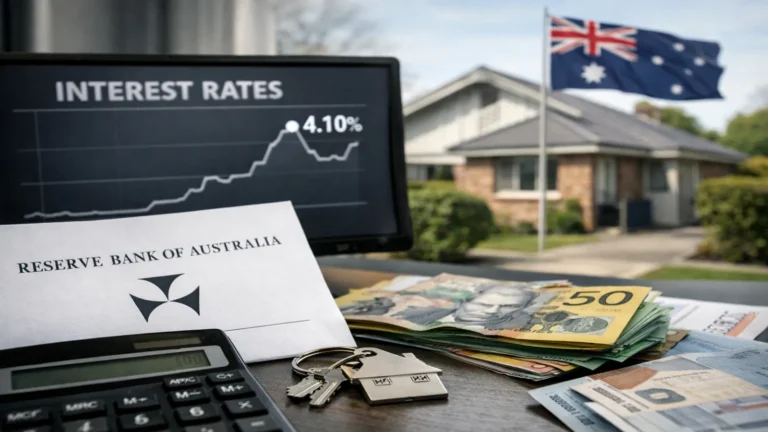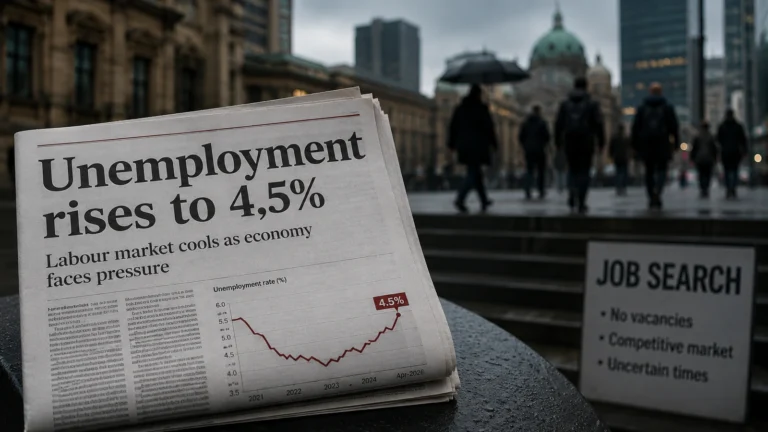
Jobs are weakening while underlying inflation has lifted to 3.4 per cent. For borrowers and investors, the next RBA call is no longer simple.
Australia has walked into the kind of economic squeeze nobody wants: households are pulling back, the jobs market is softer, and inflation is still too high for the Reserve Bank of Australia to relax.
The Australian Bureau of Statistics reported that annual headline inflation eased to 4.2 per cent in April 2026, down from 4.6 per cent in March. But the measure the RBA watches closely for persistent price pressure, trimmed mean inflation, rose to 3.4 per cent.
That is above the RBA’s 2 to 3 per cent target band.
At the same time, unemployment rose to 4.5 per cent in April, up from 4.3 per cent in March. Employment fell by 19,000 people while the number of unemployed Australians increased by 33,000.
One number tells the RBA inflation is not beaten. The other says the economy may already be losing momentum.
For property buyers, borrowers and investors, that tension matters more than any single headline about the next rate decision.
The economy is sending two different warnings
The first warning is inflation.
A lower headline inflation figure might sound like relief, but the underlying measure has moved the wrong way. Trimmed mean inflation strips out some of the sharpest price movements to give a clearer read on broader price pressure. At 3.4 per cent, it suggests the cost problem is spreading beyond one-off shocks.
The RBA’s May Statement on Monetary Policy underlined the concern. Its baseline forecast has headline inflation peaking at 4.8 per cent in mid-2026, with underlying inflation remaining above 3 per cent until mid-2027.
The second warning is demand.
The Westpac–Melbourne Institute Consumer Sentiment Index lifted modestly in May, rising to 83 from 80.1 in April. That is an improvement, but it is still deeply pessimistic territory. ANZ–Roy Morgan Consumer Confidence also remained extremely weak in mid-May, at 66.4, despite a small weekly rise.
Households are not behaving as though conditions are comfortable. That matters because lower confidence can become lower spending, weaker business revenue and eventually softer employment.
Quick take
Inflation is still too high for the RBA to declare victory, but rising unemployment and deeply weak confidence make another rate rise more damaging. The base case is not certainty about cuts. It is a longer period where borrowers need to plan for rates staying uncomfortable.
Why the RBA cannot simply rescue borrowers
The RBA’s next Monetary Policy Board meeting is scheduled for 15–16 June 2026. The cash rate is currently 4.35 per cent.
A rising unemployment rate gives the bank a reason to pause and watch. Higher rates work by slowing borrowing and spending, and a weaker labour market is evidence that pressure is already showing up.
Here’s the catch. The RBA cannot set interest rates only by looking at jobs.
If households and businesses start expecting inflation to stay high, prices and wages can adjust around that expectation. A temporary energy or transport shock can then feed into broader costs, from deliveries and construction materials to services and rents.
That is why a borrower should not read one weak employment report as a green light to stretch a mortgage application or assume cheaper repayments are around the corner.
Australian Property Review recently examined this problem in Jobs Shock Puts RBA’s Next Rate Hike on Thin Ice. The jobs data has changed the balance of risk. It has not removed inflation from the equation.
Property is exposed through borrowing power first
Housing markets do not need a wave of forced sellers to slow. They can lose momentum when buyers can no longer bid as aggressively.
When mortgage rates stay elevated, lenders assess new borrowers against larger repayments and serviceability buffers. That reduces the amount many households can borrow. For investors, holding costs are also higher, making yield, vacancy risk and cashflow buffers more important than optimistic capital-growth assumptions.
Now, the part most people miss: a softening economy does not automatically mean homes become affordable.
If rates remain high because inflation is sticky, buyers may face weaker price growth while still being unable to borrow enough to purchase comfortably. Existing borrowers may find their property value steadier than feared, but their monthly cashflow remains tight.
That is the uncomfortable middle ground: less market confidence without immediate repayment relief.
For a deeper breakdown of that mechanics, see Australian Property Review’s analysis of the RBA inflation trap and property market risk.
Tax reform uncertainty adds another layer
The federal government has introduced proposed changes to negative gearing and capital gains tax arrangements as part of its housing and tax reform agenda. Under the reported proposal, negative gearing would be restricted to newly built homes, while the current capital gains tax discount would be replaced by a different approach to taxing real gains.
But investors should be careful with the word “confirmed”. The measures have been introduced to Parliament and still face the legislative process, including the need for support in the Senate.
That distinction matters.
Markets may react to the prospect of change before a law passes. Some buyers may hold off. Some landlords may reconsider established dwellings. Developers may see stronger demand for new stock if incentives are redirected there.
But the final impact will depend on the legislation that ultimately passes, any grandfathering or carve-outs, housing supply delivery and the behaviour of investors and owner-occupiers.
The intended goal is to push more investment towards new housing supply and reduce advantages for established-property investors. The risk is that if investor participation retreats faster than new stock can be delivered, rental pressure could reappear in tight markets.
Australian Property Review has previously examined that trade-off in Negative Gearing Rent Risk: Investor Tax Gamble.
The scenarios borrowers and investors should use now
The most sensible way to read the next six to twelve months is through scenarios, not predictions.
In the base case, the RBA holds rates at elevated levels while it waits for clearer evidence that underlying inflation is falling. Growth remains soft, property activity cools and households continue to feel stretched.
In the better case for borrowers, job weakness and restrained spending pull inflation lower sooner than expected. The RBA then has room to consider rate relief without risking another inflation flare-up.
In the harder case, inflation proves persistent even as growth weakens. That would leave the RBA considering whether another rate rise is needed at the same time borrowers, businesses and the housing market are already under strain.
None of these paths makes aggressive borrowing a comfortable bet.
The practical take
A homeowner refinancing this winter does not need to forecast the RBA perfectly. They need to know whether they can carry their loan if rates do not fall for another year.
An investor looking at a purchase needs to pressure-test rent, interest costs, vacancy and tax settings without relying on rapid price growth to make the numbers work.
And a buyer hoping falling confidence will produce a bargain should remember that cheaper prices are not much help if reduced borrowing capacity cancels out the benefit.
Start here: rerun your household or investment cashflow using current repayments and a further 0.25 percentage point rate rise, then compare that with a no-rate-cut scenario lasting 12 months.
That test will tell you more about your position than trying to guess one RBA meeting.
Get the weekly signal, free
Property headlines move fast. Good decisions need context.
Subscribe to the Australian Property Review free newsletter for clear analysis on rates, housing, investing and policy, delivered to your inbox.
Subscribe for free to Australian Property Review