A national valuer network is reporting the first clear evidence that May’s property tax changes are reshaping buyer behaviour at the top end, with prestige sentiment cooling and Sydney auction clearance rates slipping below 50 per cent for the first time in more than a year.
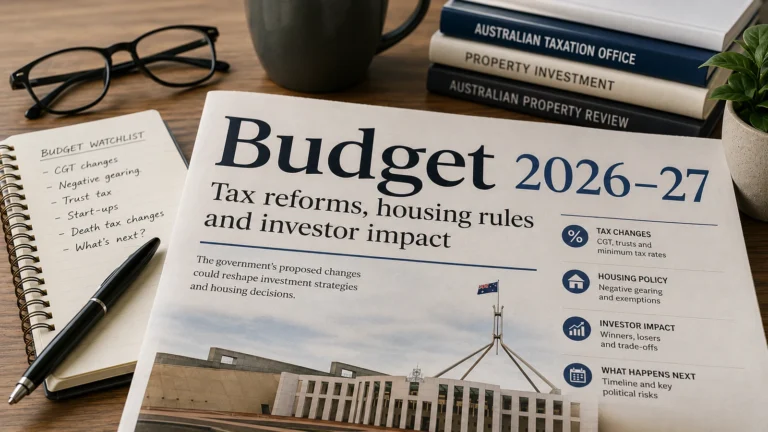
The new tax settings restrict negative gearing benefits to new builds only and replace the 50 per cent capital gains tax discount with cost-based indexation plus a 30 per cent minimum tax rate. Properties held before 12 May 2026 are grandfathered from the negative gearing changes, and the CGT reforms apply only to gains accrued after 1 July 2027.
The RBA held the cash rate at 4.35 per cent in June after three consecutive hikes, signalling no immediate shift despite persistent inflation pressure. That pause is doing little to steady prestige buyers, who face both tighter borrowing capacity and reduced post-tax returns on investment properties.
The prestige cooling pattern
A national property sentiment index tracking prestige markets fell to 58 out of 100 in July, down from 66 in February. Sydney dropped to 40 and Melbourne to 35, both now sitting in balanced-to-cool territory. Perth remains the outlier at 80, supported by chronic undersupply that continues to outweigh tax and rate concerns.
Sydney’s auction clearance rates have been running below 50 per cent in June and July, compared with mid-to-high 60s in the same period last year. The decline is sharpest in the prestige segment, where tax reform directly reduces the after-tax appeal of holding established property.
The valuer network attributes the shift to three overlapping pressures: reduced borrowing capacity as rates stay elevated, the loss of negative gearing benefits for established stock, and broader economic uncertainty including instability in the Middle East.
Where growth is still holding
Brisbane posted annual growth of 17.4 per cent to a median of $1.12 million, with price momentum holding even as Sydney and Melbourne falter. Perth and Adelaide recorded annual gains of 23.9 per cent and 11.6 per cent respectively, driven by structural undersupply rather than tax-driven demand.
The market is now highly segmented by city and price point. Prestige buyers are pausing or downgrading, while first-home buyers and upgraders targeting mid-market stock in undersupplied cities continue to compete. Investors who can still access negative gearing on grandfathered properties or new builds face a narrower opportunity set than they did six months ago.
Callout: Key numbers
Sydney clearance rates: below 50% in June-July vs mid-to-high 60s a year earlier. Prestige sentiment index: 58 (down from 66 in February). Brisbane median: $1.12m, up 17.4% annually. Perth and Adelaide: up 23.9% and 11.6% respectively.
Trade-offs for investors deciding now
If you bought before 12 May 2026, you retain negative gearing benefits on that property indefinitely. If you’re buying now, negative gearing applies only to new builds, and the CGT discount changes mean you’ll pay more tax on any gain accrued after 1 July 2027.
That shifts the calculus toward yield over capital growth. Investors who previously accepted low rental returns in exchange for tax deductions and future capital gains now need cashflow-positive assets or new builds that qualify for full negative gearing. Cities with tight vacancy and strong rental growth look more attractive than prestige markets where yields are low and price appreciation has stalled.
The risk is twofold: rates could stay elevated longer than expected, keeping borrowing costs high, or a sharp economic downturn could push prestige prices lower as highly leveraged buyers are forced to sell. The Australian Property Review article on rental yields driving apartment buying covers how investors are already adjusting.
What could change the trajectory
A rate cut cycle starting in the next six months would ease serviceability pressure and likely stabilise prestige clearance rates. Conversely, further hikes or a credit event would accelerate the cooling trend, particularly in Sydney and Melbourne where prestige stock is most exposed.
Supply constraints in Perth and Brisbane are structural and unlikely to resolve quickly, which means those markets should hold even if broader sentiment weakens. The housing shortage and workforce crisis continue to limit new completions, keeping undersupplied cities insulated from tax-driven demand shifts.
Policy risk remains. If the tax changes are perceived as driving significant price falls or investment withdrawal, there’s a non-zero chance of amendments or grandfathering extensions. That’s speculative, but it’s a scenario worth tracking if you’re making a multi-year hold decision.
The practical take
If you’re holding pre-12 May stock, your negative gearing is intact and you’re watching for rate relief. If you’re buying now, run the numbers on yield, not capital growth assumptions. New builds qualify for negative gearing; established stock doesn’t. Prestige is cooling fastest; undersupplied mid-markets are still tight.
If you want weekly signals on how tax reform is landing across cities and price points, subscribe to the Australian Property Review newsletter.
General info, not financial advice.