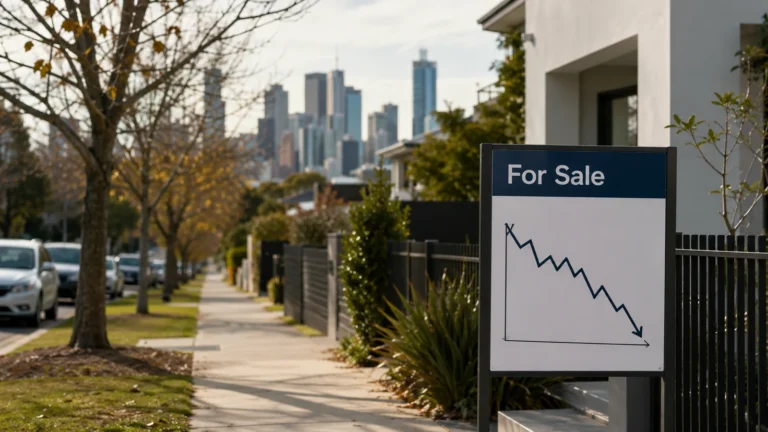
House prices dropped 0.7% nationally in July and 1.9% over the quarter, with houses down harder than units. The downturn that started at the premium end is now spreading to Brisbane, Adelaide and Perth, and even the affordable segment that held up on first-home buyer support is losing momentum as investor demand cools.
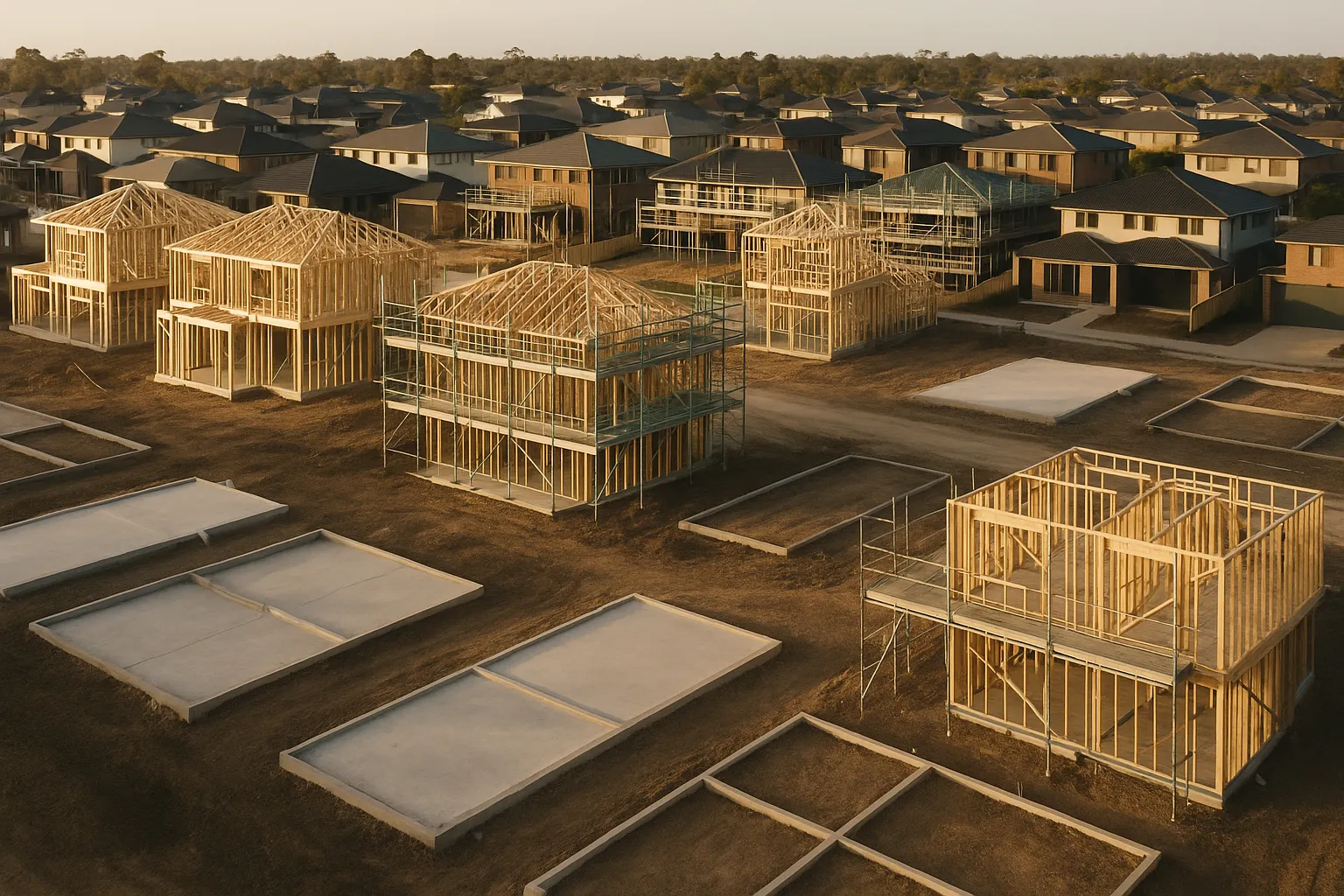
But there’s a mechanical limit on how far this can run: construction costs have jumped 51% nationally since the end of 2019, and when existing homes trade materially below the cost of building new, projects stop stacking up and supply dries up. That doesn’t prevent sharp falls in individual suburbs or property types, but it does put a floor under the national aggregate, at least in theory.
How replacement cost works as a floor
When established housing trades below the cost of delivering new supply, developers and builders pull back. Projects that looked viable at higher prices no longer clear the hurdle, construction activity slows, and eventually reduced new supply pushes buyers back toward existing stock, stabilising prices.
The mechanism depends on two conditions: construction costs stay elevated, and there’s underlying demand that can eventually absorb existing stock even if new supply dries up. Right now both hold. Building costs rose 2% in the June quarter, the largest quarterly increase since September 2022, and are up 5.9% over the year. Western Australia has seen costs more than double since 2019, Tasmania is up 69%, South Australia 65%, Queensland 61%. Even Victoria, the smallest rise among major states, is 35% higher.
Those cost increases aren’t reversing quickly. Labour is tight, materials remain elevated, and compliance and financing add layers that didn’t exist five years ago. For apartments especially, where build times are longer and financing costs bite harder, the viability threshold has shifted sharply upward. Affordable projects are largely out of reach; what proceeds now skews premium, aimed at wealthier buyers rather than the lower-priced supply first-home buyers need.
Where the thesis breaks down
Replacement cost sets a national floor, but it doesn’t prevent localised corrections or protect individual properties. Three scenarios crack the model:
High land value, low construction share. In inner-city markets where land drives the price and the dwelling is a smaller component, replacement cost offers less protection. A house in Toorak or Mosman can fall 20% without threatening the construction-cost floor because most of the value was never in the building.
Demand collapse. If unemployment rises or credit conditions tighten further, replacement cost becomes irrelevant in the near term. Builders stop because there are no buyers, not because margins are thin. Prices can undershoot replacement cost for extended periods if the economy turns.
Construction costs correct. If building activity slows enough, some cost pressures ease. Subcontractor rates, material demand and land holding costs all respond to volume. A sharp demand pullback could see construction costs themselves retreat 10-15% over 18 months, lowering the floor and allowing prices to fall further than current cost benchmarks suggest.
What the data shows across cities
The falls aren’t uniform. Brisbane moved into decline after leading the recovery. Adelaide softened in July. Perth edged lower over three months after a long run. Houses are down 0.8% for the month and 2% for the quarter nationally; units fell 0.5% and 1.4%. The premium segment, most exposed to higher rates and reduced borrowing capacity, has been weakening for months. Now that weakness is spreading to the middle and affordable tiers as investor demand cools following recent policy changes and serviceability tightens.
The question is whether replacement cost holds as a floor when the downturn broadens. In Western Australia, where costs have more than doubled, the gap between new and established is widest, so the floor mechanism should kick in earlier. In Victoria, where cost increases have been smaller, there’s more room to fall before replacement cost matters.
The catch
Replacement cost is a floor only if there’s demand that can eventually absorb existing stock. In a recession or credit crunch, prices can trade below replacement cost for years because no one is building and fewer people are buying. The floor works in a soft landing, not in a hard one.
What could change over the next 12 months
Three variables to watch:
- Unemployment. If the jobless rate pushes above 4.5%, forced selling increases and replacement cost stops being relevant for distressed sellers.
- RBA path. If rates stay higher for longer, serviceability constraints deepen and fewer buyers can meet even current prices, let alone a floor set by construction costs.
- Building cost trajectory. If construction activity drops sharply, some cost components, labour rates, material demand, land holding costs, will ease. A 10-15% correction in building costs over 18 months would lower the floor and allow prices to fall further.
Base case: prices drift lower over the next two quarters, replacement cost acts as a national floor around current levels, but individual suburbs and property types see sharper falls where land value dominated or where forced selling kicks in. Upside: rates stabilise or cut sooner, buyers return, construction cost floor holds firm. Downside: recession hits, unemployment rises, construction costs correct as demand collapses, and the floor drops 10-15% below where it sits now.
Practical call
If you’re buying: test the suburb you’re targeting against construction cost. In high-land-value inner-city areas, replacement cost offers less downside protection. In outer suburbs where the dwelling is a bigger share of price, the floor matters more, but only if the economy holds and you’re not a forced seller in 12 months.
If you’re holding: replacement cost doesn’t prevent your property falling, especially if you’re exposed to higher rates or bought at the peak. Run a scenario where your suburb falls another 10% and ask if you can service the loan if rates stay elevated another year.
If you’re building: current cost settings mean affordable projects don’t stack up. The viable pipeline is skewing premium, which limits new supply where it’s needed most and pushes more buyers toward established stock, reinforcing the replacement cost floor in the medium term, but doing nothing for affordability in the short term.
Subscribe to the Australian Property Review newsletter for the weekly signal on what’s moving prices, costs and credit.
For more on how the downturn is playing out across regions, see Housing market downturn deepens as Perth, Brisbane join decline. On affordability migration patterns as prices shift, see Million dollar suburbs: 151 new entries map where affordability migrates next. For the broader economic risks if the downturn accelerates, see Australian Property Market Recession Risk Is Rising Fast.
General info, not financial advice.