Australian capital city home values are declining at a pace that ranks among the steepest retreats in four decades. The fall, projected to reach 7.8% peak to trough by April next year, sits just below the 8.1% and 8.2% drops recorded in 2022–23 and 2017–18. But this time the trigger isn’t purely cyclical: three consecutive rate hikes set the stage, yet the real shift came when negative gearing reform changed the return equation for property investors. That psychological break makes the path forward harder to map.
The question politicians are quietly betting on: can values stagnate long enough for wage growth to close the affordability gap, or does history suggest the downside gets worse before it gets better?
The decline in context
Over the past forty years, capital city property markets have experienced seven distinct downturns. Most lasted between three and nineteen months, with an average decline around 5%. The shortest, a 1.5% fall over three months during the initial COVID lockdowns in 2020, reversed quickly. The longest, from September 2017, ran nineteen months and shed 8.2% after regulators tightened investor lending rules to cool speculation.
The current cycle began in mid-2025. Rate rises lifted borrowing costs, but the real pivot arrived when tax settings for property investors were overhauled. The math that made leveraged bets on capital growth attractive no longer stacks up the same way. Investor sentiment shifted, and auction clearance rates followed.
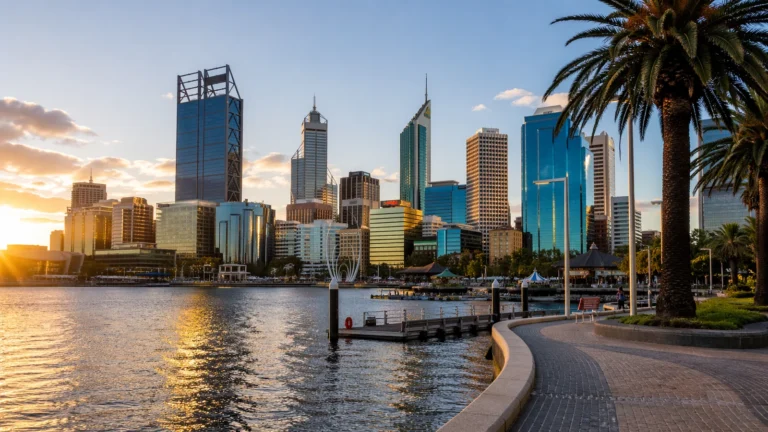
Geography matters. Analysis shows Sydney and Melbourne facing peak-to-trough declines around 10%, while Brisbane, Perth, Adelaide and Hobart are forecast to post modest gains for the 2026 calendar year. Mid-sized capitals with tighter supply and stronger interstate migration are holding up; the two largest cities are absorbing the bulk of the correction.
Why this feels different
Previous downturns resolved when the RBA cut rates or credit conditions eased. Prices bounced, often sharply. This time the policy intent is different: the tax changes aren’t temporary, and the RBA has signalled rates will settle structurally higher than the pre-pandemic decade. That combination, higher holding costs, lower tax benefits, removes two of the levers that historically supported investor re-entry.
One forecast sees capital city price growth near zero through 2027, with values rising slower than wages if the settings hold. Politicians describe this as a soft landing: affordability improves without a crash that wipes household wealth or destabilises the financial system.
The problem is precedent. Every prior attempt to engineer a gradual rebalancing has either stalled (policy reversed under pressure) or accelerated (values fell harder than expected). The idea that prices can drift sideways for years while wages catch up assumes stable credit access, no external shocks, and sustained political will. None of those are reliable.
The catch
Structurally higher rates mean fewer marginal buyers can stretch into the market, but they also compress rental yields for investors who’ve already adjusted to the new tax rules. If yields stay compressed and capital growth stalls, the next wave of investor exits could arrive faster than the current forecasts assume, especially in Sydney and Melbourne, where the correction is already deepest.
Variables that could shift the path
Three inputs will shape whether this plays out as a managed stagnation or something sharper:
- Rate trajectory: the RBA’s next moves depend on inflation and offshore conditions. If cuts arrive sooner or deeper than expected, investor appetite could return before affordability closes materially.
- Supply response: building approvals are rising in some states, but construction timelines remain stretched. If completions accelerate into weak demand, price pressure intensifies in the mid-sized capitals that have held up so far.
- Political durability: tax reform that hurts existing asset holders rarely survives a full election cycle unchanged. If polling shifts or a change in government reverses the settings, the base case evaporates.
The second-order effect worth tracking: rental markets. Investor exits reduce supply of rental stock. Rents have already jumped in some Sydney postcodes following the negative gearing changes. If vacancy tightens further, political pressure to roll back the tax changes builds, which resets the capital growth equation and brings investors back in.
What the numbers show right now
Peak-to-trough forecasts range from 2% in Adelaide and Perth to 10% in Sydney and Melbourne. Calendar-year performance splits the country: the two largest cities down, the rest flat to slightly up. Mortgage settlement volumes have risen 13%, driven mostly by refinancing rather than new purchase demand, a sign borrowers are managing rate exposure, not expanding positions.
Resale profit margins remain high for now, but the share of loss-making sales is rising in Sydney and Melbourne. That shift lags price declines by six to twelve months, so the pain for recent buyers is only starting to show in the data.
Scenarios over the next eighteen months
Base case: values drift lower into mid-2027, stabilise, then grow modestly (1–3% annually) as rates ease slightly. Investor activity stays muted. Affordability improves marginally as wage growth outpaces price growth. Rents stay elevated, political pressure mounts, but no policy reversal before the next election.
Upside (for affordability): supply completions accelerate, demand stays weak, values fall another 5–8% beyond current forecasts. First-home buyers re-enter at meaningfully lower price points. Investor sentiment remains depressed through 2028. Risk: rental crisis deepens, forcing partial tax rollback.
Downside (for affordability): offshore shock or domestic recession forces deep RBA cuts. Investors return, prices stabilise quickly, the tax changes are watered down within two years. Affordability window closes before wage growth makes a dent.
The practical take
If you’re deciding whether to buy in the next twelve months, the trade-off is timing risk versus price risk. Waiting captures further falls but bets that credit stays accessible and rates don’t drop sharply. Buying now locks a lower rate environment if cuts arrive sooner than forecast, but you’re catching a falling market in Sydney or Melbourne.
For investors adjusting to the new settings: run the yield calculation without assuming capital growth. If the property doesn’t cashflow neutrally or better under current tax rules, the holding case depends entirely on price appreciation, which the policy settings are designed to suppress.
The claim that prices can rise slower than wages for years without policy reversal or external disruption has no historical support in Australia. It’s not impossible, but it’s not the base case either. Plan for volatility, not a smooth glide path.
Want the signal when it shifts? Subscribe to Australian Property Review’s weekly newsletter for the data and analysis that cuts through the spin.
General info, not financial advice.