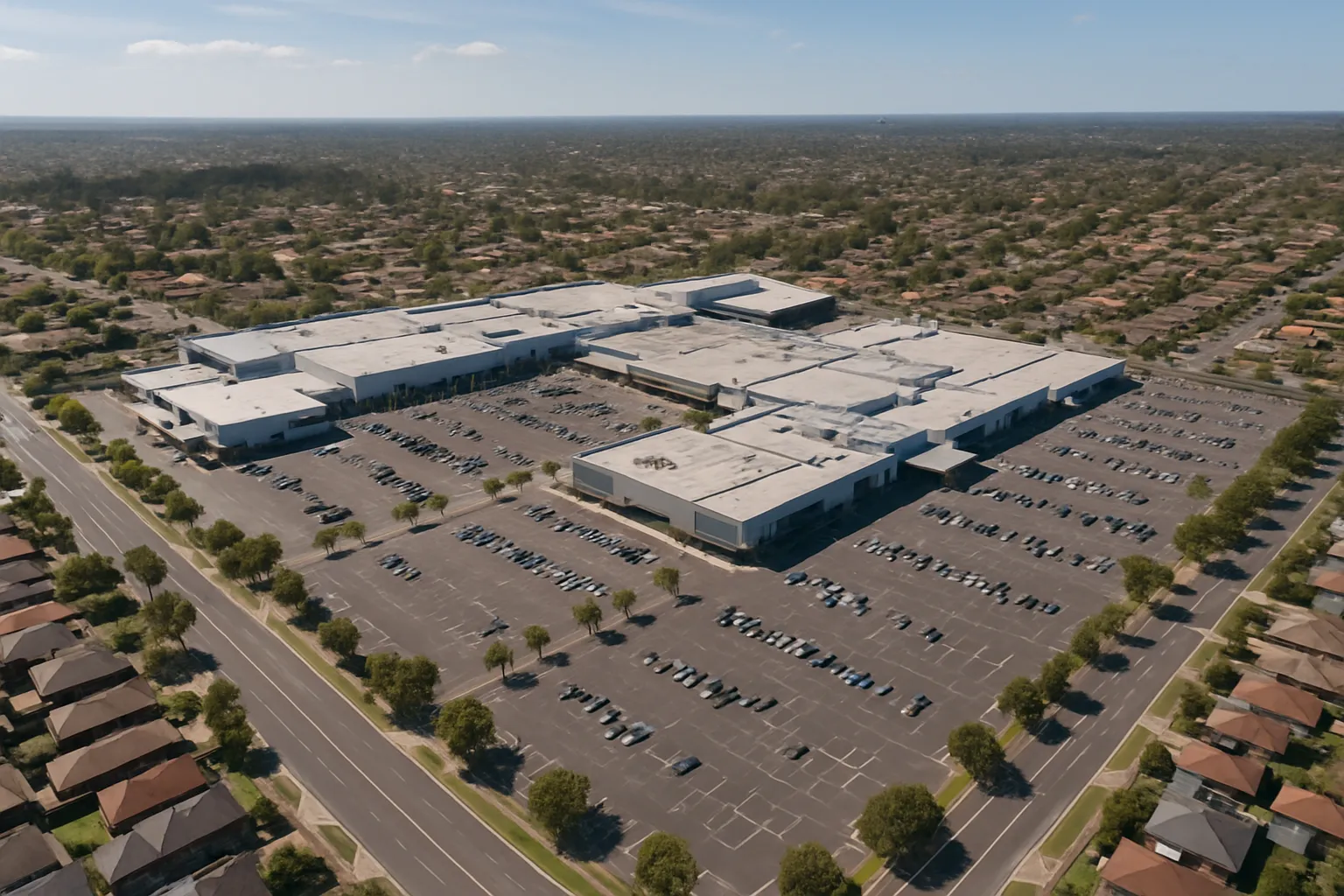
A retail landlord’s announcement of a 25,000-apartment pipeline across its shopping centre sites has put mixed-use redevelopment back on the housing agenda. The question isn’t whether the concept makes sense, it’s whether the sites can actually deliver housing at the scale and speed claimed, or whether this becomes another aspirational number constrained by the same bottlenecks that limit large residential projects everywhere.
The retail-to-residential conversion story has been running for years, particularly as discretionary spending shifts online and anchor tenants reassess floor space. Large shopping centre sites offer proximity to transport, existing services, and customer flow that could theoretically support higher-density housing. But proximity doesn’t equal planning approval, and floor area doesn’t equal financial viability.
The planning approval gap
Most major shopping centres sit on commercially-zoned land with height limits, floor-space ratios, and parking requirements designed for retail, not residential towers. Rezoning a single site can take 18 to 36 months even without community pushback. At scale across multiple centres in different council areas, the approval timeline compounds.
State government fast-track pathways exist in some jurisdictions, but they still require infrastructure contributions, environmental assessments, and design compliance. A 25,000-unit pipeline implies rezoning approvals for roughly 15 to 20 major sites simultaneously, assuming average project sizes of 1,200 to 1,700 apartments per centre. That’s a planning workflow most councils aren’t resourced to handle in parallel.
The catch: even supportive councils require evidence that a site can absorb the additional density without overloading local roads, schools, and utilities. For centres that already generate peak-hour congestion from retail traffic, adding residential towers means upgrading intersections, expanding public transport capacity, and proving water and sewer infrastructure can handle the load. Those upgrades aren’t funded by goodwill.
Infrastructure capacity and who pays
Residential developments above a certain threshold trigger developer contributions, levies that fund roads, parks, community facilities. On large mixed-use sites, those contributions can run into tens of millions per project. If the retail landlord retains ownership of the shopping centre and develops residential separately, the question becomes whether the residential margin can cover both the infrastructure levy and the opportunity cost of repurposing carpark or expansion land.
For centres in outer suburbs where land values are lower and construction costs are similar to inner-city projects, the feasibility margin narrows quickly. A project that pencils in at $650,000 per apartment in sales revenue but costs $520,000 to build (including land, contributions, and finance) leaves $130,000 gross margin before tax and holding costs. If the infrastructure levy adds another $40,000 per unit, the return compresses to levels that make debt financing harder to justify, particularly when the retail landlord’s cost of capital reflects its commercial property book, not a residential development risk profile.
The numbers that matter
- Rezoning timeline for commercial-to-residential: typically 18–36 months per site
- Infrastructure contributions for large residential projects: $30,000–$60,000 per apartment depending on location
- Average project size implied by 25,000-unit pipeline across 15–20 centres: 1,200–1,700 apartments per site
- Construction cost range for medium-density apartments (national average, 2026): $480,000–$550,000 per unit excluding land and contributions
Delivery risk and the construction bottleneck
Even if approvals land and feasibility stacks up, delivering 25,000 apartments over a realistic timeframe, say, eight to ten years, means starting roughly 2,500 to 3,000 units per year. That’s equivalent to adding a mid-sized developer’s annual output on top of existing pipeline commitments, at a time when builders are already rationing projects due to labour shortages, subcontractor insolvencies, and fixed-price contract risk.
The construction sector is running at near capacity in most capital cities. Adding large mixed-use projects to the queue doesn’t automatically increase the number of trades available to build them. It shifts the queue. If the retail landlord partners with existing residential builders, those builders are choosing these projects over others, they’re not creating new capacity. If the landlord builds in-house or through a special-purpose vehicle, it’s entering a sector where contract risk, defect liability, and margin volatility have driven multiple large players to exit or restructure in the past three years.
Base case vs aspiration
The most likely scenario is that a handful of sites with strong transport links, existing mixed-use zoning, and high land values move to approval and construction within three to five years, delivering perhaps 4,000 to 6,000 apartments. The remaining pipeline becomes a longer-term landbank dependent on future planning changes, infrastructure upgrades funded by others, and construction market conditions improving enough to make outer-suburban projects viable at scale.
That doesn’t make the initiative irrelevant. Every additional housing site that reaches practical completion matters in a supply-constrained market, and shopping centres near train stations are better-placed than greenfield subdivisions 40 kilometres from employment. But a 25,000-unit announcement is not the same as a 25,000-unit delivery forecast. The difference is planning approval, infrastructure funding, construction capacity, and financial return, none of which are solved by identifying land.
For commercial landlords exploring similar conversions, the Brisbane retail property stake sale offers a reminder that repositioning retail assets depends as much on exit strategy and capital allocation as it does on development ambition. For buyers evaluating new apartment supply timelines, the Bondi Junction apartments plan demonstrates how even well-located mixed-use proposals face extended approval and design negotiation before they reach market.
Pressure points worth tracking
Council rezoning decisions over the next 12 months will show whether the pipeline is moving from concept to approval. If multiple centres secure residential zoning changes in 2026, the project is real. If approvals stall or come with density reductions and infrastructure conditions that don’t fit the original feasibility model, the 25,000 figure will be revised downward.
State infrastructure spending is the second variable. Projects that align with existing transport upgrades, new metro stations, bus rapid transit corridors, have a clearer path to approval and a better chance of achieving the residential density needed to make the numbers work. Centres in growth corridors without committed infrastructure upgrades face a longer, less certain approval process.
Construction sector capacity is the third constraint. If residential building activity continues to soften due to higher interest rates and tighter credit, contractors may have bandwidth to take on large mixed-use projects at competitive pricing. If activity rebounds and the sector tightens again, the same projects become harder to price and slower to deliver.
What this means for housing supply
Every credible housing proposal that reaches the planning system helps, and shopping centre sites near transport are better candidates than most. But supply forecasts based on announced pipelines tend to overstate actual delivery by a factor of two to three, because they count projects that are identified but not yet approved, feasible but not yet financed, or approved but delayed by construction market conditions.
For policymakers, the lesson is that large-scale housing commitments from commercial landlords need to be supported with fast-track planning pathways, co-funded infrastructure, and realistic delivery timeframes. For investors and buyers, the lesson is simpler: until a project has DA approval, construction finance, and a contracted builder, it’s a pipeline aspiration, not a supply certainty.
If you’re tracking major residential supply decisions across Australian capitals, subscribe to the Australian Property Review newsletter for weekly updates on projects moving from concept to construction.
General info, not financial advice.