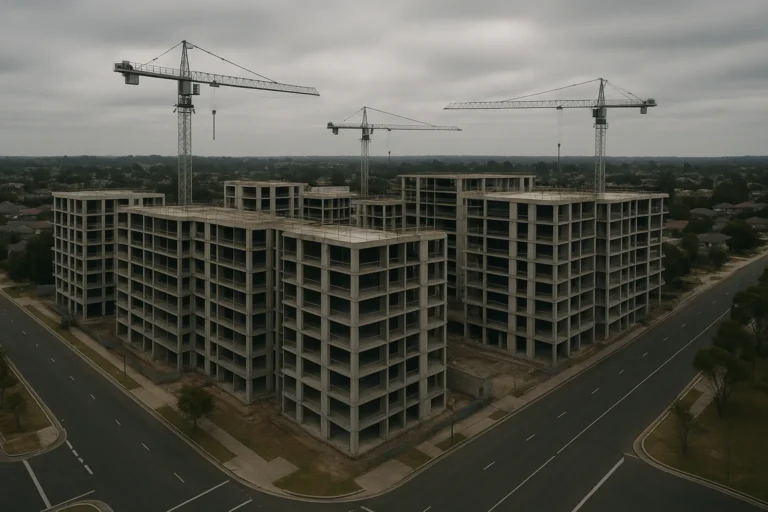
A Sydney-based construction group with $3.6 billion in debt entered voluntary administration on 25 August. Seven days later, administrators warned it would fold by the end of this week unless emergency funding materialises. The accelerated timeline, from operating company to potential liquidation in under two weeks, is the story, not the size of the debt pile.
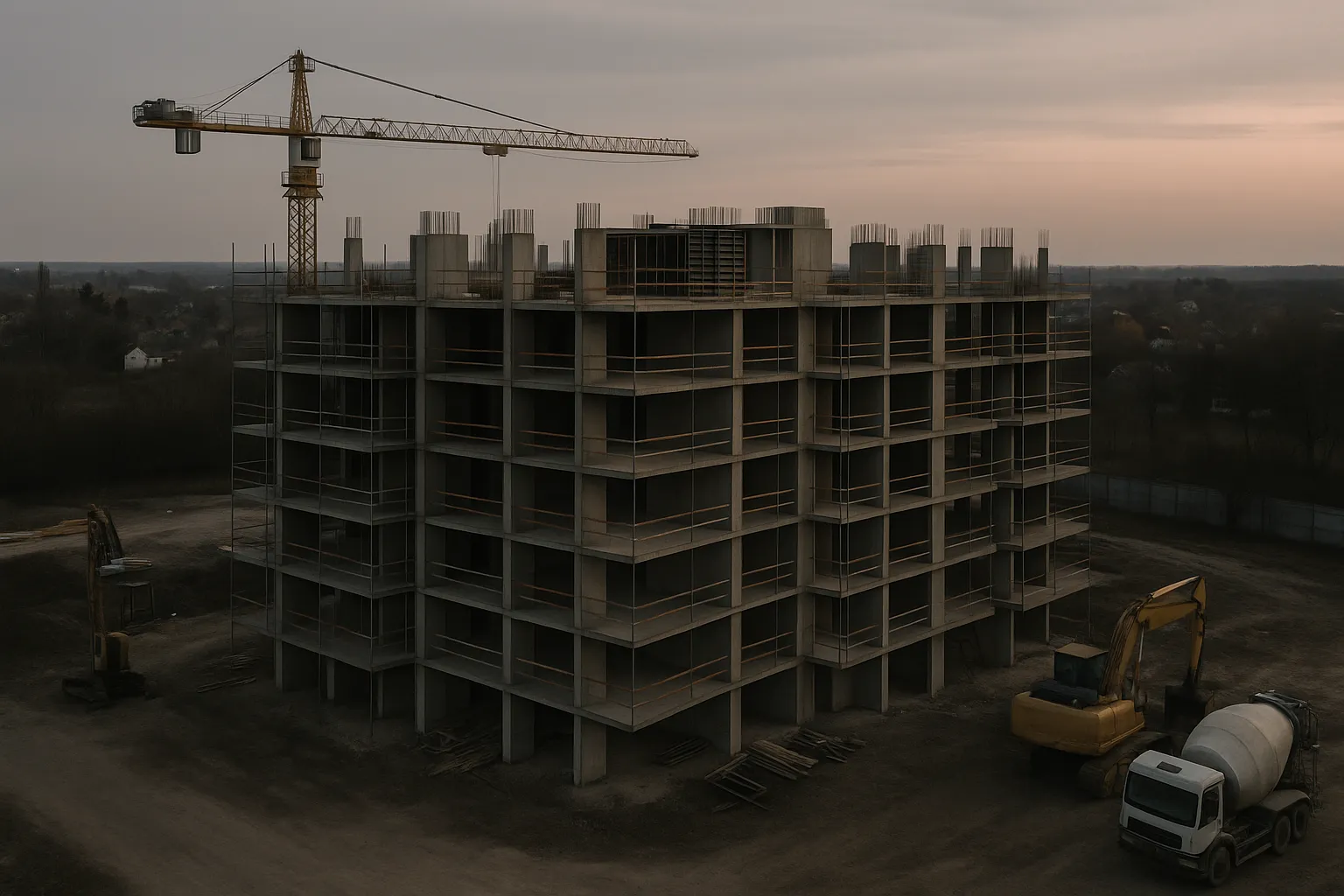
Administrators took control with no cash to pay wages or suppliers. Some of the 350 head office staff hadn’t been paid for eight weeks. A subset agreed to work unpaid until Friday in the hope a financial backer emerges. The administrators flagged redundancies even if funding arrives, reviewing which roles are “mission critical” to salvage 45 active construction sites representing 2,000 to 2,500 new homes.
What changes once the cash runs out
The group had 20,000 apartments and 7,000 dwellings in its pipeline according to its own marketing. The moment administrators stepped in, priorities narrowed to the 45 projects already under construction. Everything else, future stages, land held for development, customer deposits on contracts not yet started, became secondary.
Thousands of buyers who paid deposits are now unsecured creditors. Administrators confirmed they cannot refund those deposits. The focus is keeping partially built homes moving toward completion, which requires lenders to keep funding construction draws. That only happens if those lenders believe enough value remains in the asset to justify throwing more capital at it.
The New South Wales government declined to provide a financial lifeline. Administrators are meeting potential creditors on Friday. The tone from lenders has been described as “good,” but no commitments have been locked in. The timeline is compressed because construction sites burn cash daily, contractors, suppliers, insurance, site security all require payment whether work continues or not.
Why developer collapses accelerate this fast
Construction groups operate on thin liquidity cushions by design. Revenue comes in stages (deposit, progress payments, settlement), but costs are continuous. Most carry debt against land, work-in-progress, and corporate overheads. When a lender loses confidence, whether due to project delays, cost blowouts, or broader credit tightening, the entire structure can unravel within weeks.
Once one lender pulls support, others reassess their exposure. Suppliers move to cash-on-delivery terms or stop deliveries entirely. Staff retention collapses when payroll is missed. The time between “operating with stress” and “no option but to close” compresses to days, not months.
This isn’t unique to one company. Mid-tier developers nationally are operating in the same environment: higher refinancing costs than when they took on the debt, lenders reassessing development lending risk, and build costs that climbed faster than sale prices in many markets. The ones surviving are either cashed up, have locked in cheap debt, or are building in markets where presales are strong enough to keep lenders confident.
The catch
- $3.6bn debt: administrators inherited liabilities across land, construction loans, corporate debt, no breakdown provided yet on which tranches are secured against which assets
- 350 head office staff: some unpaid for two months, working on goodwill or already gone, cuts likely even if funding arrives
- 2,000–2,500 homes mid-build: the portion of the pipeline administrators prioritised; everything else is effectively paused or dead
- Friday creditor meeting: the effective deadline, if lenders don’t commit by then, liquidation becomes the default path
The second-order effect on Sydney supply
Every developer collapse removes not just the projects under construction, but the next stages that were banked into supply forecasts. Sydney’s housing target relies on private developers delivering tens of thousands of dwellings annually. When a group with 20,000 apartments in the pipeline exits, even if half were speculative, the gap doesn’t get filled by other builders in the short term, sites don’t transfer instantly, and lenders are more cautious after a collapse, not less.
The immediate risk is to the 2,500 homes mid-construction. If administrators cannot secure funding, those projects stall. Buyers who’ve exchanged contracts face uncertainty. Subcontractors become unsecured creditors. The assets eventually get sold, probably at a discount, and a new developer or builder steps in, but that process adds months or years to the delivery timeline.
Longer term, this tightens construction finance across the sector. Lenders recalibrate risk, which means higher equity requirements, tighter presale thresholds, or outright withdrawal from certain project types. Developers with strong balance sheets can still access capital. Marginal players cannot. That’s how a single collapse feeds into a broader supply slowdown.
What determines whether this becomes a broader pattern
Three variables: refinancing pressure on developers who took on debt in 2020–2022, lender appetite for construction lending, and whether sale prices in key markets hold or fall.
Refinancing pressure is real. Developers who borrowed at 3–4% are rolling onto 6–7%. If their projects were marginal at the original rate, they’re loss-making at the new one. Some will raise equity, some will sell assets, some will fold. The question is how many.
Lender appetite depends on loss experience. If lenders take writedowns on this case and others like it, they pull back. If they recover most of their capital because the underlying assets still have value, they stay in the market. Right now, the tone is cautious but not panicked.
Sale prices matter because they determine asset values, which determine loan-to-value ratios, which determine whether lenders keep funding. If Sydney apartments keep falling, more developers hit the same wall. If prices stabilise, the weakest players exit and the rest survive.
Red flags for the next 90 days
Watch for other mid-tier groups flagging “strategic reviews,” delaying project launches, or suddenly selling landbanks, those are early signals of liquidity stress. Watch for lenders tightening presale requirements or lifting equity thresholds for new development applications, that’s the credit channel closing before it becomes headlines.
Watch for how this case resolves. If lenders do commit funding and the active sites complete, it signals they believe the assets have value and the sector isn’t systemically broken. If they walk and the business liquidates, expect a ripple effect across other groups with similar debt structures.
For buyers with deposits on projects not yet started, this is a scenario to pressure-test. Contracts usually include clauses that let developers walk if they cannot secure finance. The deposit goes into a trust account, but if the developer collapses, you’re an unsecured creditor fighting for a refund. Ask your conveyancer what protections apply to your specific contract.
Start here
If you’re buying off-the-plan, check whether the developer is delivering other projects on time and whether presales on your building are strong enough to satisfy lender requirements, if presales are weak, the project might not proceed even if the developer stays solvent. If you’re invested in construction-exposed stocks or funds, this is a reminder that leverage cuts both ways: mid-tier developers with stretched balance sheets are vulnerable in a rising-rate environment, and the time between stress and collapse is shorter than most investors assume.
Subscribe to the newsletter for the weekly read on what’s moving markets and what it means for your next decision.
General info, not financial advice.