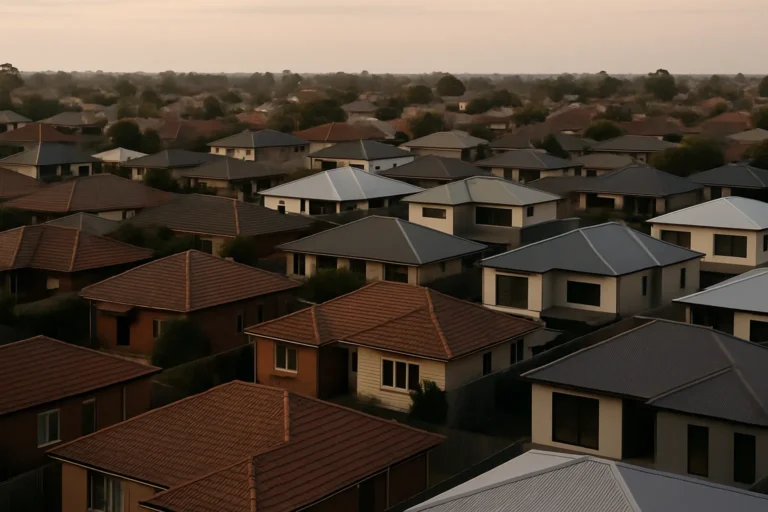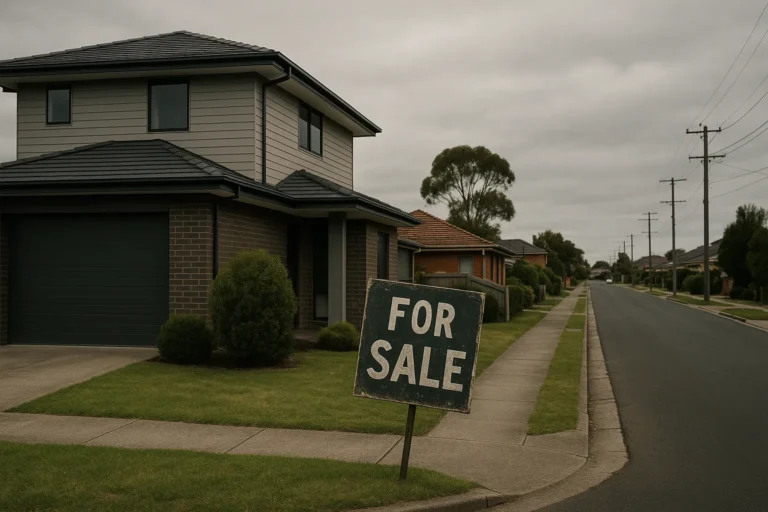
Australian house prices have dropped 3.6% from their 2026 peak, with forecasts pointing to falls exceeding 10% if the Reserve Bank lifts rates again. The decline is steepest in Sydney and other expensive markets, driven by higher borrowing costs, soft economic conditions, and the May budget’s shift on negative gearing.
For buyers who entered during or after the 2023–2026 surge, the timing is brutal. Some face construction cost blowouts on new builds, others are stuck refinancing into a weaker valuation, and a handful have become accidental landlords because selling now locks in a loss. Yet a pattern is emerging: several recent buyers are willing to absorb the hit if it resets affordability for the next cohort.
The refinancing pressure point
Buyers who purchased in the past 12 to 18 months are entering a narrow window where paper losses become real constraints. If property values fall further before they refinance, lenders may revalue the security, lifting the loan-to-value ratio and pushing the borrower into a higher interest-rate tier or requiring additional equity.
One Melbourne apartment owner, two years into a fixed-rate loan, knows repayments could jump when the term ends in 2027 if the unit’s value has slipped. A Canberra buyer who used an outer-fringe home as collateral for an inner-north purchase found himself unable to sell the first property after prices dropped, and is now servicing two mortgages while renting out a home he never intended to hold.
The common thread: they are working extra hours, delaying family decisions, and cutting discretionary spending to bridge the gap, but they are not blaming the policy shift that helped trigger the fall.
Why some owners back the slide
The willingness to accept losses is not altruism. It is memory.
Buyers who spent years locked out of the market, moving between rentals with weak tenure rights and bond disputes, see their current position as preferable even if equity evaporates temporarily. The trade is concrete: absorb a paper loss now in exchange for a market structure that does not price out the next generation entirely.
One Queensland land buyer, facing rising construction costs and a sliding end valuation, described the tension plainly: the financial hit might end up painful, but the alternative is a permanently divided housing system where renting becomes a life sentence for half the population.
The catch
- Most buyers who locked in low fixed rates before 2024 will not refinance until 2027 or 2028, giving them time to wait out the trough.
- Those refinancing in the next 12 months face the worst exposure: falling values, higher rates, and tighter serviceability tests all converging.
- If the downturn extends past 18 months, even patient holders start hitting refinancing windows, and the political tolerance for further falls may erode fast.
The policy momentum question
Prices are expected to stabilise and recover once the Reserve Bank begins cutting rates, likely in 2028. That timeline matters.
If the correction is sharp but short, recent buyers can ride it out without forced sales, and the negative gearing reforms stay in place long enough to shift investor behaviour structurally. If the downturn drags or deepens, refinancing stress spreads, and the political pressure to roll back the changes intensifies.
The risk is not that prices fall another 5 or 10 per cent. The risk is that they fall slowly enough that every refinancing cohort over the next two years faces a valuation haircut, turning paper losses into real cashflow constraints for a widening group of voters.
Who carries the cost
Long-term owners who bought before 2020 have banked years of growth, including a 26% jump in the three years to March 2023. A 10% pullback leaves them well ahead. Recent buyers who entered at or near the 2026 peak carry the full downside with none of the upside buffer.
Accidental landlords face a different bind: holding a property they planned to sell, paying two sets of mortgage interest, and taking rent from tenants they would prefer not to have, all because selling now crystallises a loss that refinancing later might avoid.
For these buyers, the maths is a rolling decision tree. Each quarter of falling prices shifts the least-bad option. Each rate hike from the Reserve Bank resets the calculation. The outcome depends on variables they cannot control and a recovery timeline no one can promise.
What happens next
If inflation stays elevated and the Reserve Bank hikes again in late 2026 or early 2027, the 10% fall scenario moves from forecast to reality. Serviceability buffers tighten further, and the cohort refinancing in that window faces the worst combination: reduced equity, higher rates, and slower wage growth relative to repayments.
If inflation cools faster than expected and rate cuts arrive in 2027 instead of 2028, the trough is shallower and shorter, and most recent buyers emerge without forced sales. The policy reforms survive their first real test, and the investor mix shifts toward new builds as intended.
The scenario in between is the one to watch: a grinding, 18-month slide that does not break the market but spreads refinancing pain wide enough to turn recent buyers from policy supporters into critics. That is when the political trade-off becomes harder to hold.
For more on the refinancing variables that determine whether buyers can wait out a correction, see Mortgage stress Australia: do deficits drive rates, or is it RBA?. If you are weighing a purchase during a downturn, Co-housing Australia: from lifestyle fringe to affordability strategy covers alternative models that soften entry cost.
Start here: if you are refinancing in the next 12 months, run the numbers on a 10% valuation drop and a 50-basis-point rate rise. Know your LVR floor and your cashflow limit before the bank does.
Subscribe to the newsletter for weekly updates on rates, refinancing windows, and policy shifts as the correction plays out.
General info, not financial advice.