Australia’s housing market outlook has shifted from modest growth to stagnation in 2026, with Commonwealth Bank economists now expecting national dwelling prices to finish the year flat. That’s down from a 3 per cent rise forecast at Budget time and 5 per cent growth predicted in March.
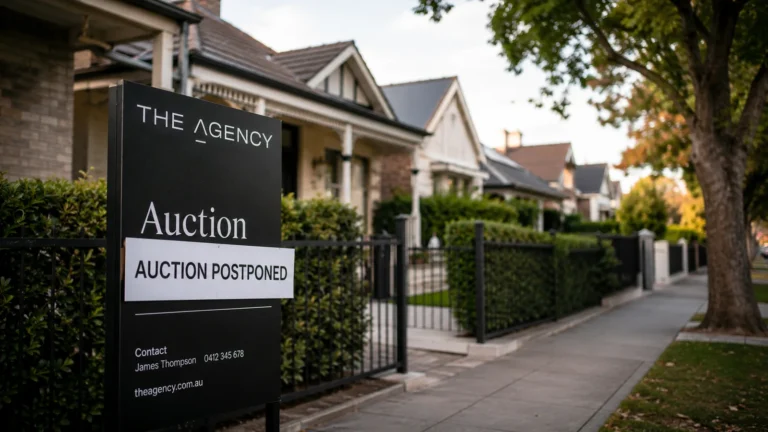
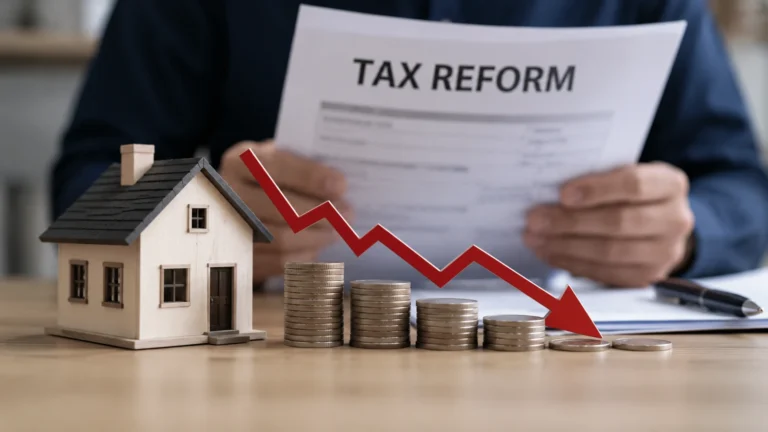
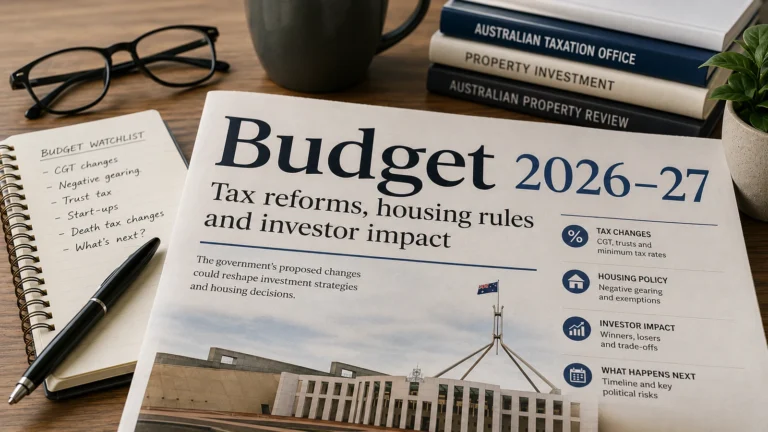
The downgrade reflects a faster-than-expected market reaction to the Federal Budget’s negative gearing and capital gains tax changes, which have compounded an already weakening trend. Auction clearance rates have been sliding since the Reserve Bank started lifting rates, price growth has slowed across most capital cities, and sales volumes have softened. The tax changes didn’t create the slowdown but they’ve accelerated it.
Where the weakness is showing up
Auction clearance rates are running well below 2025 levels. Homes are taking longer to sell and sales activity has pulled back. Price growth has slowed in every capital city, with Sydney and Melbourne recording outright falls. Perth, Brisbane and Adelaide are still growing but at a slower pace than earlier in the year.
Within cities, higher-priced areas have weakened the most. Parts of Sydney’s eastern suburbs and north-west, along with Melbourne’s inner and outer east, have seen sharper price declines. These are the segments where investor activity and borrowing capacity tend to be more sensitive to policy shifts and serviceability constraints.
How lending is expected to respond
The slowdown is already showing up in housing credit data and is likely to deepen over 2026, particularly among investors. New investor lending is forecast to fall sharply, with loan volumes running at around half of late 2025 levels. Three forces are behind the pullback: weaker expected returns, less borrowing power, and buyers simply holding off to see what happens next.
Owner-occupier borrowing is set to ease too, though that is driven more by rising interest rates than the tax changes. Investor credit growth is forecast to trough at around 3.5 per cent, with owner-occupier growth bottoming at around 5.5 per cent.
For context, Sydney property investors have already frozen activity as the tax changes hit home, and the trend is now broadening across other markets.
National dwelling prices: flat in 2026 (down from 5% forecast in March)
Investor lending volumes: forecast to halve from late 2025 levels
Investor credit growth trough: 3.5%
Owner-occupier credit growth trough: 5.5%
What could derail the base case
The main risk is a sharper near-term downturn if sentiment deteriorates faster than lending data suggests. Auction clearance rates are a leading indicator and they’ve already weakened significantly. If buyers pull back further or if higher-priced segments see distressed selling, the flat-price forecast could turn into a modest decline.
On the upside, if the Reserve Bank cuts rates earlier or more aggressively than currently priced in, borrowing capacity would improve and demand could stabilise sooner. Population growth also remains strong, which puts a floor under rental demand and limits how far vacancy rates can rise.
Another variable is supply. If developers pause new projects in response to weaker demand and higher financing costs, the medium-term supply-demand balance could tighten again. The SMSF borrowing ban has already put pressure on smaller development pipelines, and broader credit tightening could amplify that effect.
The 2027 recovery scenario
Despite the softer near-term outlook, prices are expected to stabilise and begin recovering in 2027. Lower prices and interest rate cuts should ease borrowing constraints, while higher rental yields are likely to bring investors back into the market.
The tax changes are viewed as a one-off adjustment to price levels rather than a permanent shift in the growth trajectory. Over the longer term, housing outcomes will continue to be driven more by interest rates, supply pipelines and population growth than by policy tweaks to negative gearing or capital gains treatment.
That said, the adjustment period matters. If investors stay on the sidelines for an extended period, rental supply could tighten and affordability pressures could worsen for tenants even as buyer conditions improve.
Practical implications for decision-makers
If you’re an investor, the case for waiting has strengthened. Lower prices and higher yields in 2027 would improve entry points, and borrowing costs should be lower as well. Rushing to buy now means locking in today’s serviceability constraints and risking short-term capital losses in segments still adjusting.
For owner-occupiers, the calculus is different. Interest rates matter more than tax policy, and if you’re buying to live in rather than for returns, timing the bottom is less critical. Focus on serviceability buffers and whether you can handle rates staying higher for longer.
Upgraders and downsizers face a tactical decision. If you’re selling a higher-priced property and buying in a lower price bracket, the divergence in price performance across segments could work in your favour. Conversely, if you’re upgrading into premium areas that have already softened, waiting a few more months could save you more than the cost of higher borrowing rates in the interim.
What to watch over the next six months
- Auction clearance rates: if they fall below 50 per cent in Sydney or Melbourne, it signals distress rather than normal adjustment.
- Investor lending volumes: monthly ABS data will show how fast the pullback is happening and whether it’s accelerating.
- Rental vacancy rates: if vacancies start rising in previously tight markets, it confirms demand is weakening and yields are under pressure.
- RBA forward guidance: any shift in language around rate cuts will immediately change borrowing capacity expectations and buyer sentiment.
- Sales volumes in high-price suburbs: areas already flagged as overvalued are the canary in the coal mine for how deep this adjustment goes.
If you want weekly updates on where the housing market outlook is heading, subscribe to Australian Property Review.
General info, not financial advice.