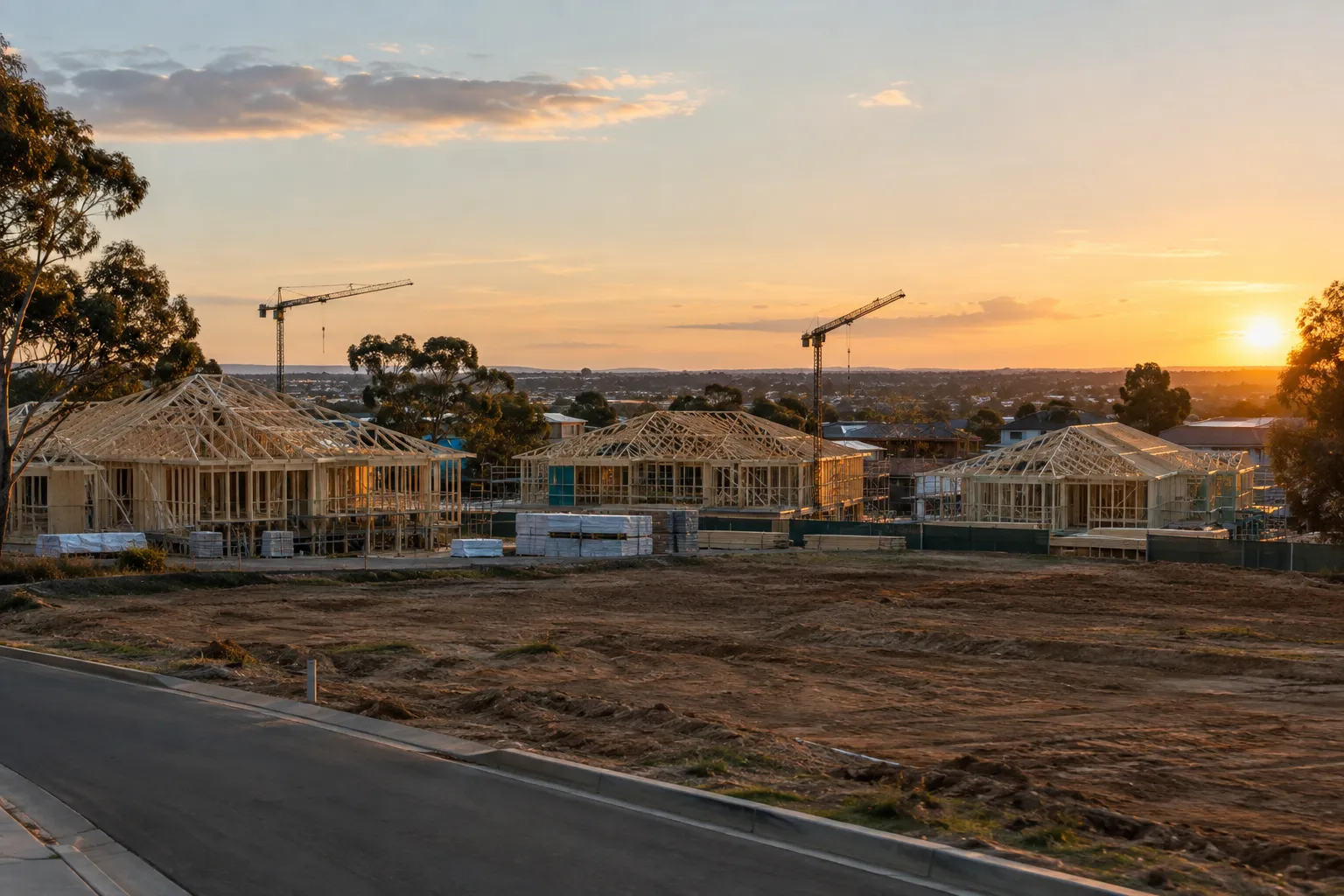
Home building starts rose 7% in the June quarter. Approvals fell 6.1% in August. Those two numbers point in opposite directions, and the second one matters more for what gets built over the next two years.
Approvals usually come before construction. When they drop, the starts figure tends to follow. So the June quarter lift looks more like a bounce off a soft base than a turn in the cycle.
Key numbers
- Starts on new homes: up 7% in the June quarter
- Detached house starts: up 11.3%
- Higher-density starts: up 0.6%
- Approvals in August: down 6.1%
- Projected miss on the 1.2 million home Housing Accord goal: 262,000 homes
Why the 7% headline flatters the picture
The lift came almost entirely from detached houses, which rose 11.3%. Higher-density starts edged up only 0.6%.
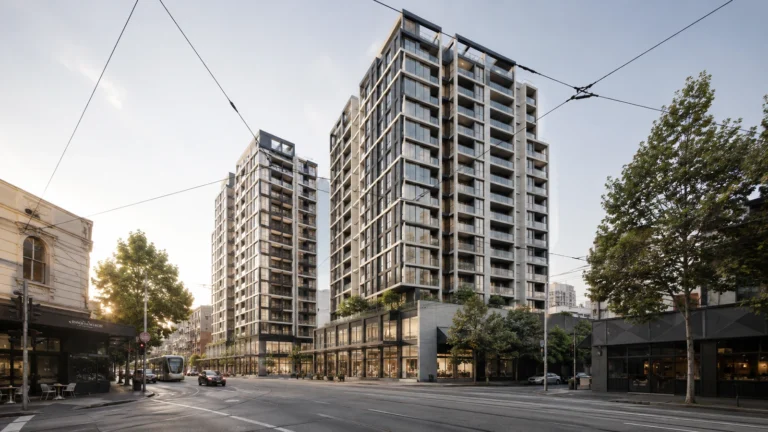
That split matters. Apartments and townhouses have to carry a large share of any plan to build 1.2 million homes, because land and infrastructure constraints limit how far detached housing can stretch in the big cities. A near-flat result in that category is the weak link.
Here’s the catch: a strong quarter for houses does not offset a stalled medium-density pipeline. The homes are different, they land in different places, and they suit different buyers and renters.
A 262,000 home gap, in plain English
A peak building body now says Australia will miss the Housing Accord target by 262,000 homes. A bank economist has agreed the target looks out of reach.
That is roughly one in five homes missing from the original goal. It is a forecast, not a certainty, and the group’s own five-year projections for housing, civil works and non-residential building were trimmed compared with its March outlook. But the direction is clear.
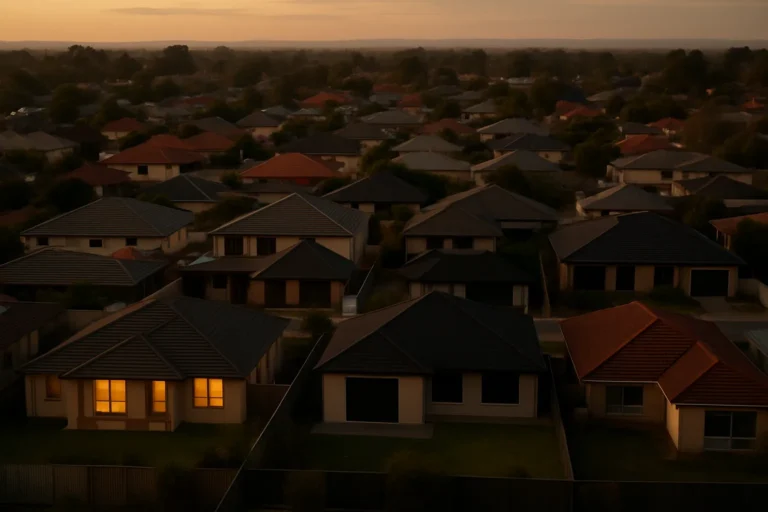
What does a shortfall of that size do? It does not show up as one dramatic event. It shows up slowly, in tighter vacancy, firmer rents and fewer options for buyers who want something new.
What fewer homes means for rents
Rents respond to supply with a lag. If completions run below household formation for several years, vacancy stays tight and landlords keep pricing power. Tenants absorb the gap first.
We have already seen this play out in pockets. Sydney unit rents hit a record as tenants reached their limit, and Perth’s rental crisis persisted even as house prices fell. Falling values did not fix the rental squeeze because the squeeze is about stock, not sentiment.
A thinner pipeline pushes that dynamic further out. The risk is not a sudden spike. It is rents that stay high for longer than the market currently expects.
Why builders say the pressure is policy and rates
The group’s chief executive pointed at small firms, which make up 98% of the industry. She cited the tax office’s credit card ban, coming trust changes and shifts affecting property investment, then added the federal budget, rising rates and global uncertainty on top.
The cash rate has been lifted four times this year, with at least one more increase expected by mid-2027. Higher rates raise financing costs for builders and cut borrowing capacity for buyers at the same time. That is a squeeze from both sides.
Capital city dwelling prices slipped 1.2% in September, a 4% slide over three months and the sharpest such drop in data back to 1980. Falling values can make a project harder to fund, because lenders and buyers both want a bigger margin of safety before committing.
Worth noting: cost pressure is not only about interest. The datacentre construction boom is squeezing Australian builders by competing for the same trades and materials. Non-residential building ran 12.1% above the prior year, so that competition is real.
What it means for buyers and brokers
Fewer new dwellings could limit off-the-plan and construction options while borrowing capacity stays squeezed. For a buyer who was counting on a new build, the choice set may narrow just as finance gets harder to secure.
For investors, the tension is obvious. Falling values and a thin supply pipeline pull in different directions. Tight rental supply supports income, but weaker prices and higher rates test cashflow and serviceability. Pressure-test your numbers at a rate above today’s, and keep a buffer for vacancy.
Three things to watch
- Approvals over the next two or three months. One weak month can reverse. A run of them locks in lower starts.
- Higher-density starts. If this category stays near flat, the Accord gap widens.
- The next rate decision. Another increase raises costs for builders and trims buyer capacity again.
The June quarter lift is real, but it describes the past. Approvals describe what comes next, and they are pointing lower.
Subscribe to the newsletter for the weekly read on supply, rates and what they mean for your next move.
General info, not financial advice.