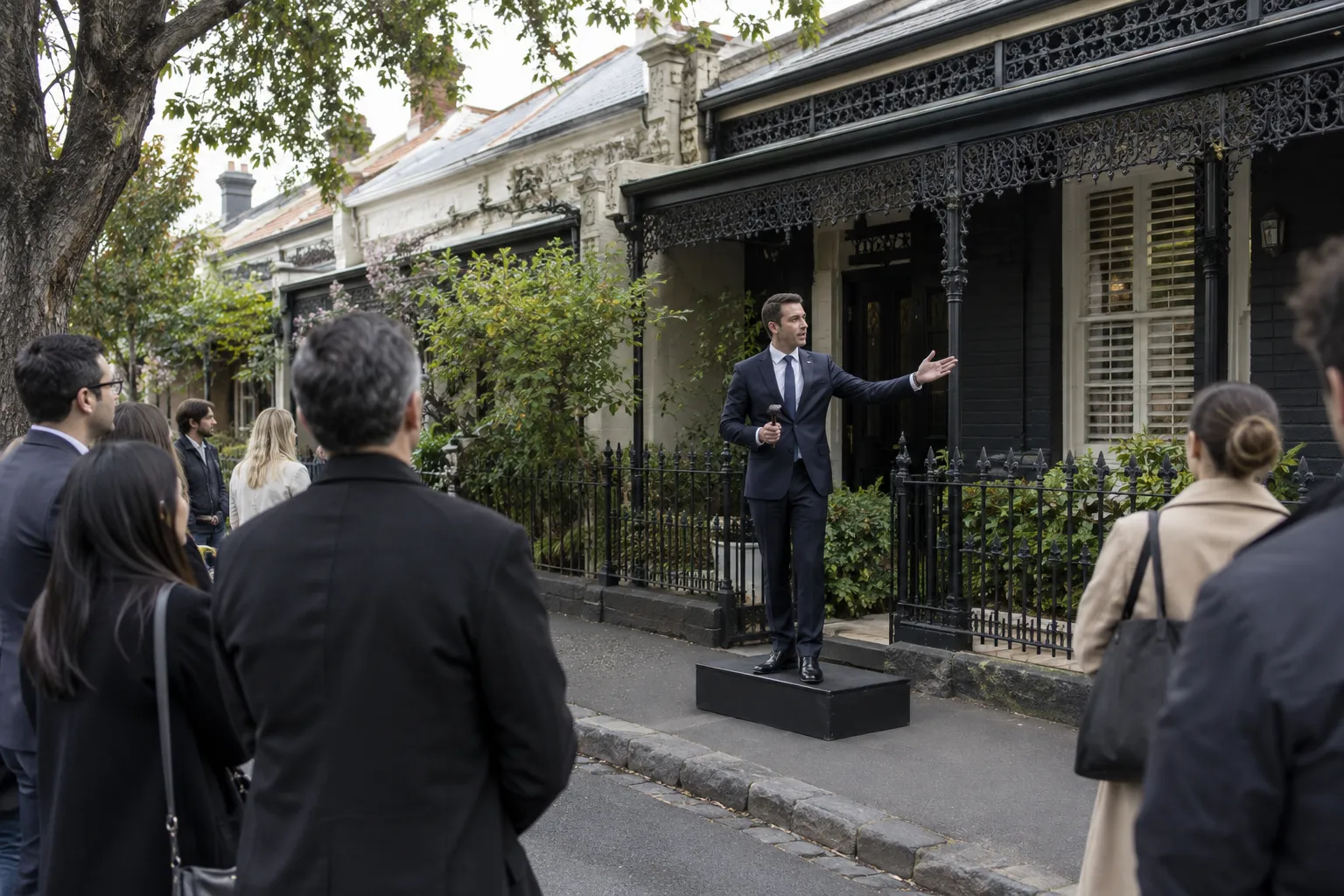
Some Melbourne home sellers are not waiting to be told. Under new Victorian laws aimed at making the property market easier to navigate, a handful of vendors have already started publishing their reserve prices ahead of auction. It is a small group so far, but it tests an old assumption: that the reserve is a secret worth guarding.
The timing matters. Auction conditions are soft across the country, and clearance rates have again sat below 50 per cent. In that setting, the question is not whether transparency is fair. It is who actually benefits.
What the new Victorian rules are trying to fix
The public detail on the reforms is thin, so it is worth being careful about what we claim. The stated aim is to make buying and selling easier to navigate. For auctions, that points at a long-running grievance: buyers turn up to a campaign with no firm idea of where the vendor’s price sits, and the guide range can drift while the campaign runs.
Publishing a reserve removes one layer of guesswork. Buyers know the floor. They can decide before auction day whether a property is within reach, rather than discovering at the fall of the hammer that it was never going to sell at the quoted range.
Why a falling market changes the maths
In a rising market, a published reserve is mostly a non-event. Competition pushes prices above it, and the number becomes a footnote. In a falling market, it behaves differently.
Here is the mechanism in plain English:
- The reserve becomes an anchor. If buyers believe prices are drifting lower, a published number tells them the most the vendor is hoping for, or close to it. Bids cluster near it rather than reaching above it.
- Passed-in properties carry a visible scar. A property that fails to meet a public reserve is a known failure. Buyers can then negotiate afterwards knowing the vendor has already been refused at that level.
- Sellers lose the bluff. Some vendors rely on an optimistic guide and a private reserve to draw interest. Publishing removes that option.
That last point cuts both ways. It also stops a seller from setting a reserve that is quietly well below the advertised range, which is what many buyers suspect already.
Who gains and who loses
The obvious winner is the informed buyer. Knowing the floor saves time, and in a soft market buyers already hold most of the leverage. First-home buyers waiting for lower prices are a good example of a group that gets more information without having to commit to anything.
The vendors who publish early may be the ones who gain most from credibility. A realistic, public reserve signals a motivated seller with sensible expectations. In a market where unrealistic pricing is a common reason for a failed campaign, that can attract genuine bidders rather than curious ones.
The losers are harder to pin down. Sellers with high expectations lose the ability to fudge. Agents who rely on a flexible guide to generate early interest lose a tool. And vendors in weak segments may find that a public reserve simply confirms what buyers already suspected.
The catch: transparency does not create demand
Here is the part most commentary skips. Publishing a reserve tells buyers where the vendor stands. It does not give them more money or more confidence. Borrowing capacity is still tight, and the broader rate and jobs picture is weighing on household decisions.
So a clearer price signal may mean a more honest market, not a busier one. Price discovery could improve even as the number of transactions stays low. Those are different outcomes, and a policy that delivers the first should not be sold as delivering the second.
There is also a sampling problem. The vendors publishing now are volunteers. They are likely to be more realistic and better advised than the average seller, so early results may flatter the idea.
How the commentary is splitting
Coverage of the reforms has divided along predictable lines. One camp sees a long-overdue push to level the field for buyers. The other sees a reform that sounds good but changes little when demand is the real constraint. Both have a point. Transparency helps the buyer who is already in the market. It does little for the buyer who is waiting on the sidelines for a reason that has nothing to do with the reserve.
What to look for as more sellers opt in
Three signals will show whether this matters:
- Gap between reserve and sale price. If published reserves are met or exceeded more often than private ones, the policy is helping vendors set credible numbers.
- Withdrawal and pass-in rates. A fall in properties passed in at auction would suggest better-aligned expectations. A rise would suggest sellers are being exposed.
- Days on market after a pass-in. If post-auction negotiations speed up, the visible reserve is doing real work.
For context on how auction results relate to the wider cycle, our guide on house prices, downturns and auctions covers the mechanics.
If you are selling in Melbourne this season, ask your agent a direct question: what would a public reserve tell buyers about this property, and are you comfortable with that answer? If the honest response is no, the problem is likely the price, not the disclosure.
Subscribe to the newsletter for the weekly property signal.
General info, not financial advice.