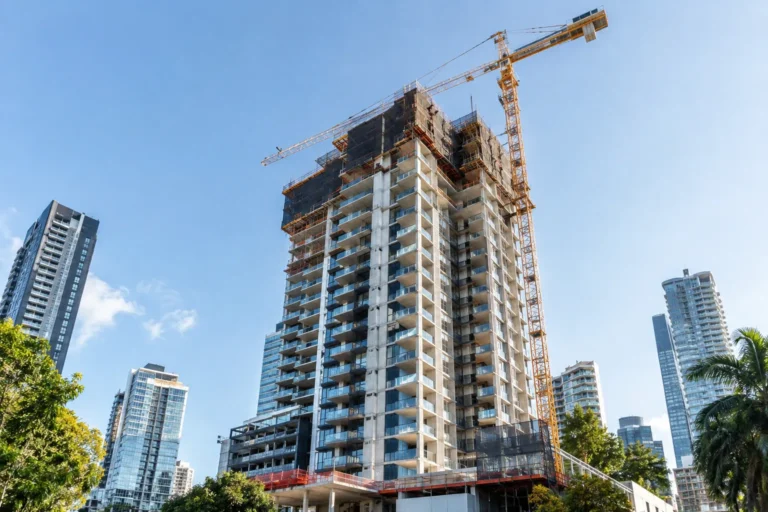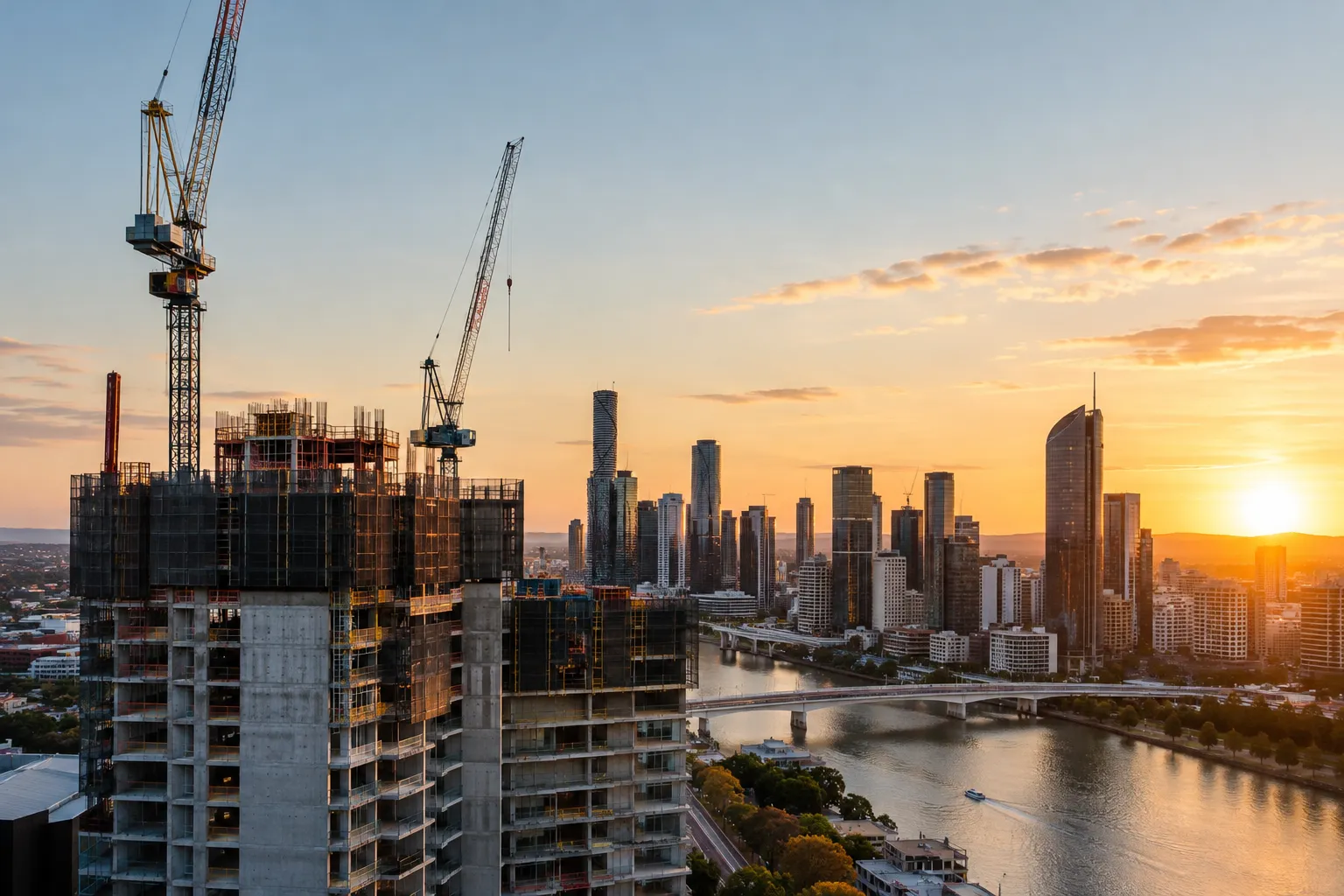
A developer with a $1.4 billion Brisbane luxury project is reportedly racing to secure funding while building costs squeeze the numbers. That is a telling detail. If a well-resourced group is feeling the pressure, smaller players are likely feeling more of it.
This is based on a headline-level report only, so the finer detail of the deal is not something we can verify. The wider mechanics, though, are well understood across Australian development, and they matter for anyone watching Brisbane’s pipeline.
Why a big project still has to chase money
Size does not guarantee easy funding. Lenders look at the same few things on every development: how much of the project is pre-sold, how firm the construction price is, and how much equity the developer has put in.
When build costs rise, the margin on a project shrinks before a single unit is sold. Lenders then ask for more pre-sales, more equity, or both. That is the squeeze.
- Higher costs mean a thinner profit buffer.
- A thinner buffer makes lenders more cautious.
- More caution means longer timelines to reach financial close.
Luxury is not immune
High-end product is often assumed to be safer because buyers have deeper pockets. But the top end of the market is a smaller pool of buyers, and pre-sale targets still have to be met before most lenders release money. A project priced at the premium end can stall if enough contracts do not sign on time.
Key numbers
- Reported project value: about $1.4 billion
- Location: Brisbane
- Core pressure points: construction costs, pre-sales, debt availability
What the cost squeeze does to the pipeline
Brisbane and the wider Queensland market are planning for a heavy run of demand ahead of the 2032 Olympic and Paralympic Games. That demand expects supply to show up on time. Developers, though, can only start building when the finance stacks up.
Here is the catch. If projects are delayed or scaled back because they cannot clear funding hurdles, the homes and hotel-style stock that infrastructure planners are counting on may arrive later than hoped. For a deeper look at how approvals and building costs interact, see our guide to housing supply, approvals and building costs.
Who carries the risk
Developers carry construction and funding risk first. Lenders carry credit risk. Buyers who sign off-the-plan contracts carry timing and valuation risk, because the price they agreed to years earlier may not match the market at settlement.
That last point deserves attention. If costs keep rising and values soften, settlement valuations can come in below contract prices. Buyers can then face a gap between what they agreed to pay and what the lender will lend against.
What could derail this view
There are two main unknowns. Construction cost growth could ease, which would restore some margin and relax lender caution. Or demand could strengthen enough that pre-sales fill quickly, which would unlock finance faster than expected. Either would soften the squeeze. Neither is certain.
Test the project, not the brochure
For investors and buyers looking at Queensland off-the-plan stock, the key is to test the project, not the brochure. Ask how much is pre-sold, who the lender is, and whether the construction contract is fixed price. A well-funded project is a safer bet than a glossy one still hunting for money.
If you want the weekly signal on property and finance, subscribe to the Australian Property Review newsletter.
General info, not financial advice.