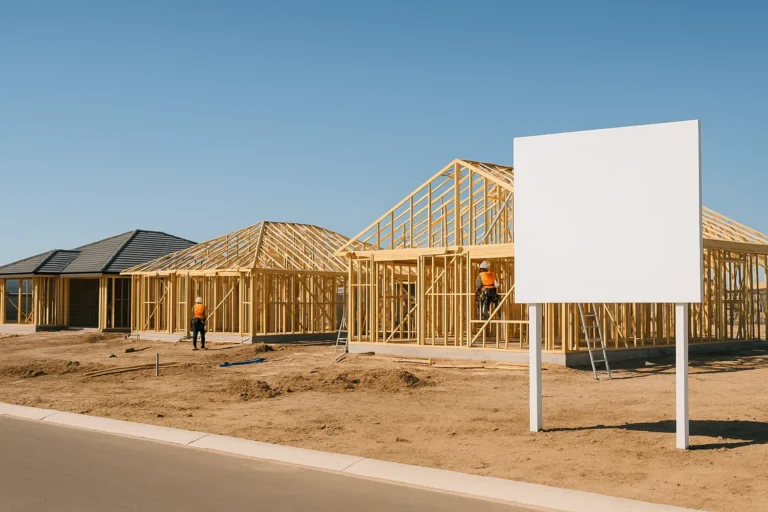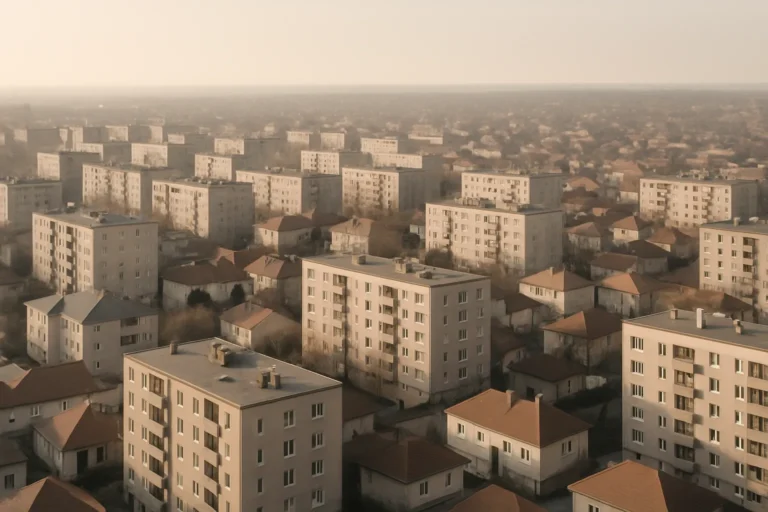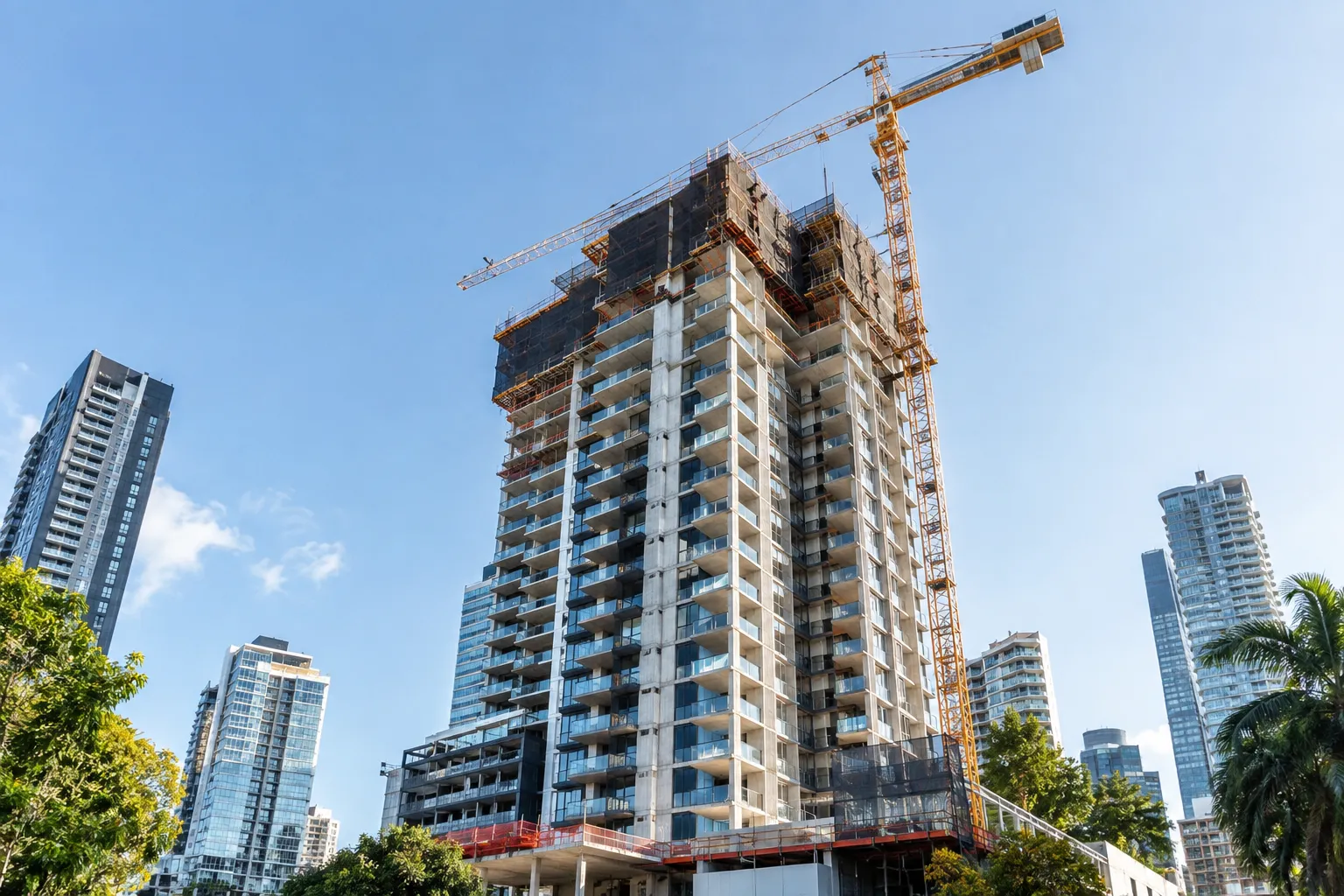
Queensland’s housing target collides with a stubborn economic reality: the buildings that would actually solve the shortage don’t pencil out anymore. Developers are walking away from high-volume projects because apartment construction costs have made small units a commercial write-off, leaving valuable inner-city sites underutilised at exactly the wrong moment.
The numbers expose the problem. A site zoned for 12 storeys could physically hold 100 apartments if you built smaller units, but the same site with 30 large luxury apartments returns better margins, so that’s what gets built. The incentive structure is backwards: profitability increases as unit count falls, which means every delivered project adds less supply than the site could have carried.
Why small apartments stopped working
Construction costs rising at 9 per cent annually have broken the feasibility model for compact one- and two-bedroom units. Fixed costs, site acquisition, approvals, base building, car parking, don’t shrink when you reduce apartment size, so a 50-square-metre unit carries nearly the same per-unit overhead as a 120-square-metre apartment. Revenue per square metre has to climb fast enough to cover that base load, and in the sub-100-square-metre segment, it often can’t.
The result: developers either abandon the site, land-bank it, or pivot upmarket to larger floor plates where sale prices can absorb the cost structure. All three outcomes reduce the housing stock that actually gets delivered.
The Olympic workforce drain hasn’t started yet
Queensland’s construction labour pool is already stretched, and the 2032 infrastructure pipeline will pull workers out of residential projects before the housing target is met. Government infrastructure traditionally pays premium rates and offers longer job security, which makes it hard for apartment builders to hold onto experienced trades once major Olympic works ramp up.
Construction labour shortage Australia: 141,000 workers short as unemployment rises shows the national picture, and Queensland’s position is tighter than the average. When Olympic projects start competing for the same subcontractors, the time cost of residential builds will stretch further, adding months to delivery schedules that are already running 18–24 months from DA approval to practical completion.
That time cost feeds directly back into construction costs. Every extra month on site increases interest carry, site management overheads, and exposure to another round of material price inflation. The longer a project takes, the less margin is left at settlement, which reinforces the luxury bias: you need bigger sale prices to cover the extended holding period.
The density mismatch
Current planning controls in many Brisbane and southeast Queensland precincts cap heights at levels that were set before the 2032 target existed. A 12-storey limit made sense in 2015 when population growth was modest and construction costs were predictable. It doesn’t make sense now, when the state needs to deliver 53,500 homes per year to meet the target and apartment construction costs have structurally shifted upward.
The practical gap: a 20-storey building takes roughly the same time to construct as a 12-storey building once you’re past the podium and into the residential floors. The per-unit cost falls as you add floors, because you’re spreading fixed costs (foundations, lift cores, services) across more apartments. But if the planning scheme won’t let you go past 12 storeys, you can’t capture that efficiency gain, so the only way to make the project viable is to reduce unit count and go upmarket.
The catch
- A 12-storey building capped at current planning limits typically delivers 60–80 apartments in a well-located site.
- The same site at 20 storeys could deliver 100–140 apartments with lower per-unit construction costs.
- But rezoning takes 18–36 months, and there’s no certainty the application will succeed.
- So developers either sit on the site or build the luxury version now, locking in the lower yield.
The policy settings that aren’t helping
Queensland’s planning system still treats each rezoning application as a contested discretionary decision, which adds time risk that debt-funded developers can’t carry. The longer an application sits in the system, the more holding costs accumulate, and the higher the contingency buffer needs to be at financial close. That contingency comes out of margin, which again pushes projects toward fewer, larger, more expensive units.
Some councils have moved to code-assessable pathways for certain precincts, but the coverage is narrow and the criteria exclude most inner-city infill sites. The result is a two-speed system: greenfield sites on the urban fringe can move faster through approvals, but they don’t solve the accessibility problem because they’re distant from jobs and services. The infill sites that could deliver apartments near employment nodes are stuck in a slower, higher-risk approvals track.
Housing construction collapse: why approved projects won’t get built covers the national approvals-to-construction gap, and Queensland’s DA approval rate has actually improved over the past 18 months, but approvals are a leading indicator, not a delivery metric. A project approved in Q1 2025 won’t reach practical completion until mid-2027 at the earliest, which means anything starting construction now is already too late to materially affect supply before the 2032 timeline starts binding.
What would change the equation
Three levers could shift the economics back toward higher-volume projects: faster, more certain approvals that reduce holding costs; direct cost relief (GST carve-outs, council fee waivers) that lower the per-unit breakeven point; or a shift in buyer demand that lets smaller apartments command higher per-square-metre prices. The first two require government action. The third depends on whether affordability constraints eventually force buyers to accept compact apartments as the only accessible option, which is happening in Sydney and Melbourne, but Queensland’s price ceiling is still low enough that many buyers can stretch to a house-and-land package on the fringe instead.
The risk: if policy settings don’t change and apartment construction costs keep rising faster than sale prices, the luxury bias will worsen. Developers will keep building 30-unit projects on sites that could hold 100 units, and Queensland will miss the target by a measurable margin that can’t be blamed on demand, the demand is there, but the buildings that would meet it don’t pencil out.
Next twelve months
Base case: construction costs rise another 7–9 per cent, Olympic infrastructure starts pulling workers out of residential projects by Q3 2025, and apartment construction timelines stretch to 26–28 months. Developers respond by pausing marginal projects and focusing capital on larger, safer luxury builds. Supply growth slows further.
Upside: state government introduces as-of-right zoning for 18–20 storey buildings within 800 metres of train stations, cutting approval timelines to under six months. Faster approvals reduce holding costs enough to make smaller units viable again, and volume picks up.
Downside: cost inflation accelerates past 9 per cent as Olympic works compete for materials, and banks tighten presale requirements in response to weakening settlement rates. Mid-tier developers exit the market entirely, leaving only the largest groups with balance-sheet strength to carry projects through extended construction periods.
What this means if you’re buying or holding
If you’re looking at an apartment in a Brisbane or Gold Coast precinct where new supply is constrained by planning limits, the luxury bias works in your favour, there won’t be a flood of new competing stock, because developers can’t make smaller units work. That supports values in the medium term, but it also means affordability won’t improve, so if you’re priced out now, you’ll likely stay priced out.
If you’re holding a development site and waiting for a rezoning, the clock is running. Every quarter you wait is another quarter of holding costs, and if Olympic infrastructure pulls trades away before your project starts, your construction timeline just stretched by six months. Either push the DA through now or sell to a group with the balance sheet to carry the time risk.
For investors comparing Brisbane apartments to Sydney or Melbourne: Brisbane’s construction cost problem is newer and less severe, which means the luxury bias hasn’t fully played out yet. The next 18 months will show whether policy settings adapt fast enough to keep smaller apartments viable, or whether Brisbane follows the same path as Sydney, where new apartments under 70 square metres basically stopped getting built after 2018.
Subscribe to the weekly briefing for updates on planning changes and construction cost tracking.
General info, not financial advice.