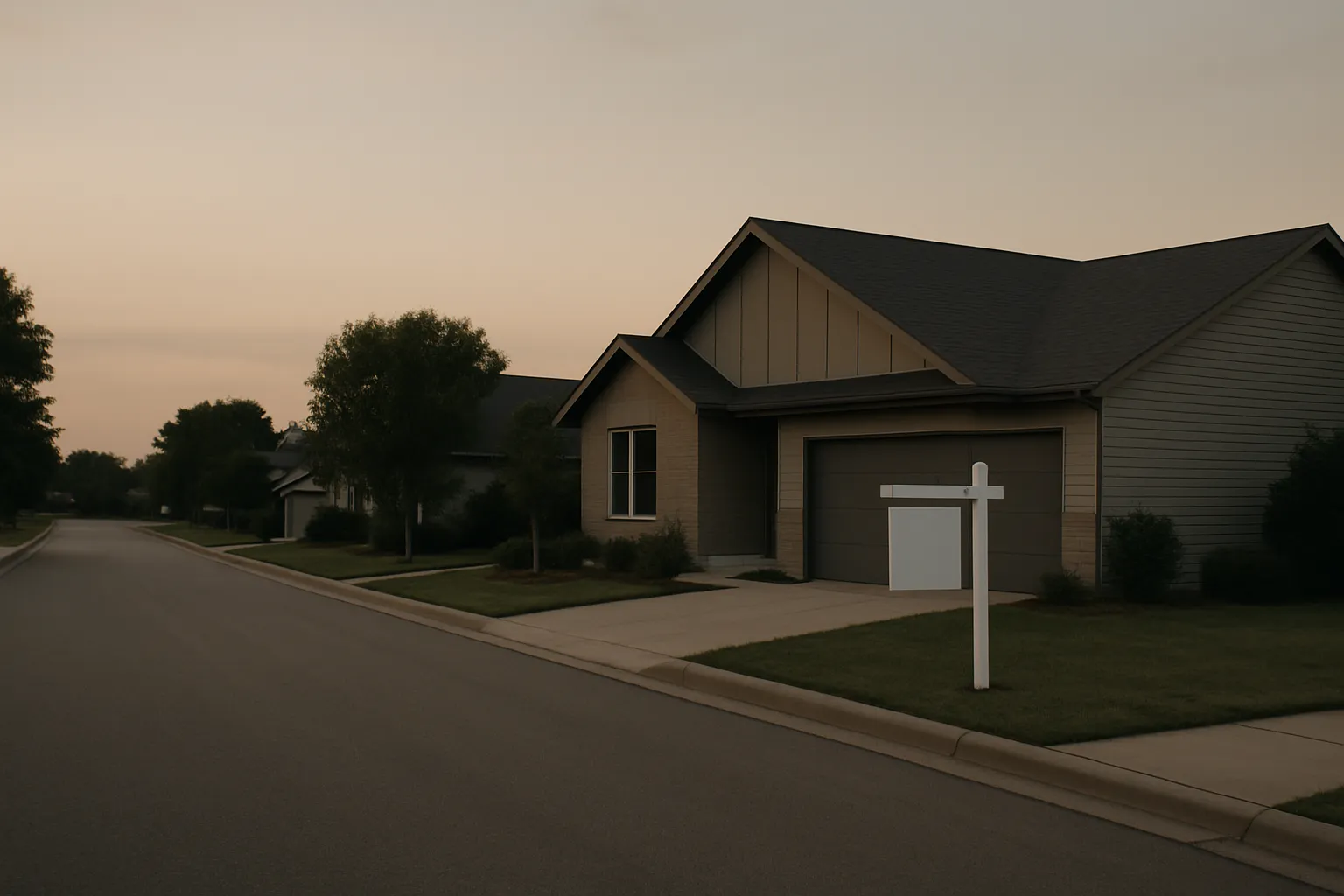
Home buyers are pulling back exactly when conventional wisdom says they should be jumping in. Prices are sliding, listings are scarce, and the setup looks like a bargain-hunter’s dream. Yet activity has stalled.
The gap between textbook opportunity and real behaviour comes down to confidence, or the absence of it. When markets fall, the rational play is to buy the dip. In practice, falling prices signal danger, not discount.
Why rational behaviour breaks down
Buyer psychology flips in a declining market. A 5% price drop doesn’t read as “I’m getting value”, it reads as “what if it drops another 5%?”
Three forces drive the freeze:
- Loss aversion: The pain of overpaying by $50,000 outweighs the pleasure of underpaying by the same amount. Buyers wait to be certain they’ve hit the bottom.
- Anchoring to the peak: Properties that sold for $1.2 million six months ago now list at $1.1 million, but buyers remember the higher number and assume further falls are coming.
- Herd behaviour in reverse: When neighbours and colleagues are sitting out, pulling the trigger feels reckless, even if the fundamentals stack up.
The result is a standoff. Sellers who must move drop their price and find few takers. Sellers who can wait pull their listings. Buyers who want in convince themselves to wait another quarter.
The overpaying problem
Fear of mistiming the bottom is rational when you’re locking in 25 years of debt. The penalty for buying six months early, paying 3% more than you needed to, can cost tens of thousands in real terms.
But the penalty for waiting also compounds. Every quarter spent renting is capital you didn’t build, and if rates fall or sentiment turns before you move, the window closes fast. Falling markets don’t stay frozen, they either stabilise or accelerate down.
The practical risk isn’t picking the exact bottom. It’s whether the property you can afford today will still be available, and at what price, in six months.
The catch
Buyers optimising for the perfect entry point often end up buying into the recovery at higher prices than they would have paid during the freeze. The bottom reveals itself only in hindsight.
The lack of urgency
In a rising market, urgency is manufactured by competition. Buyers move fast because someone else will. In a falling market, that pressure evaporates.
Listings sit longer. Auctions pass in. Open homes are quiet. Agents talk about “considered buyers” and “taking their time,” which is code for inactivity.
The absence of urgency isn’t irrational, it’s a signal that buyers don’t trust the current price to hold. They’re waiting for proof the market has stopped falling, which only comes from other buyers stepping in first.
This is the paradox of the buyer’s market: everyone wants confirmation before they move, but confirmation only arrives when enough people move without it.
What restarts buyer activity
Markets don’t thaw from sentiment alone. Three conditions usually break the freeze:
- A circuit-breaker event: A rate cut, a policy shift, or a supply shock that reframes the narrative. Buyers need a reason to believe the worst is priced in.
- Forced transactions: Life events, divorce, job relocation, inheritance, push people into the market regardless of sentiment. These buyers set the floor.
- Value hunters with long horizons: Investors and upgraders who can absorb short-term volatility start nibbling. Their activity stabilises prices, which brings confidence back.
The restart is rarely a single moment. It’s a gradual thaw, suburb by suburb, price tier by price tier. Premium markets can stay frozen while entry-level properties start moving again.
Trade-offs for buyers deciding now
If you’re weighing a purchase, the question isn’t whether prices have bottomed, it’s whether the property meets your needs at a price you can service.
Upside of moving now: less competition, more negotiating room, and the option to lock in rates before the next cycle turns. If you’re planning to hold for seven-plus years, mistiming the bottom by a few months matters less than getting the location and cashflow right.
Downside: if prices fall another 5 to 10%, you’ll wear that on paper for a year or two. If your employment or income is uncertain, that’s a real risk.
Base case for the next six months: listings stay thin, prices drift lower in fits and starts, and transaction volumes remain weak until either rates move or a seasonal lift brings buyers back in spring. Suburbs with high forced-sale activity (mortgagee sales, deceased estates) will show deeper discounts than tightly held areas.
Where to look next
Watch auction clearance rates and days on market in your target area. If clearance rates tick up two weeks in a row, or if properties start moving faster, it’s a signal sentiment is shifting.
Track vendor price adjustments. If asking prices stop falling or start holding steady, it means sellers believe they’ve found the floor.
And pay attention to who’s buying. If investors are returning, it’s usually a sign the risk-reward is tilting.
For more on the risks of waiting for perfect timing, see why waiting for rate cuts could backfire.
If you want the signal without the noise, subscribe to the Australian Property Review newsletter.
General info, not financial advice.