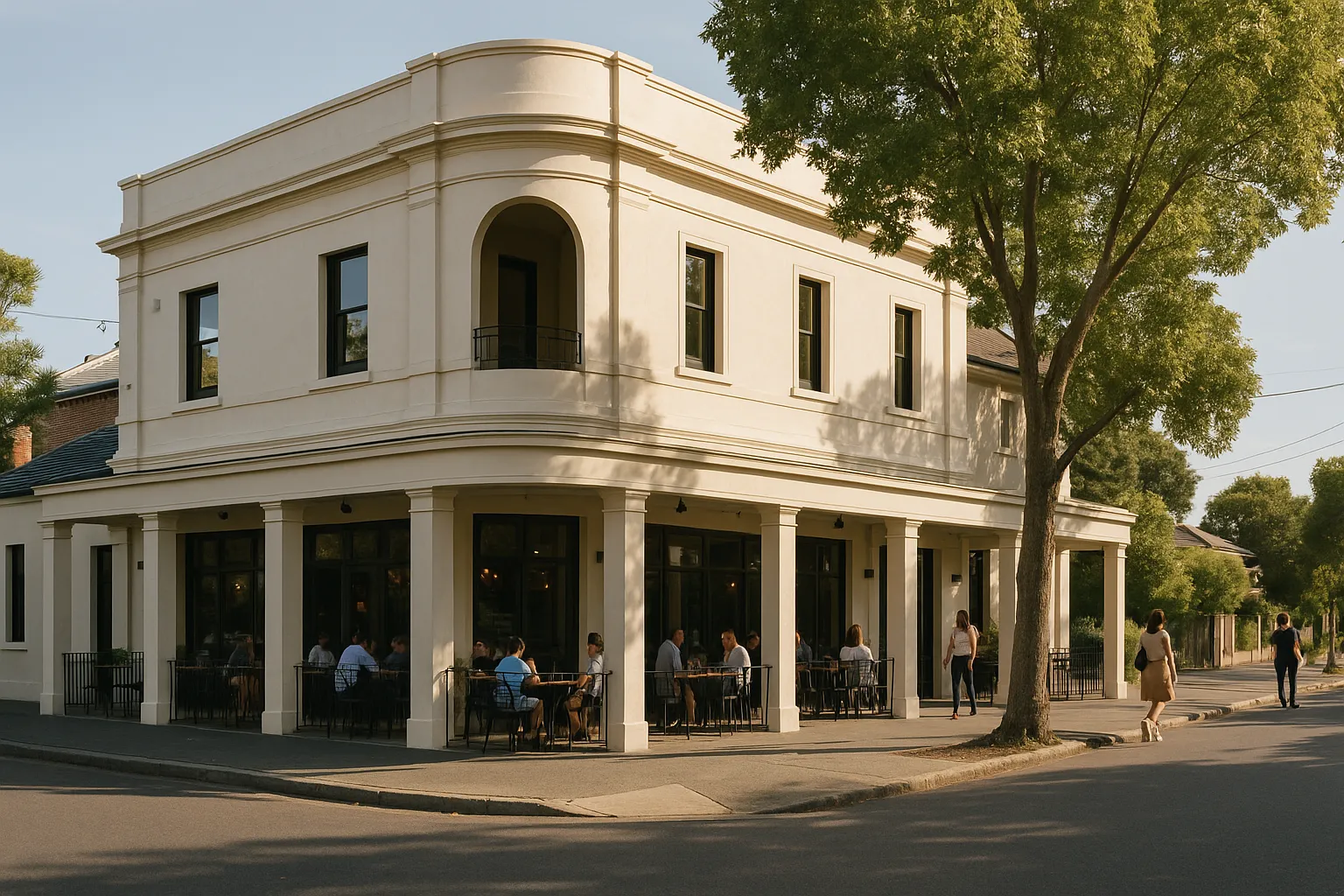
A hospitality family deploying $100 million into a Double Bay pub tells you something about where institutional and family-office money is moving right now. Not into CBD office towers with rising vacancy. Not into suburban retail strips competing with online. Into assets that generate rent from businesses people physically need to visit, in locations with demographic tailwinds and limited new supply.
The commercial property market is splitting. One side: legacy formats struggling with structural headwinds (hybrid work eroding office demand, e-commerce pressuring retail). The other: experiential assets in premium catchments where foot traffic never disappeared and tenant cashflow stayed resilient through the rate-rise cycle.
Why hospitality assets hold up when other commercial struggles
Pubs, restaurants and entertainment venues in high-income suburbs share three characteristics that office and retail increasingly don’t: fixed location advantage (you can’t Zoom a meal or a drink), inelastic local demand (discretionary spending contracts less in wealthy postcodes), and lease structures tied to revenue not just square metres (meaning landlord and tenant incentives align when times tighten).
Double Bay fits the archetype. Median household income well above Sydney’s average, limited development sites, entrenched spending habits, and a pub that’s been trading for decades. Compare that to a Parramatta office tower where hybrid work just permanently reduced tenant requirements by 20%, or a suburban shopping strip where three anchor tenants negotiated rent cuts in the past 18 months.
The yield spread between hospitality and office/retail has compressed as capital reprices risk. Five years ago, investors demanded 150-200 basis points more yield to compensate for hospitality’s perceived operational complexity and turnover risk. Today, the premium is closer to 50-75 basis points in premium locations, because the actual vacancy and rent-default experience flipped the script.
The catch: hospitality isn’t a passive hold
Buying a pub is not buying an office floor. Tenant quality matters more, a hospitality operator’s balance sheet, track record and fit with the location directly determine whether the asset performs or becomes a problem. Lease length is typically shorter (10-15 years with options versus 20+ for office), increasing rollover risk. And fitout responsibility often sits with the landlord, meaning capital expenditure between tenants can run six or seven figures.
Family offices and private buyers have an edge here because they can assess operator quality and move quickly without committee approvals. Institutional capital is starting to follow, but it requires asset-management capability most office or retail funds don’t have in-house.
There’s also a timing question. If Australia enters a recession in the next 12-18 months, unemployment spikes, discretionary spending contracts, hospitality revenue takes a direct hit. Premium suburbs hold up better than mass-market locations, but no venue is immune. The family making this move is effectively backing economic resilience in high-income Sydney postcodes, which is a reasonable base case but not a guarantee.
Key numbers
- $100 million: transaction value, signalling institutional-scale capital flowing into single hospitality assets in premium locations
- 50-75 basis points: current yield premium hospitality commands over office/retail in top-tier suburbs, down from 150-200 bps five years ago
- 10-15 years: typical pub lease term versus 20+ for office, increasing rollover and re-leasing risk
- 20%+: estimated permanent reduction in CBD office space requirements due to hybrid work, per major tenant surveys
What this means for commercial property investors
If you’re holding suburban retail or CBD office, the valuation pressure isn’t temporary. Structural demand has shifted, and the capital flowing into alternatives like hospitality reflects that. If you’re looking to deploy capital, experiential assets in wealthy postcodes are pricing at premiums for a reason, but the premium assumes the next downturn won’t materially dent spending in those areas.
The practical risk is overpaying at the top of the hospitality cycle. Yields on premium pubs have compressed 100+ basis points in three years. If rates stay higher for longer or unemployment rises, those yields could widen again, meaning capital loss even if the tenant keeps paying rent. The families and private buyers moving into this space now are either taking a 10+ year view or banking on being able to ride out a downturn without forced selling.
For residential investors, the takeaway is indirect but real: commercial capital is moving toward scarcity and location, the same factors driving residential land values in tightly-held suburbs. The money isn’t chasing yield anymore, it’s chasing assets that can’t be replicated, in places where demand is structurally locked in. That logic applies whether you’re buying a pub in Double Bay or a house in a suburb where affordability is resetting through price corrections.
What could derail this thesis
A sharp economic downturn that hits discretionary spending even in wealthy postcodes. A flood of new hospitality supply in Double Bay or similar markets (unlikely given planning constraints, but possible if a major mixed-use development lands). Or a structural shift in social behaviour, less eating and drinking out, more at-home consumption, which would reduce venue revenue and tenant serviceability.
The counter-case is that experiential spending is the last discretionary category to contract, especially in high-income demographics, and that limited new supply in established suburbs protects existing operators from competition.
The practical take
Commercial hospitality property is drawing capital because it combines scarcity, demographic resilience and tenant cashflow that hasn’t broken under higher rates. But it’s not a passive bet, operator quality, lease structure and fitout obligations all require active management. If you’re in commercial property, this is the moment to reassess whether your office or retail exposure reflects the market as it is now, not as it was five years ago. If you’re watching from residential, the same scarcity and location logic applies to your next decision.
Subscribe to the newsletter for weekly analysis on where capital is moving and what it means for your property decisions.
General info, not financial advice.