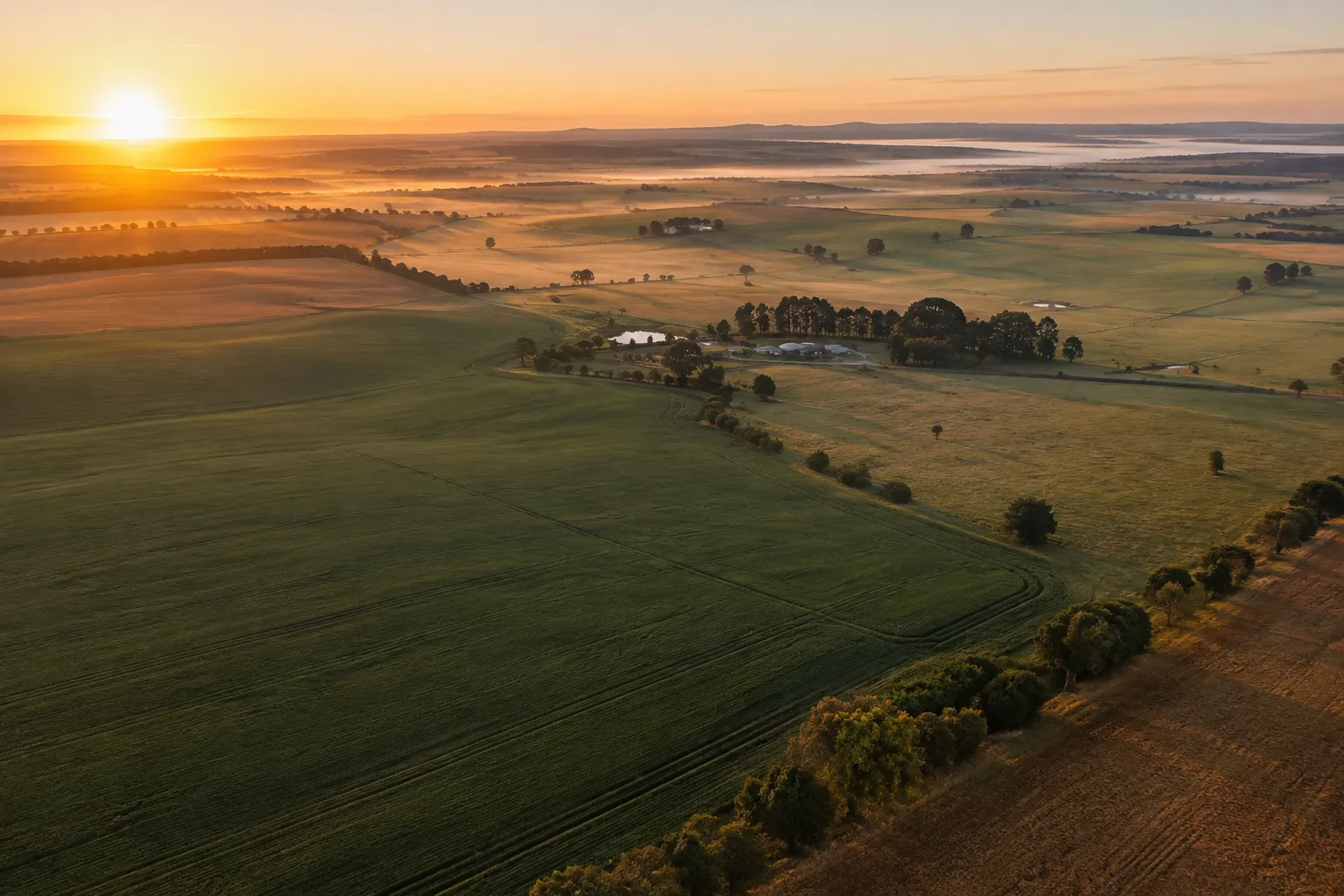
A reported $300m farms deal involving billionaire Ray Dalio is the kind of headline that tempts a quick conclusion: big money loves Australian dirt. The more useful read is about what large buyers and sellers of farmland are actually pricing, and what that tells everyday property investors.
We only have the headline and a limited public summary to work from, so this piece does not try to retell the deal or put numbers on it. It looks at what a transaction of this size usually points to in farmland investment Australia wide.
What a deal this size usually tells you
Large farmland portfolios rarely change hands on a whim. Institutional and family-office buyers tend to hold rural land for long stretches, so a sale often reflects a decision about timing, fund life or portfolio balance rather than a verdict on agriculture itself.
That matters because a headline sale can mean very different things:
- A seller locking in gains after strong land values over recent years
- A buyer pricing in a long-term shift in food, water and land scarcity
- A restructure that says more about the owner’s fund than the farms
Without the full terms, treat any single deal as one data point, not a trend.
How farmland yields work, in plain English
Farmland returns come from two places: income from the land (leasing it or farming it) and capital growth. Income yields on farmland have historically sat below what many residential investors expect from rental property once you strip out growth. The pitch is the combination of modest income, inflation-linked capital growth and a physical asset that is not easily replicated.
The catch is that farmland income depends on seasons, commodity prices, water access and input costs. A good run of rainfall and export prices can make returns look better than the long-run average. Always ask what time period the yield is measured over.
Foreign capital: appetite and the rules around it
Foreign investors in Australian rural land face tighter scrutiny than they once did. Screening thresholds, register reporting and national interest tests shape who can buy and how much. That means a big offshore-linked buyer is operating inside a framework, and the rules themselves can change.
For local readers, the practical point is competition. When well-funded global buyers want scarce rural assets, domestic farmers and smaller investors can be priced out of the market for the best land. It also keeps the broader foreign property tax deductions debate relevant, because policy settings on offshore money tend to move together.
Farms versus homes: where investor dollars compete
Rural real assets and residential property are not direct substitutes, but they compete for the same pool of long-term capital. When housing returns look squeezed by borrowing limits, tax settings and rate rises, some investors look for alternatives that offer scarcity and inflation protection.
Here is the rule of thumb. Farmland suits investors who can hold for a decade or more, accept lumpy and weather-dependent income, and do not need to borrow heavily against it. Residential property suits those who want higher liquidity in the form of a broad buyer pool and easier financing, even if the yield is thin.
High-end buyers are already rethinking where they put money. The shift described in luxury property’s old Sydney-Melbourne script breaking is a reminder that capital moves toward perceived scarcity and value, wherever that turns out to be.
Key numbers
- Reported deal size: about $300m (headline figure only, terms unconfirmed)
- Typical hold period for institutional farmland buyers: often a decade or more
- Main return drivers: lease or farming income plus land value growth
What could derail the farmland story
Farmland is not a one-way bet. Higher interest rates lift the return that buyers demand, which can soften land values. Drought, trade disruption or a commodity price slump can hit income. Regulatory change on foreign ownership or water rights can shift who is allowed to bid.
There is also a transparency issue. Private farmland deals disclose far less than listed markets or suburban sales, so headline prices are hard to compare. Be careful about reading a single reported sale as a benchmark for your own decisions.
What this means for a residential investor
Most readers will not buy a farm. The takeaway is about the direction of capital, not a shopping list. Strong appetite for farmland signals that large investors still value hard, scarce assets, which supports the case that location and land content matter in housing too.
Before chasing a new asset class, pressure-test your own position. Know your cashflow buffer, your serviceability if rates move again, and how long you can realistically hold. If a rural exposure interests you, a listed or managed vehicle may be a more realistic entry than a direct purchase, though each comes with its own fees and risks.
Start here: write down what return, over what timeframe, you actually need from your next investment, then compare it honestly against what farmland and housing can each deliver. Subscribe to the newsletter for the weekly signal.
General info, not financial advice.