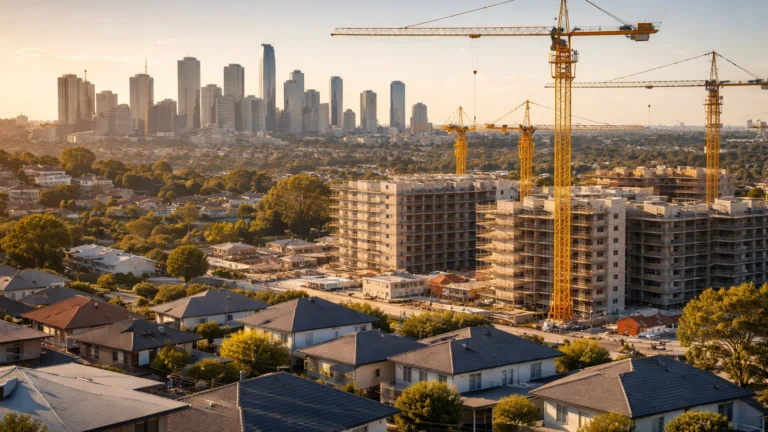
Australia’s housing supply problem has a hidden constraint that no amount of rezoning will solve. While governments chase a 1.2 million dwelling target by 2030, they’re not funding the infrastructure those homes need to function as liveable communities.
The arithmetic is simple but brutal. Adding thousands of apartments to an existing suburb without new schools, parks, public transport capacity or community facilities doesn’t create housing supply in any meaningful sense. It creates overcrowded infrastructure, longer waiting lists, and neighbourhoods that can’t absorb the density being imposed on them.
The infrastructure deficit compounds with every rezoning
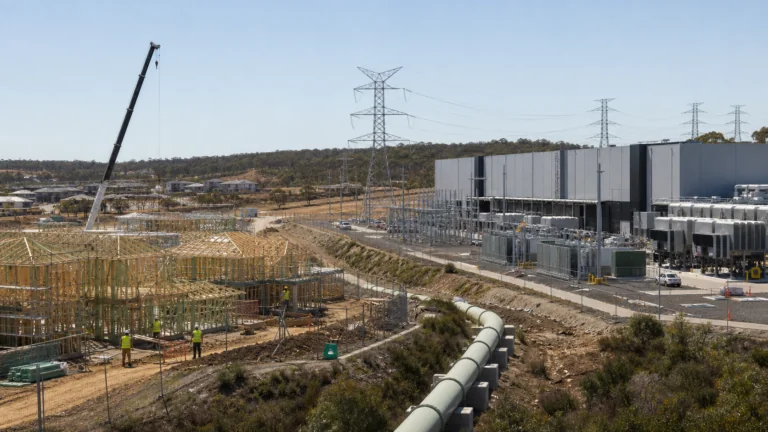
Consider a typical high-density rezoning scenario: a suburb designated for 9,400 new apartments across 142 towers. Government contribution includes rezoning approval and a railway station. What’s missing? Schools. Parks. Healthcare facilities. Road upgrades to handle the traffic increase.
The financial gap is enormous. A single primary school costs $50-80 million to build. Secondary schools run $100-150 million. Parks, community centres, upgraded roads and public transport links add tens of millions more. State governments are rezoning land worth billions but committing almost nothing to the infrastructure those developments require.
This creates a two-stage failure. First, existing residents face degraded amenity as services get stretched across more users. Second, new buyers discover they’ve paid premium prices for apartments in communities without the infrastructure to support daily life. Schools hit capacity. Parks get overcrowded. Roads congest.
What public housing used to solve that the market can’t
From 1945 through to the mid-1990s, public housing commissions built at scale. At their peak they accounted for 20% of all new dwellings. They employed and trained apprentices, innovated on construction methods, and kept costs down through bulk purchasing and publicly owned land.
Crucially, they coordinated infrastructure. When a state housing authority built 500 homes in a new area, they also built schools, community centres and transport links. They had the planning power and long timeframes to think beyond individual projects.
Today, public housing accounts for less than 2% of new supply. NSW alone lost 4,530 public and community homes over three years. The 1995 shift from direct construction funding to rental assistance was supposed to give tenants more choice. Instead, it created chronic undersupply and handed taxpayer subsidies to private developers who face no obligation to coordinate infrastructure.
The catch
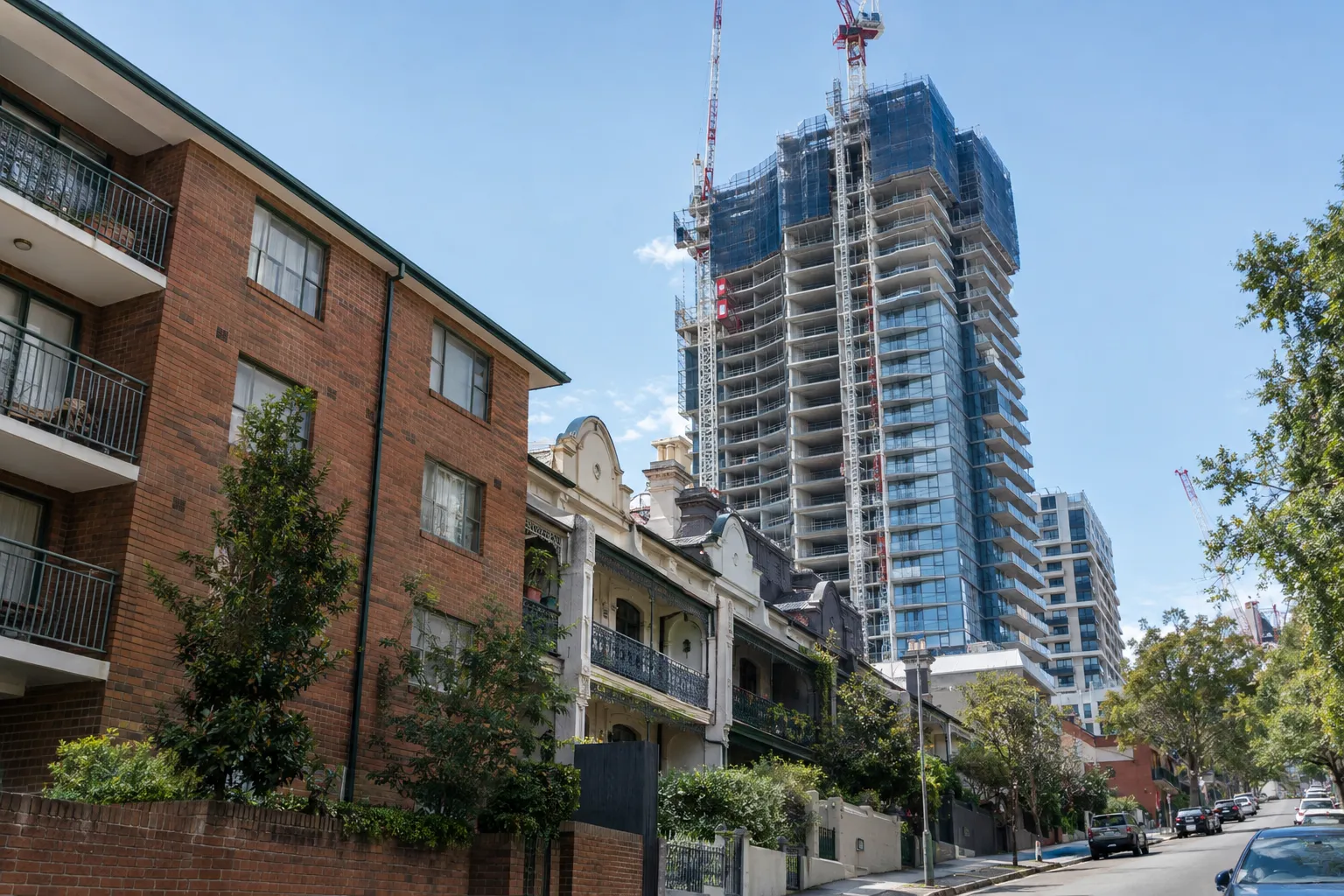
- Heritage demolition accelerates: 151 buildings in one Sydney suburb now designated for removal under density push
- Construction industry failure rate: 3,472 companies collapsed last year as costs rose faster than project approvals
- Public housing as share of new supply: dropped from 20% postwar average to under 2% today
- Infrastructure funding gap: state governments rezoning billions in land value while committing near-zero to supporting infrastructure
The 40 million question no one’s answering
The Intergenerational Report forecasts Australia’s population hitting 40 million within decades. That’s 14 million more people than today. Where do they live, and what kind of cities do we build to house them?
The Planning Institute of Australia’s Growing Well paper asks the critical question: do we want mega cities, or a network of accessible satellite centres, or fast-rail-connected regional hubs that spread growth across the country?
Each path requires radically different infrastructure investment. Mega cities need massive public transport expansion, vertical infrastructure, and services concentrated in small geographic areas. Regional networks need high-speed rail, distributed employment centres, and coordinated state and federal planning.
Right now we’re getting none of these. We’re getting patchwork rezoning with no national framework, no infrastructure coordination, and no honest conversation about what 14 million more people actually means for how we build and fund cities.
The private market can’t price in what it doesn’t pay for
Developers follow a rough rule: one-third land cost, one-third construction, one-third profit. In a high-land-cost suburb, that formula produces $3 million apartments, not affordable housing. The market has no mechanism to deliver genuinely low-cost dwellings when land values are set by what the top 20% of buyers can pay.
This is why rental assistance failed as a housing policy. It subsidises demand without creating supply. Landlords capture most of the benefit through higher rents. Tenants get marginal improvements. The construction industry gets no signal to build more affordable stock.
The same dynamic plays out with infrastructure. Developers don’t pay the full cost of the schools, parks and transport their projects require. Those costs fall on state governments years later, or never get funded at all. The result is housing supply that looks adequate on a spreadsheet but fails in practice because it lacks supporting infrastructure.
Pressure points over the next 12 months
The National Housing Accord targets aren’t being met. Construction companies are failing faster than projects can complete. Skilled worker shortages are worsening, feeding immigration debates that ignore the fact we’re not training local apprentices at the scale public housing commissions once did.
Meanwhile, rezoning proposals are multiplying. More suburbs will see plans for tower clusters with minimal infrastructure funding. More heritage buildings will face demolition. More existing residents will fight density increases that degrade amenity without delivering genuine affordability.
The risk is performative policy: big targets, dramatic rezoning announcements, and little actual delivery because the construction industry can’t scale, the workforce isn’t there, and the infrastructure funding doesn’t exist.
What would actually change the trajectory
Three structural shifts could break the cycle. First, restore public housing construction at scale. Not 2% of supply, not token projects, but 15-20% of all new dwellings built by state agencies with the mandate and funding to coordinate infrastructure.
Second, require infrastructure contributions that match density increases. If a rezoning adds 5,000 new dwellings, the approval should mandate proportional funding for schools, parks, community facilities and transport. Not as optional levies but as non-negotiable preconditions.
Third, have the national conversation about city shape that the Planning Institute paper calls for. Mega cities versus distributed growth isn’t a technical question, it’s a choice about how Australians want to live. That choice determines where infrastructure investment goes and what kind of housing supply we need.
None of this is happening. Instead we’re getting rezoning without infrastructure, private supply that can’t deliver affordability, and a construction industry in crisis.
Next step for anyone watching this unfold
If you’re in a suburb targeted for high-density rezoning, check the local council’s infrastructure plans. Not the developer’s promises, the actual funded commitments from state government for schools, parks and transport. If those don’t exist, the housing supply being promised is illusory.
For investors, understand that density without infrastructure creates downside risk. Apartments in overcrowded, under-serviced areas face liquidity problems and price pressure when buyers realise what’s missing.
For first-home buyers considering new high-density precincts, model your decision on current infrastructure, not future promises. If the school is at capacity now, it’ll be worse in five years. If the train is packed now, more apartments won’t fix that.
For a clearer view on how alternative models like co-housing can work around these constraints through smaller-scale, community-coordinated development, see how Melbourne friends pooled land to triple density. And if 10,000 imported modular homes can actually break the supply gridlock, here’s the case for and against that approach.
Want this analysis in your inbox each week? Subscribe to the newsletter for housing policy, supply constraints, and what actually moves the market.
General info, not financial advice.