A construction company has announced plans to import 10,000 finished homes into Australia each year, framing the model as a solution to the twin bottlenecks strangling supply: a shortage of skilled trades and planning approval delays that push projects out 12 to 18 months.
The pitch is straightforward. Manufacture housing modules offshore where labour is cheaper and lead times are shorter, ship them to Australia as finished units, then install them on prepared sites. In theory, you sidestep the tradie crunch, compress timeframes, and deliver volume at a lower per-unit cost.
The question is whether the theory survives contact with Australia’s regulatory framework, logistics network, and the actual cost structure once you account for freight, compliance, site preparation, and the fact that local councils still control what gets approved and where.
What the model promises
Modular housing isn’t new. Factories in Europe and Asia have been producing apartment modules, relocatable homes, and student accommodation for years. The difference here is scale: 10,000 homes annually would represent roughly 6% of Australia’s 2025 dwelling completions, assuming construction runs at around 170,000 units.
The claimed advantages are speed and cost. A factory can run multiple production lines in parallel, weather doesn’t stop work, and labour costs in offshore manufacturing hubs are a fraction of Australian wages. A two-bedroom module can be built, fitted out, and shipped in as little as eight weeks, compared to six to nine months for a comparable build on-site in Australia.
The model also claims to bypass the tradie shortage. Australia is short an estimated 90,000 construction workers, a gap that’s expected to widen as the government pushes to deliver 1.2 million homes over five years. If you can move the bulk of the build offshore, you reduce the domestic labour dependency.
The regulatory and logistics wall
Here’s where the promise meets friction. Every modular home still needs to comply with the National Construction Code, state-specific building standards, and local planning rules. That means design approvals, engineering certifications, bushfire attack level ratings where relevant, and energy efficiency assessments, all before a single module is fabricated.
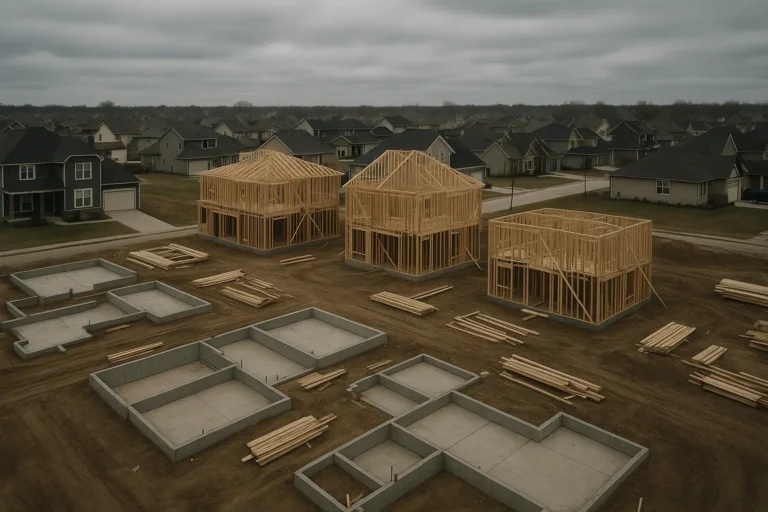
Once the modules land in Australia, they still need a prepared site: concrete slab or pier footings, service connections for water, sewer, power, and stormwater, plus final inspections and occupancy certificates. None of that is faster or cheaper than it is for a traditional build. The site work alone can take three to six months depending on council approvals and contractor availability.
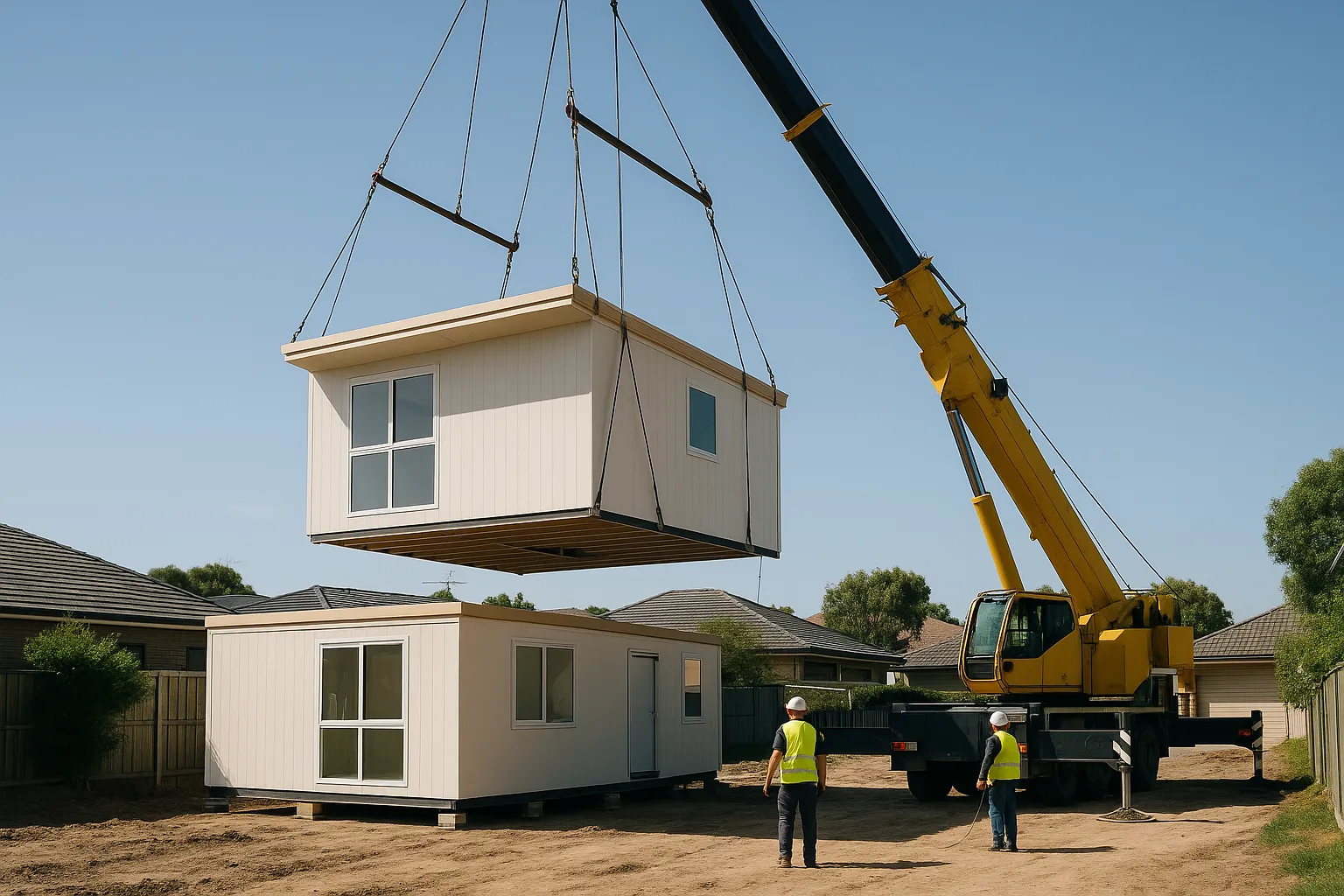
Freight is another pressure point. Shipping a finished module from Asia costs between $8,000 and $15,000 per unit depending on size, origin port, and fuel prices. Add in customs clearance, transport from the wharf to site, and crane hire for installation, and you’re looking at another $5,000 to $10,000. Those costs eat into the offshore labour savings quickly.
Then there’s the supply chain risk. Container shipping rates spiked 300% during COVID and took two years to normalise. A single port delay, customs bottleneck, or regulatory change in the manufacturing country can stall an entire production run. You don’t have that risk with local builds.
Where councils and buyers push back
Local planning approval is the other chokepoint. Councils control zoning, design guidelines, and development application timelines. A modular home still needs a DA, and if it doesn’t fit the streetscape or exceeds height limits, it gets knocked back the same way a traditional build would.
Some councils are sceptical of modular housing on aesthetic grounds. Others worry about quality control on offshore builds, especially if defects emerge years later and the original manufacturer is unreachable. That scepticism shows up in longer DA review times and stricter compliance requirements, which undermines the speed advantage.
Buyers have their own concerns. Resale values for modular homes in Australia are patchy. Banks treat some modular builds as relocatable dwellings rather than permanent structures, which affects loan-to-value ratios and interest rates. If a buyer can’t get standard financing, the market for that property shrinks.
The catch
- Site preparation, council approvals, and service connections still take months, offsetting the factory speed gain.
- Freight and logistics can add $15,000 to $25,000 per unit, eroding offshore labour savings.
- Councils retain full control over what gets approved and where, so modular doesn’t bypass the planning system.
- Financing and resale value issues limit buyer demand, especially outside urban infill sites.
- Supply chain disruptions (port delays, shipping cost spikes, regulatory changes offshore) introduce risks that don’t exist with local builds.
Cost structure reality check
A builder claims modular housing can deliver a two-bedroom home for 20% to 30% less than a comparable on-site build. Let’s pressure-test that.
A standard two-bedroom house in a middle-ring suburb costs roughly $350,000 to $450,000 to build (excluding land). If offshore manufacturing cuts that to $280,000, you’re saving $70,000 to $120,000, until you add back freight ($10,000 to $15,000), site prep ($30,000 to $50,000), craning and installation ($8,000 to $12,000), and compliance/certification costs ($5,000 to $10,000).
Net saving: $20,000 to $50,000, or roughly 6% to 12%. That’s not nothing, but it’s also not a revolution. And it only works if the offshore factory runs at full capacity, shipping schedules stay predictable, and councils don’t add extra review layers.
If any one of those assumptions breaks, freight costs spike, a port strike delays shipments, or a council decides modular homes need additional engineering sign-off, the cost advantage disappears.
Who this model suits and who it doesn’t
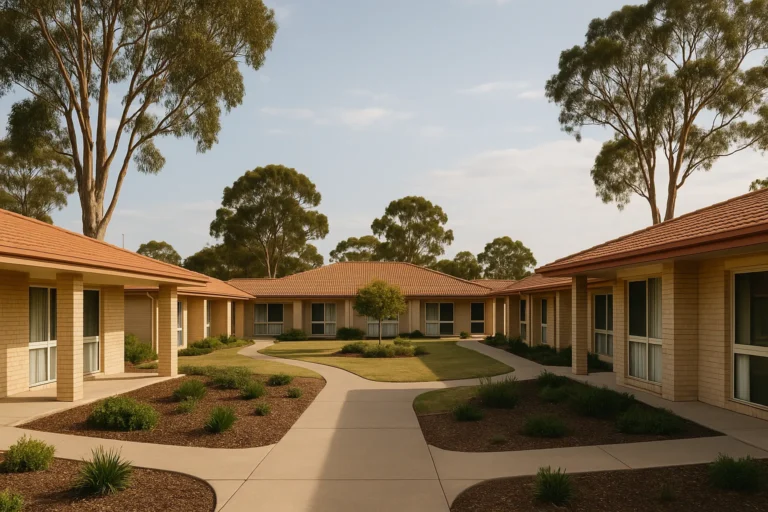
Modular housing works best in tightly defined scenarios: infill sites where speed matters, social housing programs that can lock in volume orders and standardise designs, or retirement villages and manufactured home estates where buyers expect a factory-built product.
It’s a harder sell for custom builds, large family homes, or sites with complex topography. The cost and time savings rely on repetition and volume. If every module needs custom tweaks to fit a sloping block or match a heritage streetscape, you lose the factory efficiency that makes the model viable.
Investors and developers eyeing build-to-rent projects might find value here, especially if they can secure multi-year supply agreements that stabilise unit costs. But they’ll still need to solve the council approval and site prep bottlenecks, which modular housing doesn’t fix.
What would need to change for this to scale
For 10,000 imported homes a year to be feasible, three things would need to shift. First, councils would need to fast-track approvals for certified modular builds, treating them more like complying development. That’s a political decision, and there’s no sign it’s coming.
Second, the federal government would need to streamline customs and port logistics for modular housing shipments, potentially creating a dedicated import category. Right now, every shipment gets treated as a one-off, which adds time and cost.
Third, banks would need to treat modular homes as standard permanent dwellings for financing purposes. Until that happens, buyer demand will stay limited, which caps the market for any builder trying to hit volume targets.
None of those shifts are impossible, but they’re not in the builder’s control. And without them, 10,000 homes a year is a stretch.
What to watch over the next year
If this model gains traction, you’ll see it first in social housing tenders and large-scale infill projects where state governments can bypass some council layers. Watch for announcements from state housing agencies or community housing providers signing multi-year modular supply deals.
Second signal: whether councils in high-growth corridors start creating fast-track pathways for certified modular builds. If that happens, it means the regulatory barrier is softening. If it doesn’t, the approval bottleneck will kill the volume ambition.
Third: shipping and freight cost trends. If container rates stay stable or fall, modular becomes more competitive. If they spike again, the offshore model loses its cost edge and builders revert to local supply chains.
If you’re weighing this as a buyer or developer
For buyers, modular housing is worth considering if you’re looking at a knockdown-rebuild on a standard suburban block, you’re time-sensitive, and you’re comfortable with a limited design palette. Get clarity upfront on council approval timelines, financing terms, and what the resale market looks like for modular homes in your area.
For developers, the math works if you can lock in volume, standardise designs, and secure sites where council approval is predictable. Run your numbers with a 15% to 20% buffer on freight and logistics costs, and model what happens if delivery delays push your project out three months. If it still stacks up, it’s worth exploring.
Housing shortage deepens as workforce crisis stalls 300,000 builds covers the broader tradie shortage driving interest in offshore models.
If you want the weekly read on what’s shifting in supply, planning, and how policy changes hit the market, subscribe to the newsletter.
General info, not financial advice.