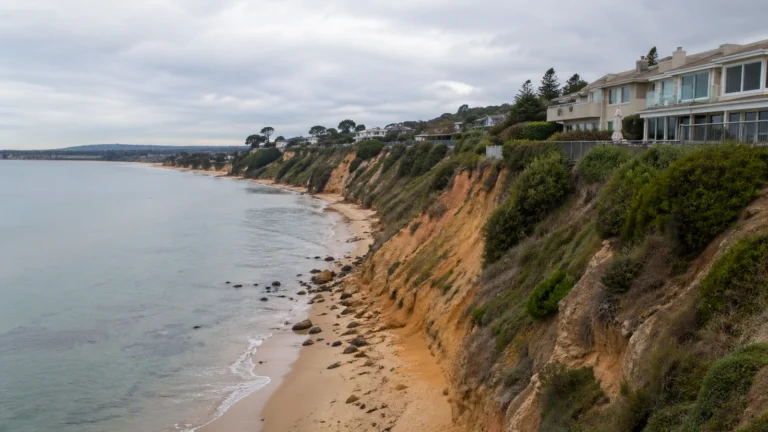
Multiple homeowners on Victoria’s Mornington Peninsula have received notices demanding they surrender parts of their backyards after council declared the land was never theirs to begin with. Some families are being told to move fences at their own expense and hand back areas they’ve maintained for decades.
The land title dispute centres on strips of land backing onto a creek. Residents say previous owners were allowed to fence and maintain these areas under an informal arrangement dating to the 1980s. Mornington Peninsula Shire now says it has no records of any such agreement and is reclaiming the land for public use.
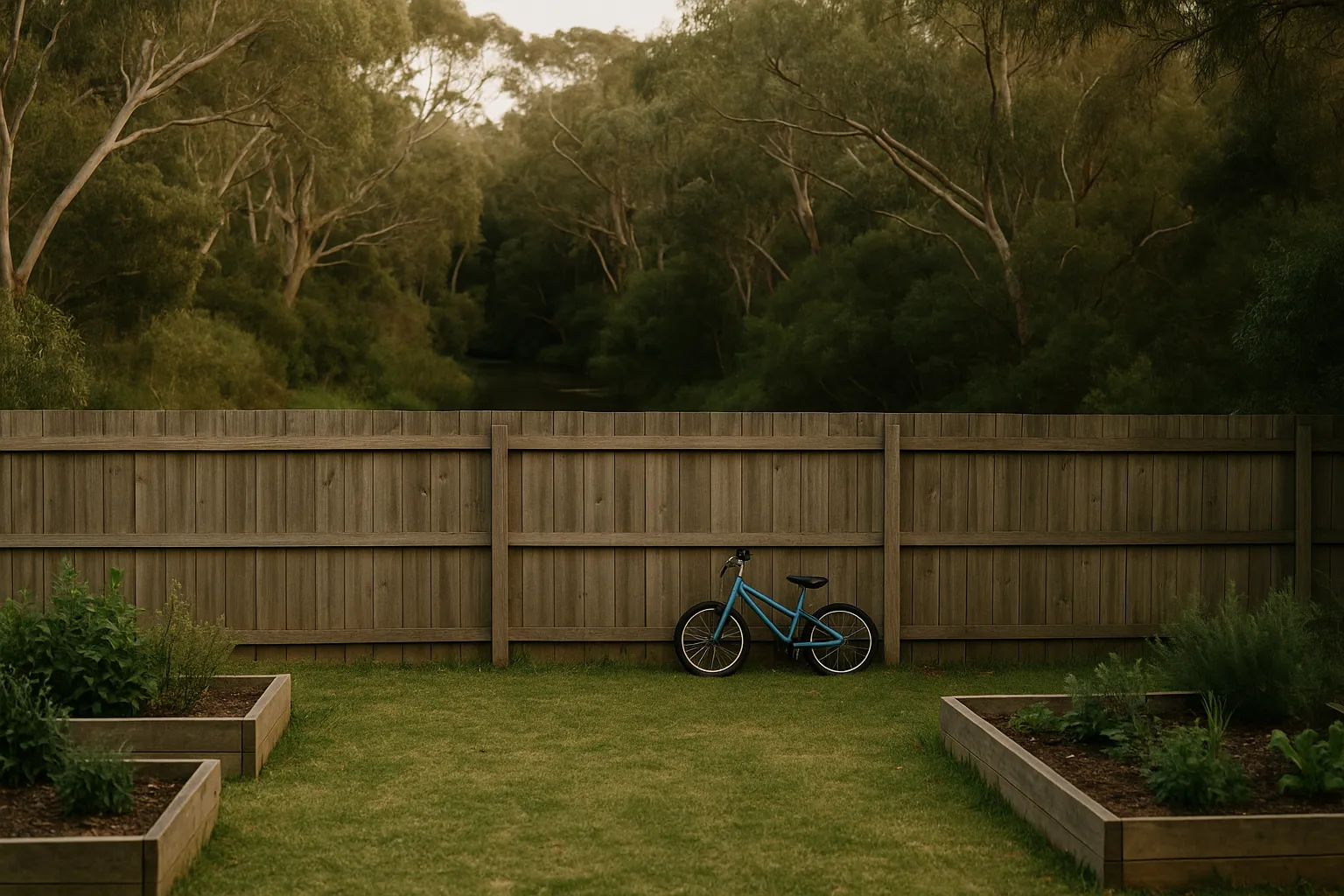
For families who bought recently, the notice came as a shock. One couple purchased their home four years ago specifically for the backyard space. They now face losing more than half of it, the area where their son learned to walk and rides his bike.
How informal land arrangements collapse
The core problem is a gap between actual title boundaries and what’s physically fenced on the ground. In this case, homeowners erected fences beyond their registered property lines, enclosing council-owned land adjoining a creek.
Residents claim an understanding existed that allowed them to occupy and maintain these strips as long as they kept them tidy. The arrangement allegedly served dual purposes: reducing council maintenance costs and deterring anti-social behaviour near the waterway.
Without formal documentation, that understanding has no legal weight. When council priorities shifted or institutional memory faded, affected homeowners had no proof the arrangement was ever authorised.
The catch
- Australia’s Torrens title system guarantees ownership of land within registered boundaries, not informal occupation beyond them
- Adverse possession (claiming land through long use) was abolished in Victoria in 2018 and requires court action in states where it still exists
- Relying on “everyone knew about it” or “it’s been this way for decades” carries no weight without registered title or documented easement
- Conveyancing searches show registered boundaries, but physical inspections often miss encroachments unless a surveyor is engaged
What residents are being told to do
Homeowners received 28 days’ notice to:
- Engage a licensed surveyor to confirm actual title boundaries (cost typically $1,500–$3,000)
- Remove fences, sheds, garden beds or other improvements from council land
- Relocate boundary fencing to the correct line (cost varies by length and materials, often $5,000–$15,000)
- Do all of this at their own expense with no compensation for improvements made in good faith
Mornington Peninsula Shire stated it is not required to contribute to fencing costs where council land is held as public reserve. That position is consistent with standard practice, public authorities generally do not fund private boundary compliance.
For retirees and families who bought believing the entire fenced area was included in their purchase, the financial and emotional cost is significant. One resident said she had to rehome bees and abandon gardening hobbies because the compliant boundary would leave her with almost no usable yard.
The title guarantee gap this exposes
Victoria operates under the Torrens system, which guarantees ownership of land described in the register. The guarantee does not extend to physical features or informal arrangements.
When you buy property, your contract describes a lot number and plan reference. The title defines boundaries by cadastral coordinates, not fences. Unless you commission a boundary survey before settlement, you are trusting that:
- The previous owner’s fences matched the title (often they don’t)
- No informal encroachments exist (sometimes they do)
- Any longstanding arrangements were properly documented (frequently they weren’t)
Standard conveyancing searches check title, planning overlays, encumbrances and registered easements. They do not confirm physical boundaries match the plan. Most buyers skip the survey to save $2,000–$3,000 upfront, discovering the mismatch only when council, a neighbour or a future buyer’s surveyor raises it.
Who else faces this risk
Similar disputes arise in:
- Older suburbs where original fences were erected casually and never checked
- Properties adjoining creeks, parks, road reserves or rail corridors where public land boundaries are poorly marked
- Estates where developers installed fences before title subdivision was finalised, leaving mismatches
- Rural blocks where fence lines followed natural features (treelines, waterways) rather than surveyed boundaries
The Mornington case is unusual in scale, multiple homeowners affected on one street, but the underlying risk is widespread. A 2019 study by the Victorian Surveying Industry found boundary disputes were among the top three sources of property litigation, often triggered years after purchase when councils or neighbours reassert rights.
What recourse affected owners have
Limited. Once council or another authority formally demands return of its land, homeowners face three options:
- Comply: Move the fence, absorb the cost, lose the land
- Negotiate: Request council grant a licence or lease to continue occupying the strip (rare, usually denied for public reserve land, may carry annual fees if granted)
- Litigate: Challenge council’s claim in court (expensive, slow, unlikely to succeed if title records clearly show the land was never private)
Adverse possession claims no longer apply in Victoria and are difficult elsewhere. Even in states where the doctrine exists, proving 15+ years of continuous, exclusive, open occupation without the owner’s permission is a high bar and requires court proceedings.
Homeowners who purchased recently may have a claim against their conveyancer if the encroachment was reasonably discoverable and not disclosed. That requires proving negligence, which is difficult if standard searches were completed and no survey was commissioned.
What would reduce this risk
Three changes would help:
- Mandatory boundary surveys at settlement: Currently optional in most states; making them compulsory for all sales would catch mismatches before money changes hands. Cost would add $2,000–$3,000 to every transaction but would eliminate most surprise disputes.
- Public register of informal land agreements: Councils that allow encroachments or licence private use of public land should record those arrangements in a searchable register linked to title. When arrangements expire or are revoked, affected owners receive clear notice.
- Transition support for legacy cases: Where informal arrangements existed for 20+ years and council has no record, a fair resolution might include cost-sharing for boundary compliance or below-market buyout of narrow unusable strips.
None of these changes are currently proposed in Victoria or other states.
What this means for buyers
If you are purchasing:
- Commission a boundary survey before settlement, especially if the property backs onto public land (creek, park, road reserve). The $2,500 cost is cheap insurance.
- Walk the boundaries with a tape measure and compare fenced dimensions to the title plan. If the fenced area is larger than the plan shows, ask why.
- Check council records for encroachment notices, licences or complaints about the property. Standard conveyancing searches may not catch these.
- If buying an older home where “everyone knows” an informal arrangement exists, assume it has no legal weight unless documented.
If you already own:
- If your fence line might extend beyond your title boundary (check the plan), engage a surveyor now rather than waiting for council to act. Voluntary compliance is cheaper and less stressful than a 28-day notice.
- If you occupy council land with permission, request a formal licence in writing. If council refuses, at least you know the risk.
- Do not invest in permanent improvements (sheds, retaining walls, pools) on land you do not legally own. If you must surrender it later, you lose the investment.
The Mornington dispute is a reminder that physical occupation and legal ownership are not the same thing. Australia’s title system is robust, but only within registered boundaries. Beyond the line, you are on someone else’s land, even if no one has said so for 40 years.
Subscribe to the newsletter for weekly updates on property law, policy and market shifts that affect your decisions.
General info, not financial advice.