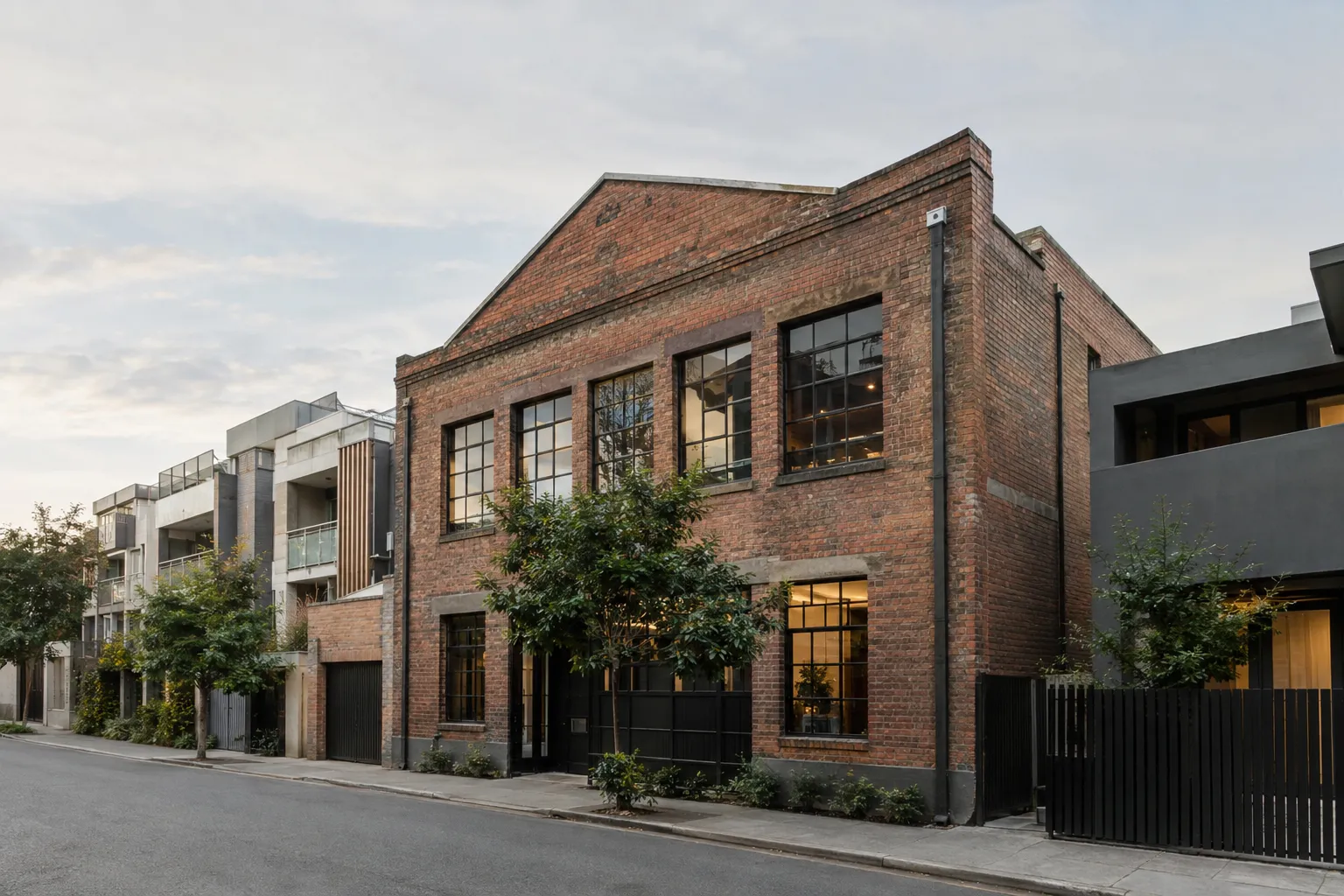
An inner-city Melbourne industrial property with long-term entertainment industry tenancy is on the market, and the price it fetches will show whether developers still see residential conversion as viable under current credit conditions.
The site sits in the zone where industrial use meets residential density, a category that’s drawn developer attention over the past decade as cities densify and industrial land shrinks. The question now: does that pipeline still flow when construction finance is tight and pre-sales are harder to secure?
What’s at stake
Inner-city industrial sites appeal to developers because they’re typically larger parcels than infill residential blocks, already serviced, and close to transport and amenity. Rezoning or mixed-use overlays can unlock residential or commercial towers where factories or warehouses once stood.
But the appeal only converts to deals when three things align: zoning certainty, pre-sale appetite from buyers, and construction finance that pencils. Right now, two of those three are under pressure.
Pre-sales have slowed across Melbourne’s apartment market as first-home buyers hit serviceability limits and investors wait for clearer rate signals. Construction lenders want higher pre-sale thresholds before they’ll fund a project, and some have pulled back from medium-density altogether.
The conversion trade-off
Buying an occupied industrial site with existing cashflow gives a developer time to work through approvals and market conditions before breaking ground. The risk: holding costs compound if the project stalls, and the longer the hold, the higher the hurdle rate for feasibility.
If this property trades at a price that assumes near-term residential conversion, it signals confidence that approvals and finance will come through within 18 to 24 months. If it trades closer to industrial holding value with a longer time horizon, that’s a more cautious read on development conditions.
The catch
A sale price alone won’t tell you feasibility, only what a buyer is willing to pay today. The real test comes 12 months later when we see whether they lodge plans or hold the asset longer.
Pressure points across Melbourne’s conversion pipeline
Melbourne’s industrial land has been shrinking for two decades as warehouses and factories move to outer suburbs or interstate. That’s pushed land values higher in inner zones, where residential uses can pay more per square metre than industrial tenants.
But approvals are slower than they were five years ago. Heritage overlays, community pushback on height, and council preference for affordable housing contributions all add time and cost. A site that once took 12 months from purchase to DA approval now takes 18 to 24 months in many inner councils.
At the same time, construction costs haven’t fallen enough to offset the higher land price and slower approvals. Developers who bought sites in 2021 and 2022 expecting a quick turnaround are now holding them longer or selling at a loss.
For context, builder insolvencies tied to cost blow-outs have been rising across residential construction, which makes lenders more cautious about funding new projects.
Who’s still buying and why
Two types of buyers typically compete for these sites: developers with balance sheets strong enough to hold through a slow approval process, and opportunistic funds betting that the next rate-cut cycle will restart apartment demand before their holding costs erode returns.
The latter group has been less active in 2025 as the RBA’s pause on rate cuts extends into its second year. Developers with existing project pipelines are more selective, focusing on sites where zoning is certain and where they can stage construction to match pre-sale velocity.
If this property attracts multiple bids, it suggests confidence in Melbourne’s medium-term apartment demand is still intact. If it trades quietly or sits on market longer than 90 days, that’s a signal the conversion thesis has weakened.
What happens over the next six months
Three things to watch:
- Settlement price versus the last comparable industrial sale in the same precinct
- Whether the buyer lodges a planning application within 12 months or holds the existing tenancy
- How many other inner-city industrial listings follow, and at what price expectations
If developers pull back from conversion plays, that reduces one pathway for increasing housing supply in inner Melbourne. Industrial sites that stay industrial don’t add dwelling capacity, even if they’re zoned for mixed use.
The flip side: if conversion projects stall because feasibility doesn’t work, forcing them through just adds to the builder insolvency count and doesn’t deliver completed housing either.
Practical take for anyone tracking supply
This sale won’t move the broader market, but it’s a useful temperature check. Inner-city industrial conversions have been a steady supply source for Melbourne apartments over the past decade. If that pipeline slows, it puts more pressure on greenfield and infill residential development to meet population growth.
For investors or owner-occupiers in nearby apartment stock, watch whether new projects lodge in the next 12 to 18 months. More supply keeps price growth modest. Less supply, especially if demand holds or rises, shifts the balance.
Start here: track DA lodgements in inner Melbourne councils over the next two quarters. If conversion projects drop off, it’s a leading indicator that this source of supply is tightening.
Subscribe to the newsletter for updates on Melbourne development activity and supply pipeline shifts.
General info, not financial advice.