Large-scale residential developers are pushing pause on new projects as falling prices make it harder to hit the pre-sale hurdles banks require before releasing construction finance. The feedback loop is straightforward: softer prices mean fewer buyers willing to commit off-the-plan, which means projects that need 60-70 per cent pre-sold before breaking ground are sitting on hold, and those delays are now starting to show up in medium-term supply forecasts.
The immediate impact is on apartment and townhouse projects in the $600k-$900k price band, where first home buyers and upgraders typically compete. Developers report that campaigns running 12-18 months ago would clear pre-sale thresholds in three to five months; the same projects today are taking seven to nine months or stalling at 40-50 per cent, which is below the threshold most construction lenders will accept.
The mechanics of the stall
Development finance for multi-unit projects almost always requires a minimum percentage of units sold before the bank will fund earthworks and construction. That threshold varies by lender and project size but typically sits between 60 per cent and 75 per cent. When prices are rising, buyers are more willing to commit early because they expect capital growth between contract and settlement. When prices are falling or flat, that incentive reverses: why lock in a price today when the same unit might be cheaper in six months?
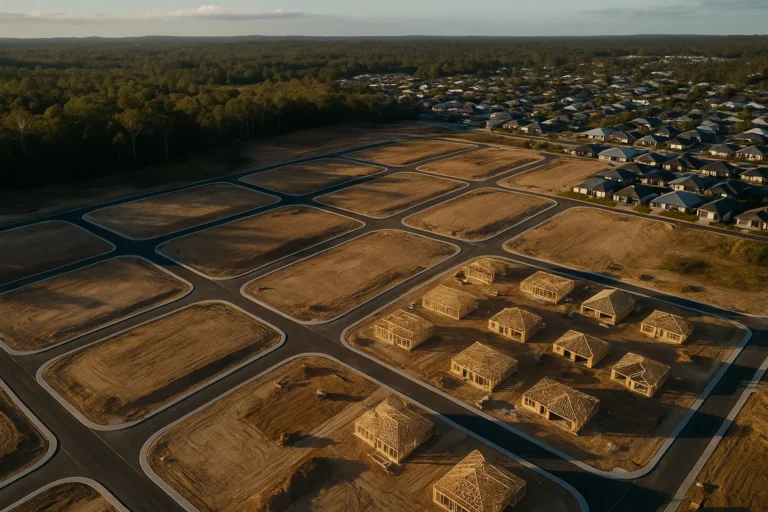
The result is a growing pipeline of approved, shovel-ready projects that are not starting because they cannot hit pre-sale targets. Developers face a choice: lower prices to move more units and risk the project becoming unviable once margin compression and rising construction costs are factored in, or wait for market conditions to improve and accept the holding cost of land and approvals.
Which markets and project types are most affected
The pressure is most visible in outer-suburban and regional markets where affordability was already stretched and price falls have been steeper. Inner-city apartment projects with strong amenity, transport links and investor appeal are still moving, but at a slower pace. Townhouse developments in growth corridors, particularly those targeting first home buyers relying on maximum borrowing capacity, are seeing the longest delays.
Projects in the $400k-$600k range are slightly more resilient because first home buyer grants and stamp duty concessions provide a floor of demand, but once you move above $700k the pool of qualified buyers shrinks quickly in a falling market. Luxury developments above $1.5 million are a separate segment and tend to rely less on pre-sales, but they are also seeing longer sell-down periods.
The supply gap opening up
Every project deferred today is a gap in the supply pipeline 18-24 months from now. Construction timelines for medium-density projects run 12-18 months from breaking ground to practical completion, so a project paused in early 2026 would have delivered new stock in mid-to-late 2027. If the project stays on hold for another six months, that delivery date shifts to early 2028.
The risk is that current softness in prices creates a supply shortage just as demand picks up again, either from rate cuts, returning confidence, or population growth absorbing existing stock. That dynamic has played out in previous cycles: a sharp pullback in construction activity during a downturn, followed by a supply crunch and rapid price growth once demand returns.
The catch
- Pre-sale thresholds: most projects need 60-75% sold before construction finance is released
- Timeline lag: a project deferred today removes supply 18-24 months out
- Outer suburbs: longer delays in growth corridors where affordability is tightest
- Investor-grade stock: inner-city projects still moving but at slower pace
- First home buyer segment: $400k-$600k range slightly more resilient due to grants and concessions
Who absorbs the holding cost
Developers sitting on approved sites are paying land holding costs, council rates, and the opportunity cost of capital tied up in a non-performing asset. Smaller developers with limited balance sheets may be forced to sell the site at a loss, consolidating development activity among larger players with deeper pockets. That reduces competition and can slow the pace of new supply even when market conditions improve.
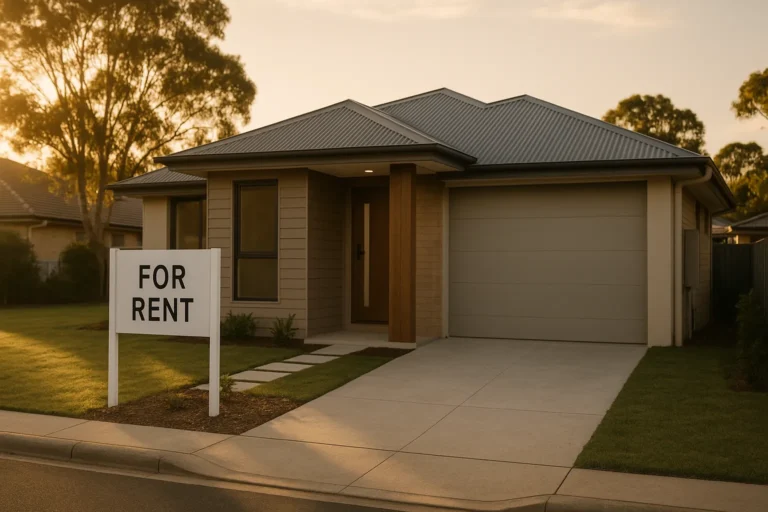
The other group absorbing cost is renters. Every deferred apartment or townhouse project is one less household that can move out of the rental market. Investor lending has already pulled back sharply, removing another source of new rental supply, and now the development pipeline is slowing as well. The result is upward pressure on rents even as property prices fall, because rental supply and ownership supply are not perfectly substitutable.
Three scenarios for the next 12 months
Base case: prices stabilise over the next two quarters, pre-sale activity picks up modestly, and some deferred projects restart in the second half of 2026. Supply tightens slightly in 2027 but does not create a severe shortage. Rents rise 3-5 per cent.
Upside (for supply): rate cuts arrive sooner than expected, buyer confidence returns, pre-sales accelerate and most paused projects restart within six months. Supply remains on track for late 2027 delivery. Rents rise 1-3 per cent.
Downside: prices keep falling, pre-sale activity stays weak, more projects are cancelled or sold to other developers at a discount. Supply gap widens significantly in 2027-2028, rental vacancy stays below 2 per cent, and rents rise 6-8 per cent while prices are still soft.
Policy levers and the timing problem
Governments can address this dynamic through direct intervention, infrastructure funding that unlocks land and de-risks projects, reduced development charges, or direct public investment in social and affordable housing that does not rely on pre-sales. But those measures take time to design, fund and deliver, and the supply gap is opening now.
The other lever is monetary policy. Rate cuts improve borrowing capacity and restore some buyer confidence, which can restart pre-sale activity. But rate cuts are a blunt tool and depend on inflation coming down, which is outside the control of housing policymakers.
What this means if you’re making a decision now
If you are a buyer considering an off-the-plan purchase, the risk is that you lock in a price today and the market keeps falling before settlement. The upside is that fewer projects starting now means less new supply competing with you when you sell in five or ten years. The decision depends on your time horizon and whether you are buying for owner-occupation or investment.
If you are a renter, expect upward pressure on rents over the next 18 months even if property prices stay flat or fall slightly. The supply pipeline is thinning, investor activity is down, and vacancy rates are already tight in most capital cities.
If you are a developer or investor in development projects, the question is whether to wait for market conditions to improve or accept lower margins to keep projects moving. The cost of waiting is measured in holding costs and the risk that construction costs rise faster than prices recover. The cost of proceeding is compressed margin and potential losses if prices keep falling.
Subscribe to the newsletter for weekly updates on supply pipelines, construction finance and rental market pressure points.
General info, not financial advice.