A fair question is now being asked about interest rates: what if higher rates fix the demand side of housing inflation while making the supply side worse? That is the argument from a prominent property economist, who says rate hikes risk worsening housing inflation because government spending is lifting construction costs and tax changes are deterring investors.
It is a provocative claim. It is also testable, at least in outline. Here is how to think it through without taking either side’s word for it.
Two inflations, one cash rate
The RBA’s main tool works on demand. Higher rates cut borrowing capacity, slow price growth and, in theory, ease pressure across the economy. If you want the mechanics, our guide to RBA rates and repayments covers how a cash rate move reaches a household budget.
But housing inflation has a second driver that the cash rate does not touch directly: the cost and availability of new dwellings. Rents and prices over time depend on how many homes get built relative to how many households form. A rate rise that cools demand but also slows building can leave the underlying shortage intact.
That is the heart of the claim. It is not that rate hikes do nothing. It is that their effect on supply may offset part of their effect on demand.
In plain English
- Demand-side effect: higher rates reduce what buyers can borrow.
- Supply-side effect: higher rates raise funding costs for builders and can delay projects.
- The net result on rents and prices depends on which effect is bigger, and that varies by city and housing type.
Building costs are the quiet variable
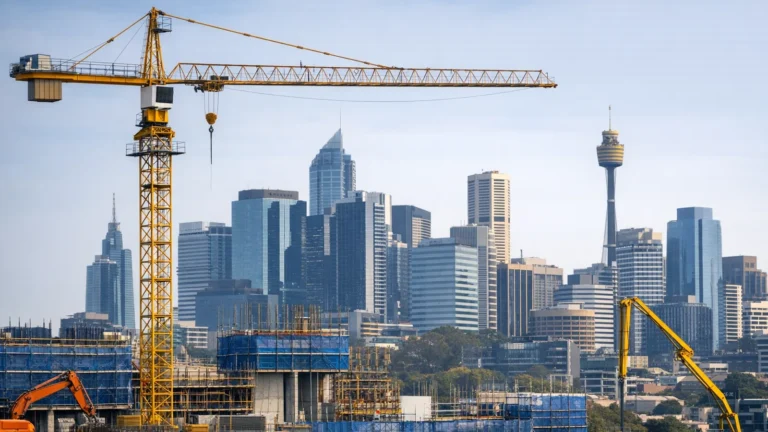
The argument leans heavily on construction costs. When governments spend heavily on infrastructure and public projects, they compete with housing builders for the same trades, materials and contractors. That pushes up the price of a new home even when demand for housing is soft.
This part is plausible, but the size of the effect is the real question. Spending on roads, rail and hospitals does draw on the same labour pool as residential construction. How much of the rise in building costs comes from that competition, versus materials prices, wages or planning delays, is difficult to separate cleanly. Anyone claiming a precise share should show their working.
What the investor tax angle adds
The second leg is tax. If tax changes make property less attractive to investors, fewer investor-funded projects and purchases go ahead. Investors supply a large share of rental stock. Fewer of them, or smaller portfolios, can tighten rental supply at the same time as higher rates are squeezing the investors who remain.
That creates a possible loop. Higher rates raise holding costs. Tax settings reduce the return. Some investors sell, and tenants lose a rental or face a higher rent. Whether that loop is large or small is an empirical matter, and the answer likely differs between a capital city unit market and a regional house market.
How to test the claim yourself
You do not need a model. Three public data series tell you most of what you need.
- Building approvals (ABS). Are approvals falling as rates rise? A sustained fall in approvals, especially for apartments and townhouses, points to the supply-suppression story.
- Construction cost indices (ABS and industry sources). Are costs rising faster than general inflation? If yes, the cost-pressure argument gets support.
- Rents (CoreLogic, Domain, PropTrack, ABS CPI rents). Are rents accelerating while prices soften? That divergence is exactly what the claim predicts.
If all three move the way the claim says, the case strengthens. If approvals hold up and rents ease, it weakens.
Who bears the cost
The distribution matters as much as the headline. Higher rates hit existing borrowers first, through repayments. If supply is also squeezed, renters carry a second hit through rents, and would-be first-home buyers face pricier new builds. Established owners with low debt are the least exposed.
That is the uncomfortable part of the argument. Even if the RBA’s decision is right for aggregate inflation, the pain is not shared evenly, and the groups least able to absorb it, renters and younger buyers, may carry more of it.
This connects to the wider debate about how the central bank weighs its options. Our look at the RBA’s unemployment test shows how the policy trade-offs are being framed on the labour side, and the housing question sits alongside it.
Where the claim is strongest, and where it is not
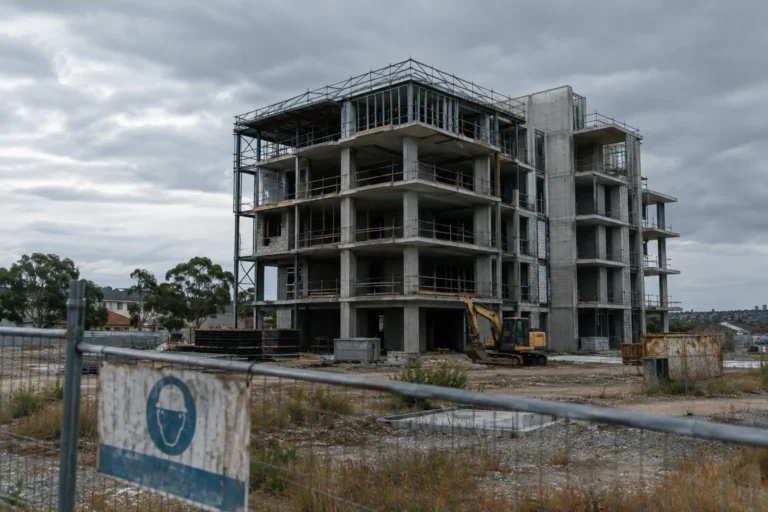
The claim is strongest in markets where new supply is already thin and where construction is the binding constraint, not demand. In those places, a rate rise that slows building can worsen a shortage.
It is weakest where prices and rents are being driven by demand that rates can plausibly cool, such as investor-heavy established-house markets with high leverage. There, higher rates may work as intended.
Commentary on this issue has split along predictable lines. One camp treats rates as the primary lever and frames any housing side effect as secondary. The other argues that fiscal and tax settings are the real drivers and that the central bank is being asked to fix a problem it cannot reach. Both have part of the picture. Neither explains every market.
What to do with this
If you are a borrower or investor, do not treat the claim as a forecast. Treat it as a reason to stress-test your own position: what happens to your cashflow if rates rise again and rents do not keep pace, or if a project you are relying on is delayed by cost blowouts?
For a first step, pull the latest approvals and rent data for the specific area you care about before making any decision. National averages hide the difference between markets.
If you want the weekly signal on rates, supply and policy, subscribe to the newsletter.
General info, not financial advice.