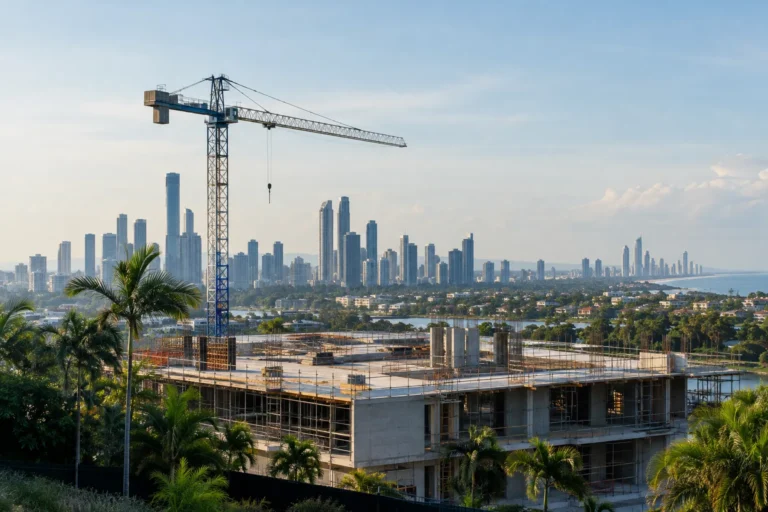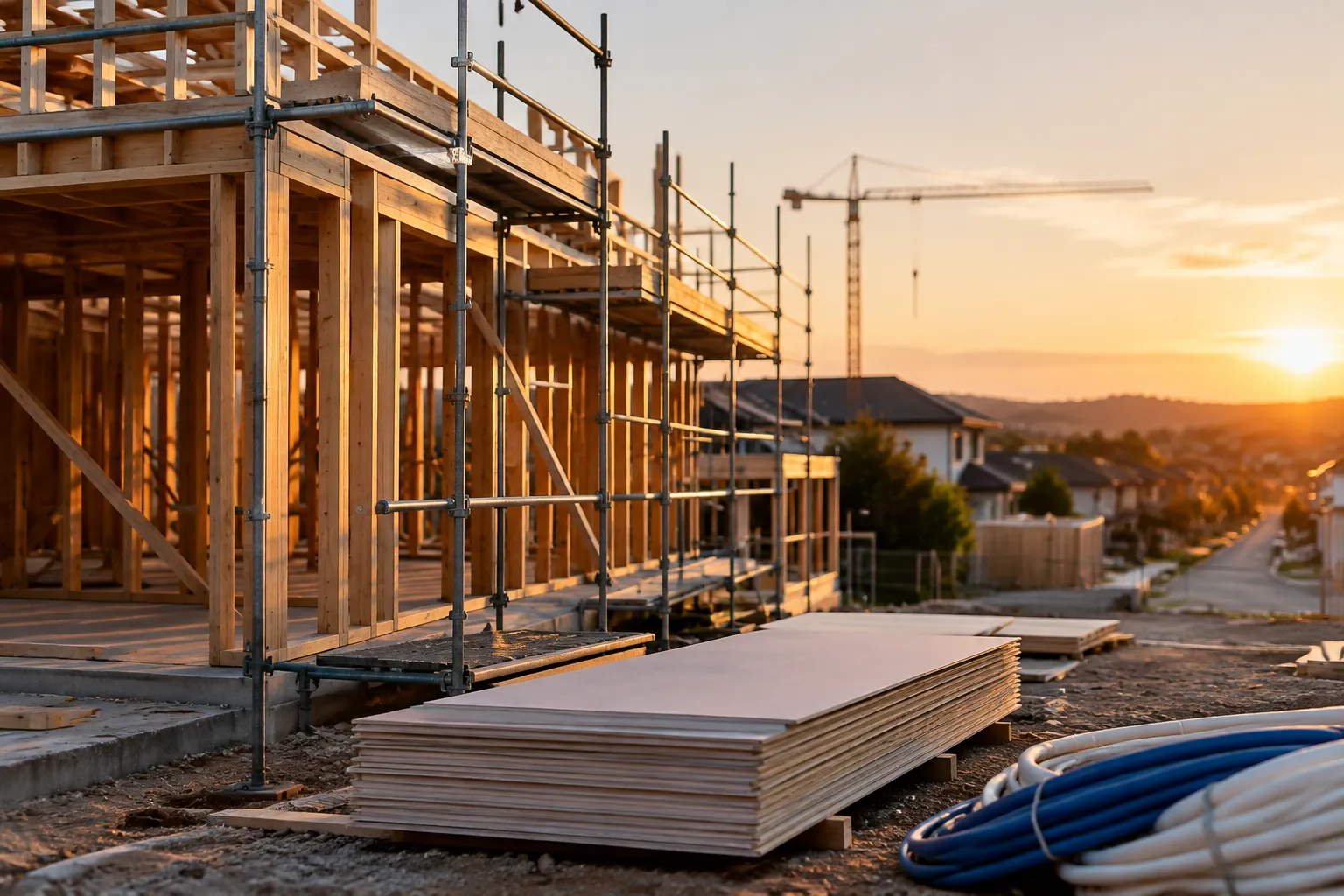
Construction costs rose 1% across Australia in the three months to September 2026, according to Cotality’s Cordell index. Over the twelve months, growth reached 3.2%, up from 2.8% the quarter before. That is not a spike. But it is a change of direction, and it lands on an industry that has little room left to absorb it.
What the Cordell index actually shows
The quarterly lift matches the pace seen through late 2024 and 2025. After a softer stretch, suppliers appear to be returning to their usual pricing rhythm.
The detail is uneven. Plastics rose broadly, and plasterboard crept higher. Some of the pressure may be flowing through from Middle East conflict, though the expert quoted in the source coverage was careful to say the escalation remains modest by historical standards.
By state, Western Australia led with 1.1%. NSW and Queensland both matched the national 1.0%. Victoria and South Australia came in at 0.9%, each slightly better than the prior period. Every state is still running below its five-year average.
Key numbers
- National quarterly growth: 1.0% to September 2026
- Annual growth: 3.2%, up from 2.8%
- Western Australia: 1.1%, the highest of the states
- Victoria and South Australia: 0.9% each
Why a 1% quarter matters more than it sounds
A developer does not feel construction costs as an index. They feel it as a line in a feasibility model that was signed off months earlier. Fixed-price contracts help, but only until the next tender, and anything not locked in moves with the market.
Builders carry the first hit. Margins in residential construction are thin, and the expert noted this lift squeezes them further. Thin margins are the point. A small cost move that a healthy builder absorbs can tip a stretched one into a difficult conversation with a client, a supplier or a lender.
The second-order effect is on borrowers. Higher costs can feed into higher prices for new stock, or into smaller scope for the same budget. Either way, the buyer or owner-builder is the one paying for it.
Costs, not only planning, hold back new homes
Much of the supply debate focuses on zoning, approvals and delays. Those are real. But a planning permit does not build anything. A project still has to clear a feasibility test: expected sale prices against land, construction, finance and a margin that satisfies the lender and investors.
When costs rise faster than prices, that test gets harder to pass even in places where the approval is already in hand. That helps explain why approvals and completions can drift apart. Our housing supply, approvals and building costs guide walks through how those pieces connect.
Finance is where cost pressure shows up visibly. Lenders look at construction budgets closely, and a thinner margin means less tolerance for surprises. We have already seen how development lending is tightening in Perth, where Western Australia now sits at the top of the quarterly cost table.
Commentary has split along predictable lines
One reading says 3.2% is modest, below long-run averages in every state, and nothing to panic about. The other says that even modest growth matters when builder margins are already thin, and that insolvency risk is what actually threatens the supply pipeline.
Both are partly right. The number is not extreme. But the sensitivity of the sector to small moves is the real story, not the headline figure.
What could derail this view
The data could simply be noise. One quarter does not make a trend, and the annual figure is still under the five-year average. If supplier pricing settles back, the pressure eases.
The opposite risk is that conflict-related cost increases build over the next few quarters. The source coverage did not give a forecast, and neither should anyone else at this stage. What is clear is that the direction has changed, and projects already marginal have less room than they did six months ago.
The practical step
If you are planning to build, renovate or invest in a development, ask your builder how much of the price is fixed, for how long, and what triggers a variation. Then stress-test your budget against a further 3% to 5% rise. If it only works with no movement at all, the plan is too tight.
If you want the weekly signal, subscribe to the free newsletter.
General info, not financial advice.