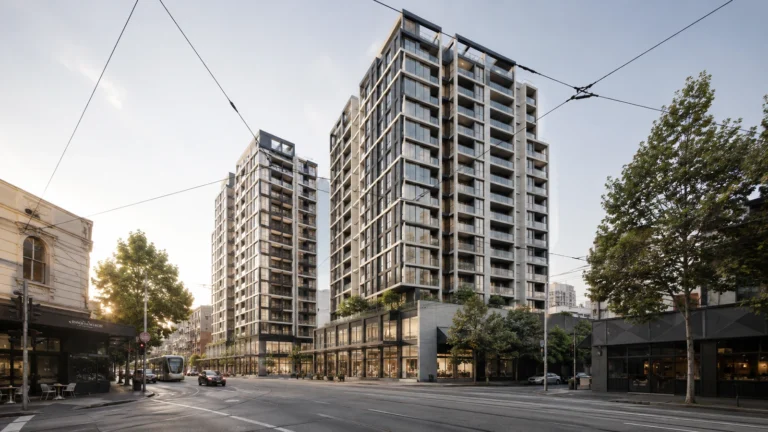
A sovereign wealth fund has put $450 million into Sydney’s office sector at a time when local investors remain wary of CBD commercial real estate. The transaction marks one of the largest institutional commitments to Australian offices since hybrid work patterns reshaped demand.
The Singapore fund’s move signals confidence that prime Sydney office assets have reached a price floor, even as vacancy rates stay elevated and return-to-office policies remain inconsistent across corporate tenants.
What the deal tells us about institutional appetite
Large institutional buyers operate on longer time horizons than domestic funds. A sovereign wealth fund backing Sydney offices now suggests three calculations: that current pricing reflects most of the post-pandemic reset, that prime CBD locations will retain tenant demand despite hybrid work, and that the gap between distressed secondary buildings and quality stock is widening.
The $450 million commitment targets established office towers rather than development sites or value-add conversions. That choice points to a bet on income stability rather than speculative repositioning.
Institutional capital has been selective in Australian commercial property since 2022. Industrial and logistics assets drew the bulk of offshore investment, while office deals largely stalled. This transaction breaks that pattern in a market where local super funds and REITs have stayed cautious.
Where Sydney CBD office fundamentals stand now
Sydney’s prime office vacancy sits around 5-6%, up from the sub-3% rates before the pandemic but still below the long-term average. The pressure point is in secondary stock, where vacancy has climbed past 12% in some submarkets.
Net effective rents have softened as landlords offer incentives to retain and attract tenants. Face rents in premium buildings have held relatively steady, but the gap between asking and achieved rents has widened through rent-free periods and fitout contributions.
Leasing velocity improved through late 2025 as more companies finalised their office footprint decisions. Flight to quality remains the dominant trend: tenants are consolidating into fewer, better-located buildings rather than simply downsizing.
Key numbers
- Prime Sydney office vacancy around 5-6%, secondary stock above 12%
- $450m transaction among the largest institutional office deals since 2022
- Net effective rents down 10-15% from peak in some CBD submarkets
- Average lease incentives now 25-30% in prime stock, higher in secondary
The risks that could derail recovery assumptions
Office market recoveries depend on corporate space decisions that remain fluid. If another wave of companies shifts permanently to smaller footprints or dispersed hubs, even prime buildings face sustained vacancy pressure.
Interest rate settings matter for valuations. Cap rates have already expanded, but further monetary policy uncertainty could compress what buyers will pay even for stabilised income streams.
The construction pipeline also creates supply risk. Several major Sydney office projects are scheduled for completion through 2026-2027, adding stock into a market still absorbing pandemic-era changes. New supply could pressure rents and occupancy if leasing demand doesn’t accelerate.
Sovereign funds can afford to take long-term views that domestic buyers cannot match. What looks like a value entry point to a 30-year holder might still prove uncomfortable for shorter-cycle investors.
What this means for office owners and investors
If you own Sydney CBD commercial property, this transaction provides a reference point for how institutional capital is pricing prime assets now. It does not validate secondary or tertiary stock, where fundamentals remain weak.
For investors considering office exposure, the sovereign fund’s move suggests that some smart money sees a floor, but it doesn’t signal an immediate broad recovery. Quality and location matter more than they have in a decade.
Watch tenant retention rates and lease renewal terms in your building or target assets. The gap between stabilised, well-leased properties and those facing rollover risk is the difference between income certainty and value erosion.
The institutional capital flowing into large-scale property developments and foreign investment channels across other sectors shows appetite for Australian real estate remains strong where the investment case stacks up.
Practical steps if you’re exposed to office assets
Start here: pressure-test your office holdings or potential acquisitions against three scenarios. Base case: vacancy stabilises, rents stay flat, capital values edge up slowly as rates normalise. Downside: another leg of corporate downsizing, sustained vacancy, rents fall another 10%. Upside: return-to-office accelerates, vacancy tightens faster than expected, rents recover by 2027.
If your numbers only work in the upside case, you’re taking more risk than the institutional buyer who can absorb a flat decade.
For exposure through listed office REITs, compare trading prices to net tangible assets and watch distribution coverage. Funds trading below NTA with covered distributions offer income with an embedded margin of safety if asset values stay flat.
Subscribe to the newsletter for weekly analysis of institutional investment patterns and what they signal for property markets.
General info, not financial advice.