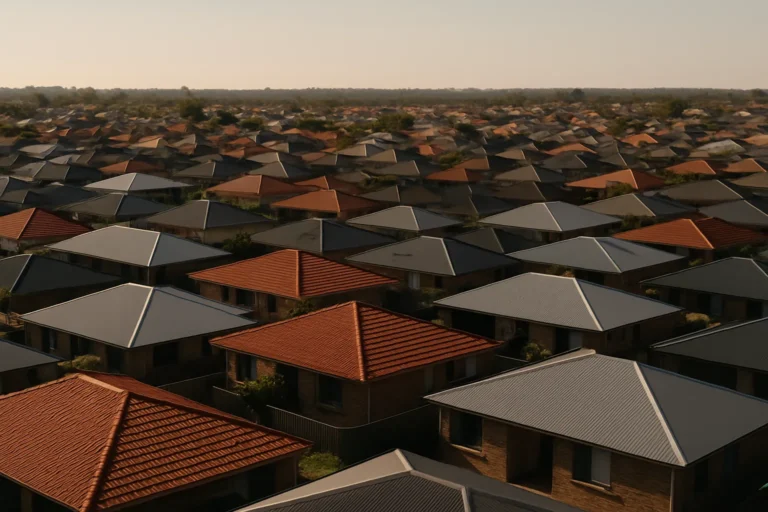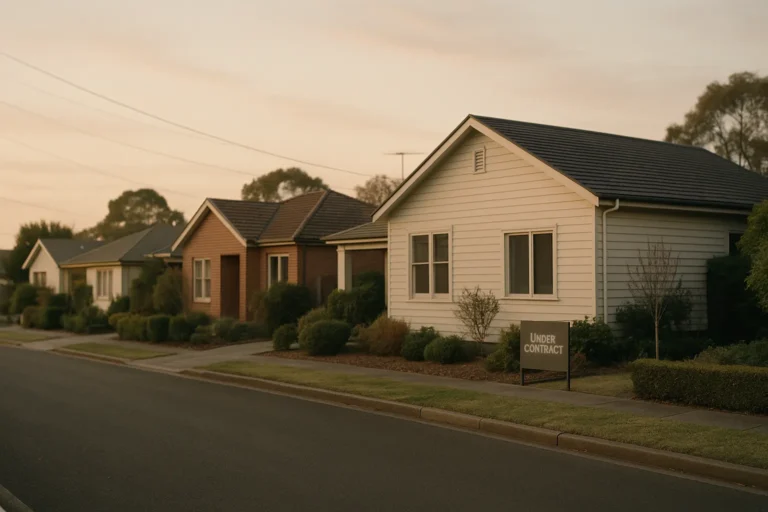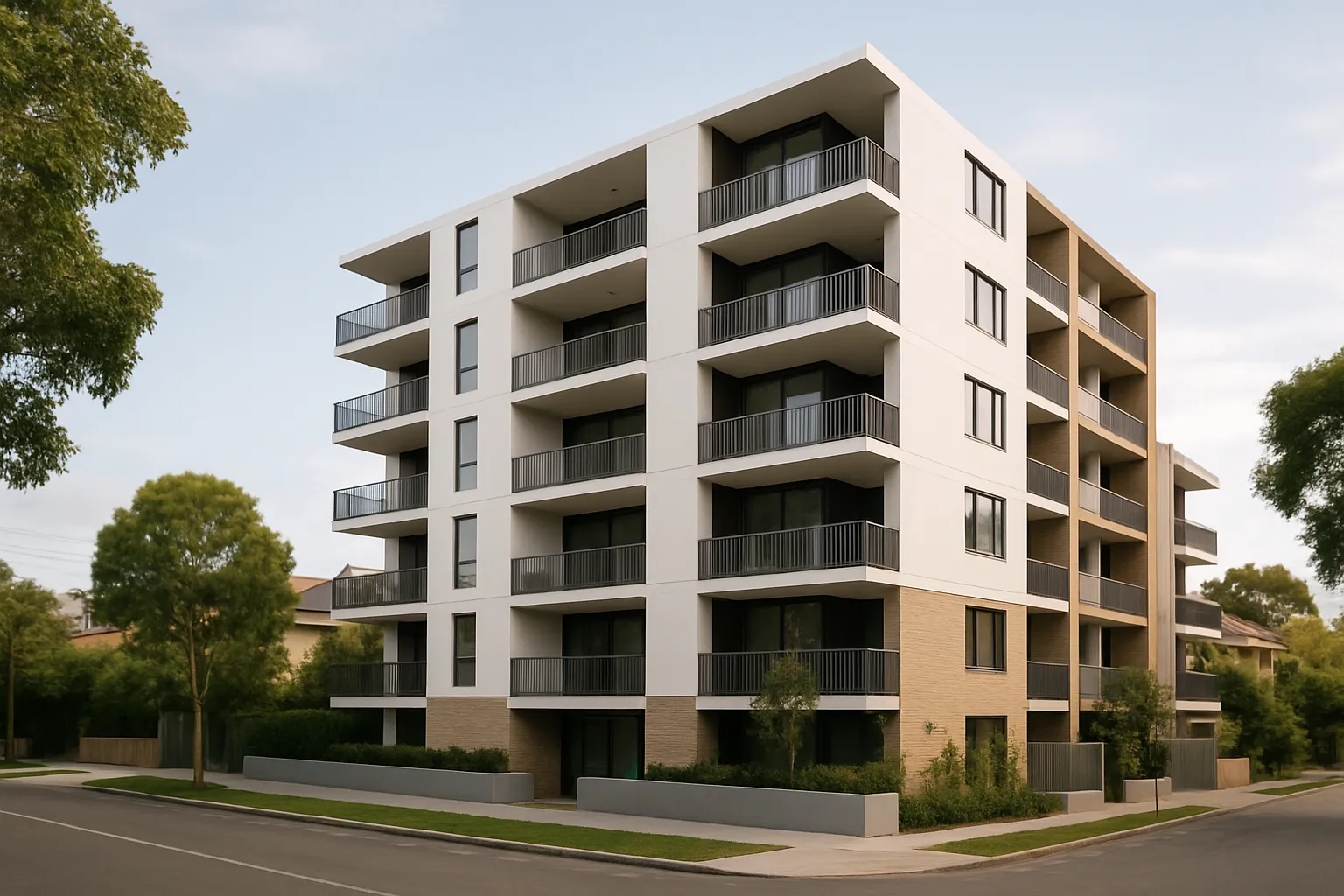
For the first time in years, units are pulling ahead of houses on price growth across multiple Australian regions. The shift is happening fast enough that it shows up in both hard numbers and buyer search behaviour, and the underlying driver is simple: fewer households can afford a house, so they’re buying what they can reach instead.
PropTrack data shows units recorded 6.7% annual price growth to June 2026, beating the 5.6% growth in houses. Month on month, units held flat while house prices slipped 0.4%. Since January, the cumulative split is 9.9% for units against 9.6% for houses. Not a massive gap, but consistent enough that it reflects a genuine change in buyer preference rather than seasonal noise.
Where the demand is shifting
Unit search activity on major listing platforms sat below 30% of total buy searches in late 2020. Through 2021 to 2024 it settled around 37% to 39%, then lifted again from late 2025. That’s a structural move, not a blip. When search share climbs and holds for quarters at a time, it signals buyers are adjusting their criteria before they even book an inspection.
New listings rose 6.3% for houses and 6.9% for units in the six months to June 2026 compared with the same period a year earlier. Supply grew at roughly the same pace across both segments, which means the price divergence is demand-led. Buyers want units more than they did two years ago, and they’re willing to pay more for them relative to houses.
The affordability math that’s driving it
The national median house price now sits at $1,001,000. The median unit price is $735,000. That’s a $266,000 gap, and for a household earning the median income, it’s the difference between being able to service a loan and being locked out entirely.
PropTrack’s affordability data shows the median household could afford repayments on just 15% of properties in 2025. That’s the tightest squeeze in 15 years. When borrowing capacity is that constrained, the $266,000 price difference stops being a lifestyle trade-off and starts being the only way into the market.
Some regions are seeing sharper splits. In North Sydney and Mosman, units outperformed houses by 13.5 percentage points over the past year. Brisbane Inner recorded the widest gap nationally at 24.5 percentage points. Similar patterns showed up in Victoria’s Murray River and Swan Hill areas, Boroondara, and South Australia’s Port Adelaide and western suburbs. These aren’t fringe markets or distressed pockets. They’re established areas where the house-unit price gap has widened to the point that buyer composition is changing.
Key numbers
Units: 6.7% annual price growth, $735,000 median
Houses: 5.6% annual price growth, $1,001,000 median
Affordability: median household can afford 15% of properties
Unit search share: lifted from under 30% in 2020 to 37-39% through 2021-24, rising further from late 2025
What’s happening on the supply side
Private sector approvals for apartments and units jumped 17.8% in June, far ahead of the 0.4% rise in house approvals. Total dwelling approvals rose 7.2%, ending three months of decline. That tilts the approval pipeline toward medium-density for the first time in a while, which matters because it suggests developers are reading the same affordability signals and adjusting their project mix accordingly.
Building approvals data shows the June figures in more detail. The split between house and apartment approvals is widening, but actual construction starts lag approvals by 12 to 18 months, so the supply response is still a year or more away from hitting the market in volume.
That creates a near-term risk: if buyer preference keeps shifting toward units faster than new unit supply can land, the price premium over houses could widen further before it stabilises. Investors chasing yield might accelerate that if they start favouring apartment projects in Brisbane and other cities where rental demand is tight and construction pipelines are still thin.
What could stall this
The RBA held the cash rate at 4.35% in June after three increases earlier in the year. The next decision is due 11 August 2026. If inflation stays above the 2% to 3% target band and the board hikes again, borrowing capacity shrinks further. That would push more buyers toward units, but it would also freeze out a larger share of households entirely, which could dampen total transaction volumes even as the unit share of sales grows.
The other variable is whether medium-density planning approvals in middle-ring suburbs can keep pace with demand. If councils slow-walk rezonings or restrict heights and densities, the approval spike won’t translate into enough actual dwellings to ease the affordability gap. That would lock the price premium in place and shift the question from whether units outperform houses to how long the gap can widen before policy catches up.
The read for buyers and investors
If you’re a first-time buyer and your borrowing capacity is maxed out, the $266,000 median gap between houses and units is the only number that matters. The trade-off is space and land, but the alternative is renting for another three years while house prices compound further out of reach.
For investors, the unit-over-house price growth pattern suggests yield compression in houses and relative strength in unit cashflow, especially in regions where rental vacancy is below 2%. That makes new-build units in precincts with strong transport links and employment hubs worth pressure-testing, but only if construction timelines and defect risk are nailed down in the contract. Apartment construction costs are still elevated, which means developers are building to tighter margins and buyers need to check builder solvency before committing.
If you’re holding a house in an area where the unit-house price gap is widening, watch whether local planning policy shifts toward higher-density rezonings. That could unlock capital gains if your land gets rezoned for apartments, but it could also cap house price growth if supply tilts heavily toward units in your suburb.
What happens if rates move again
A rate hike in August or later in 2026 would cut borrowing capacity by another 3% to 5% depending on loan size and deposit. That pushes the affordability floor higher and narrows the share of properties the median household can service. Under that scenario, unit price growth could accelerate further relative to houses, especially in Brisbane, Melbourne’s middle ring, and Adelaide, where unit supply is still catching up to population growth.
The base case is that affordability stays tight, unit demand holds above historical averages, and approvals data suggests developers are responding. The risk case is that a rate hike stalls transaction volumes entirely, freezing both house and unit markets until wages catch up or the RBA cuts. The upside case is that planning reform accelerates medium-density supply in the right locations, easing the price gap and giving more households a realistic path into ownership.
Subscribe to the newsletter for the weekly breakdown of what’s shifting and what it means for your next decision.
General info, not financial advice.