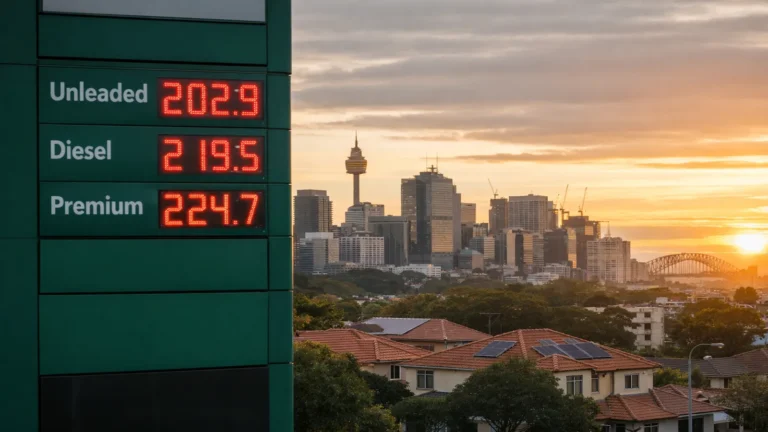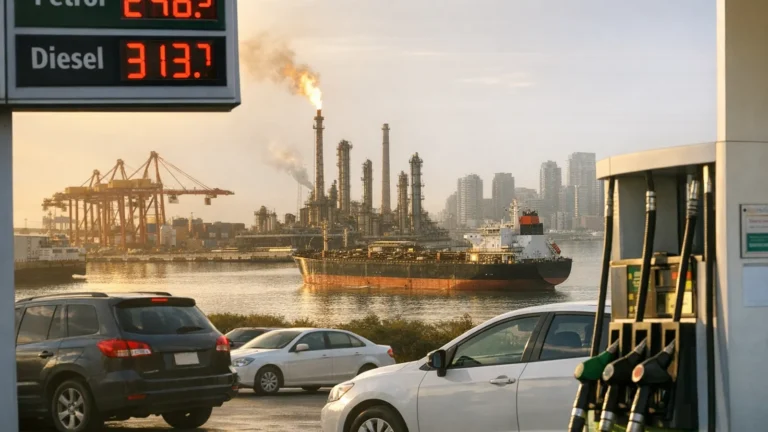
A new oil shock is pushing recession talk back into the room. For property readers, the bigger question is not whether global markets are nervous. It is whether this becomes another short-lived panic, or the kind of inflation pulse that keeps rates higher for longer and makes an already strained housing market harder to navigate.
That distinction matters.
Australia does not need a full-blown crisis in the Middle East to feel the pain. We feel it through petrol, freight, imported goods, construction inputs and confidence. That does not automatically produce a housing crash. But it can absolutely make the next phase of the property cycle more fragile.
Now, the part most people miss.
Housing usually breaks through cash flow and credit before it breaks through headlines. If oil stays high long enough, the hit does not stop at the bowser. It moves into household budgets, builder margins, tenant stress, investor confidence and, eventually, the Reserve Bank’s room to move.
The problem is not just fuel. It is the chain reaction
An oil spike works like a tax on the economy.
Households pay more to drive, transport operators pay more to move goods, businesses pay more to run equipment and suppliers start lifting prices where they can. Some firms absorb part of it. Many cannot. That is how a geopolitical shock starts turning into an inflation problem.
For property, that matters in four ways.
First, borrowers lose breathing room. A household can often manage a high mortgage for a while when the rest of the budget is stable. That becomes much harder when fuel, groceries, insurance and utilities all stay stubborn at the same time.
Second, rate relief gets harder. If higher oil feeds broader inflation, the RBA has less freedom to sound relaxed, let alone cut aggressively.
Third, construction gets squeezed. Materials tied to energy, transport and petrochemicals become dearer to make and move. Projects that looked viable at one cost base can quickly look shaky at another.
Fourth, sentiment turns defensive. Buyers pause. Developers hold back. Investors start demanding a bigger buffer before they commit.
That is why an oil shock matters even if home prices do not immediately fall.
Why this lands awkwardly for Australia
Australia is not entering this from a position of comfort.
Inflation had already proved sticky. The rate debate had already become more tense. Households were already dealing with a slower economy, high repayments and thin buffers. Add an external energy shock to that mix and the system becomes less forgiving.
This is where the overseas story starts to matter locally.
If the US faces higher inflation pressure and global bond markets start repricing, Australia does not sit outside that. A stronger US dollar can pressure the Australian dollar, which makes imports more expensive. That adds another inflation channel just when households and businesses can least afford it.
So the property risk is not only about what the RBA does next. It is also about whether global rates, currencies and energy costs combine to keep local financial conditions tighter than buyers were hoping.
What changes for housing, and what probably doesn’t
Here is the catch.
A sharp oil move does not automatically wipe out Australian housing demand.
The country still has a supply problem. Listings are not endless. Rental pressure remains real in many markets. New home delivery is already struggling. That shortage can stop prices from falling as much as the macro headlines imply.
But undersupply is not a magic shield.
What it can do is change the shape of weakness.
Instead of a clean national drop, you can get a slower, patchier market. Borrowing power fades. Time on market drifts out. Investor-grade stock underperforms. Outer suburban buyers feel the transport hit harder. New projects get delayed because the cost stack no longer works. In other words, the market can stay structurally tight and still feel much tougher on the ground.
That is why broad national averages can miss what buyers and investors actually experience.
The building cost risk could be bigger than many buyers expect
For housing policy, this may be the nastiest second-order effect.
Governments can announce supply targets all they like. The market still has to build the homes. And building is brutally sensitive to cost blowouts, delays and margin pressure.
If diesel, freight and oil-linked materials stay elevated, that adds pressure to a sector that is already carrying labour shortages, finance constraints and planning friction. Apartment projects are especially vulnerable because they are more complex and less forgiving when costs drift.
That means an oil shock can end up worsening affordability two ways at once: by keeping rates restrictive for longer and by making new housing harder to deliver.
For background on that supply side, read How a war thousands of kilometres away could blow up the cost of building homes in Australia and Labor’s housing promise is slipping and the gap is widening.
The catch
If oil stays high for weeks, markets get noisy.
If it stays high for months, property starts wearing the damage through borrowing costs, building costs and weaker household buffers.
This is where the recession argument gets real
Not every oil shock produces recession. But many become dangerous because central banks have no clean answer.
If inflation flares again, rates stay higher for longer or even rise further. If central banks look through the inflation shock, currencies and bond markets can do the tightening instead. Neither route is especially friendly for property.
In Australia, that can produce the worst mix for housing decision-makers: slower growth, squeezed households, fragile confidence and no quick monetary rescue.
That is not the same thing as saying prices must collapse. It is saying the margin for error narrows.
Highly leveraged borrowers feel it first. So do buyers relying on every dollar of capacity. So do investors carrying weak yields and thin cashflow buffers. And so do regional households who spend more of their budget on fuel and transport than inner-city professionals often realise.
What would make this less dangerous
There are three ways this story becomes more manageable.
The first is duration. A short spike is painful but survivable. A long spike is where the trouble compounds.
The second is inflation containment. If fuel lifts but the pass-through into broader prices stays limited, the RBA has more flexibility than the market currently fears.
The third is labour-market resilience. Property can absorb delayed rate cuts more easily than it can absorb a meaningful rise in unemployment.
If those things hold, the damage may look more like a confidence shock than a housing shock. If they do not, then recession talk stops sounding theatrical and starts sounding practical.
So what should property readers do with this?
Do not trade the headline. Pressure-test the mechanics.
If you are buying, assume higher living costs for longer and rerun your numbers with a real cashflow buffer.
If you are investing, stop looking only at rates. Look at fuel exposure, tenant affordability, insurance, vacancy risk and how resilient your holding costs would be if cuts arrive later than expected.
If you are developing or renovating, be honest about the cost side. In this kind of market, the deal often fails in the spreadsheet before it fails on site.
For more context, see
- Why a Middle East oil shock may not crash Australia’s housing market yet,
- Oil Shock Hits Property Investors Where It Hurts Most: The RBA May Not Be Done Yet,
- Australia’s rate pain is back and worse may be ahead, and
- Household bills set to soar as petrol shock spreads.
Bottom line
Oil is the obvious story. Property is the slower one.
If this shock fades quickly, Australia’s housing market may wobble without breaking. If it lingers, the damage is more likely to show up through sticky inflation, delayed rate relief, weaker building economics and rising household stress.
That is the real risk.