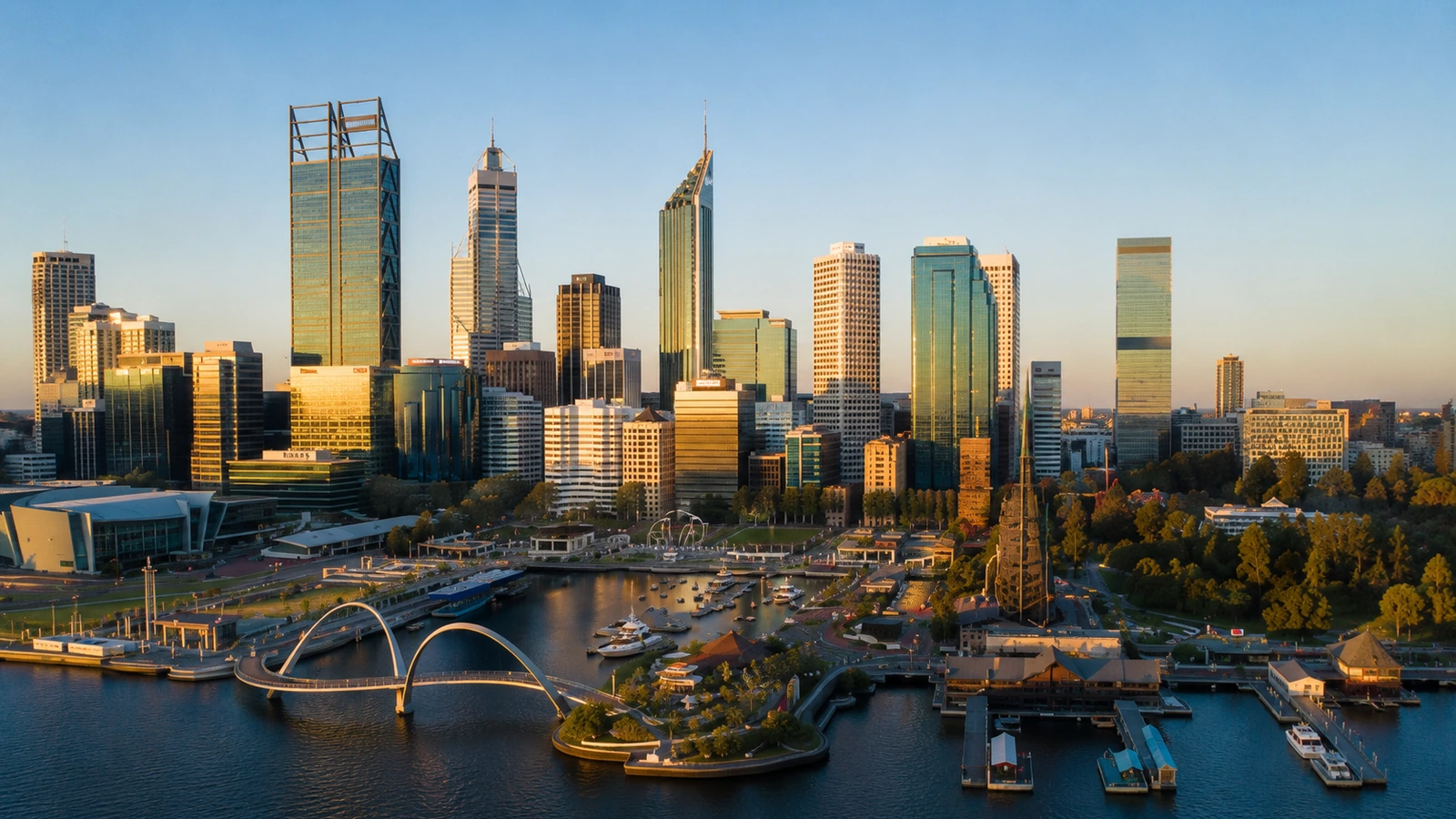
Perth property market momentum has been one of the clearest housing stories in Australia.
After years of being overlooked, Western Australia’s capital has delivered the kind of price growth that forces even sceptics to pay attention. Dwelling values are up strongly over the past year, rents remain tight, and investors from the eastern states are still looking west for yield.
But that does not mean Perth can keep running at the same speed.
The better question is not whether Perth is suddenly weak. It is whether the city is shifting from boom conditions to something more selective.
That distinction matters.
A slowing market can still rise. A stretched market can still be under-supplied. And a city with strong fundamentals can still punish buyers who pay too much for the wrong asset.
The boom is not over, but the easy phase may be
Perth has had a powerful run.
The city’s dwelling values rose again in May, according to Cotality figures cited in the supplied market data, with annual growth sitting near 26 per cent. Over five years, values have climbed by more than 90 per cent.
Those are not normal numbers.
They reflect a market that spent much of the previous decade recovering from the long shadow of the mining investment downturn. Between roughly 2014 and 2020, Perth was not behaving like Sydney or Brisbane. It was dealing with weaker demand, softer confidence and too much stock in parts of the market.
That history matters because today’s growth is not only a Covid-era boom. In some suburbs, it has also been a catch-up trade.
Australian Property Review has previously noted the same national split in Sydney slips as Perth surges. Is the housing cycle turning?, where Perth kept moving while Sydney and Melbourne showed clearer signs of fatigue.
The catch is that catch-up growth does not last forever.
At some point, buyers stop comparing Perth with its own weak past and start comparing prices with incomes, rents, borrowing power and risk.
That is where the next phase begins.
Why Perth still has support underneath it
The strongest argument for Perth is still supply.
Western Australia’s population has been growing faster than the housing pipeline can comfortably absorb. The supplied data points to nearly 66,000 extra residents in the year to September 2025, against just over 22,000 completed dwellings.
That gap is the basic maths behind the pressure.
More people need housing. Too few homes are being finished. Rental vacancies stay tight. Rents rise. Investors see higher income returns. Owner-occupiers face more competition for established homes.
In plain English, Perth does not need perfect conditions to keep prices supported. It needs demand to remain stronger than available supply.
That is still the base case.
Perth also continues to offer rental yields that look more attractive than Sydney or Brisbane. The supplied figures put Perth’s gross rental yield at around 3.6 per cent, above Sydney at 3.1 per cent and Brisbane at 3.3 per cent.
For investors, that matters because yield is not just a headline return. It affects cash flow, holding power and the size of the buffer needed when rates, insurance, land tax or maintenance costs rise.
Australian Property Review has covered the investor mood shift in Perth investor boom cools as risks build, where WA remained attractive but sentiment was already being tested by higher borrowing costs and policy uncertainty.
That is the key point.
The fundamentals are still strong. The margin for error is getting thinner.
Quick take
Perth does not look like a market about to fall off a cliff.
But it does look like a market moving from broad-based growth to a more selective phase.
The simple rule of thumb: when a market has already moved hard, asset quality matters more than the suburb headline. Strong rental demand can support prices, but it will not save every poor-quality purchase.
Rates are the pressure point buyers cannot ignore
The biggest risk to Perth is not that demand disappears overnight.
It is that borrowing power keeps getting squeezed.
Higher interest rates reduce what buyers can afford before they even make an offer. They also force investors to pressure-test cash flow more carefully, especially when buying after a major price rise.
Australian Property Review has explained this borrower pressure in RBA Rate Pain: What Borrowers Can Do Now, where the focus was not only on rate rises, but on whether households still had enough buffer left.
That same issue applies in Perth.
A buyer who could absorb a vacancy, repair bill or rate rise two years ago may have less room today if they are buying at a much higher price. The rental market may still be tight, but higher rents do not remove every risk.
This is where investors need to separate two things:
- Market strength
- Deal quality
A strong market can still produce weak deals.
That is especially true when buyers chase last year’s growth without checking whether the rent, location, building condition and resale appeal still stack up.
The next signal is listings, not headlines
If Perth is cooling, the first signs are unlikely to be dramatic.
They will show up in the boring numbers.
More listings. Longer days on market. Fewer runaway campaigns. More price guides that need adjustment. More buyers willing to walk away.
That does not mean prices must fall. It means buyers have more room to think.
The supplied market commentary points to rising listings against weekly sales as one early sign that the market is becoming more balanced. That fits the usual pattern. When supply on market lifts and demand stops accelerating, price growth slows first.
Falls come later, and only if the imbalance shifts far enough.
For now, the better read is moderation, not collapse.
Not all Perth property will move together
This is the part many buyers miss.
Once a boom matures, the market stops lifting everything equally.
Quality homes in established locations usually hold up better because they appeal to more buyer types. A well-located family home, villa or apartment with owner-occupier appeal has a deeper resale market than a compromised property bought only because it looked cheap on a spreadsheet.
That does not mean affordable areas are finished.
In fact, affordability often keeps demand active in outer and middle-ring suburbs. But the risk is paying a premium for a property with weak land value, poor layout, high strata costs, limited transport access or expensive maintenance issues.
Perth’s earlier growth phase rewarded speed.
The next phase is more likely to reward discipline.
A buyer who does the extra work on comparable sales, rental demand, building condition and local supply risk will be better placed than someone who simply assumes Perth will keep carrying every decision.
What could derail Perth’s run
There are four main risks to watch.
The first is interest rates. If borrowing costs rise again or stay high for longer, buyers may have less capacity to keep bidding up prices.
The second is confidence. Property markets can handle bad news better than uncertainty. If investors become unsure about tax rules, lending conditions or future policy settings, some will delay decisions.
The third is supply. Perth’s shortage is supporting the market now, but any meaningful improvement in completions, listings or rental availability would reduce pressure.
The fourth is local employment. Western Australia’s economy has been a strength, helped by wages growth and resources-linked activity. If that weakens, Perth’s housing story becomes less one-sided.
None of those risks guarantees a downturn.
They simply show why buyers should avoid assuming the past 12 months will repeat.
The practical take for buyers and investors
Perth still has more support than many markets.
Population growth is strong. Supply is tight. Rental yields remain comparatively attractive. The economy has been resilient. Those are real advantages.
But after a price surge of this size, the strategy needs to change.
Do not buy Perth because the city has already boomed. Buy only if the individual asset still works under conservative assumptions.
Start with three checks:
- Cash flow: Can the property handle a higher rate, one month vacant and a repair bill?
- Asset quality: Would an owner-occupier want this property if investor demand cooled?
- Exit risk: Are there enough future buyers for this asset if the market becomes more selective?
If the answer is weak on any of those, the headline growth rate is not enough protection.
The bottom line is simple. Perth’s boom may not be over, but the forgiving part of the cycle is fading.
For weekly property signals without the spin, subscribe free to the Australian Property Review newsletter
General info, not financial advice.