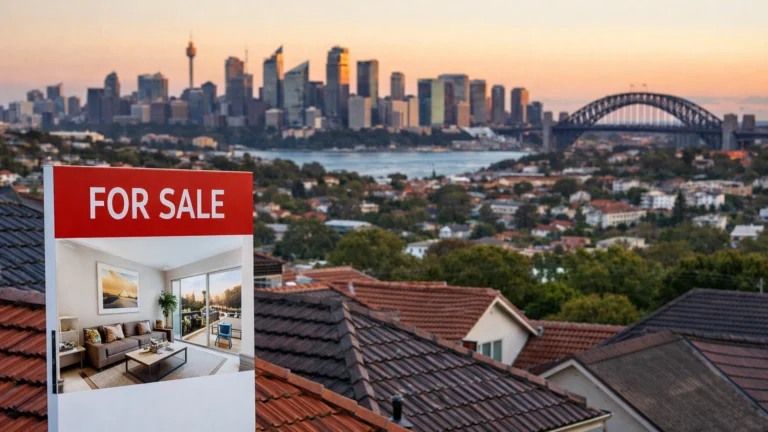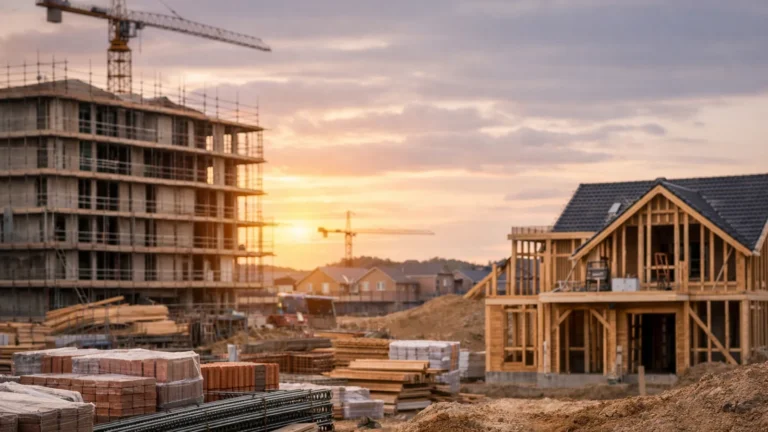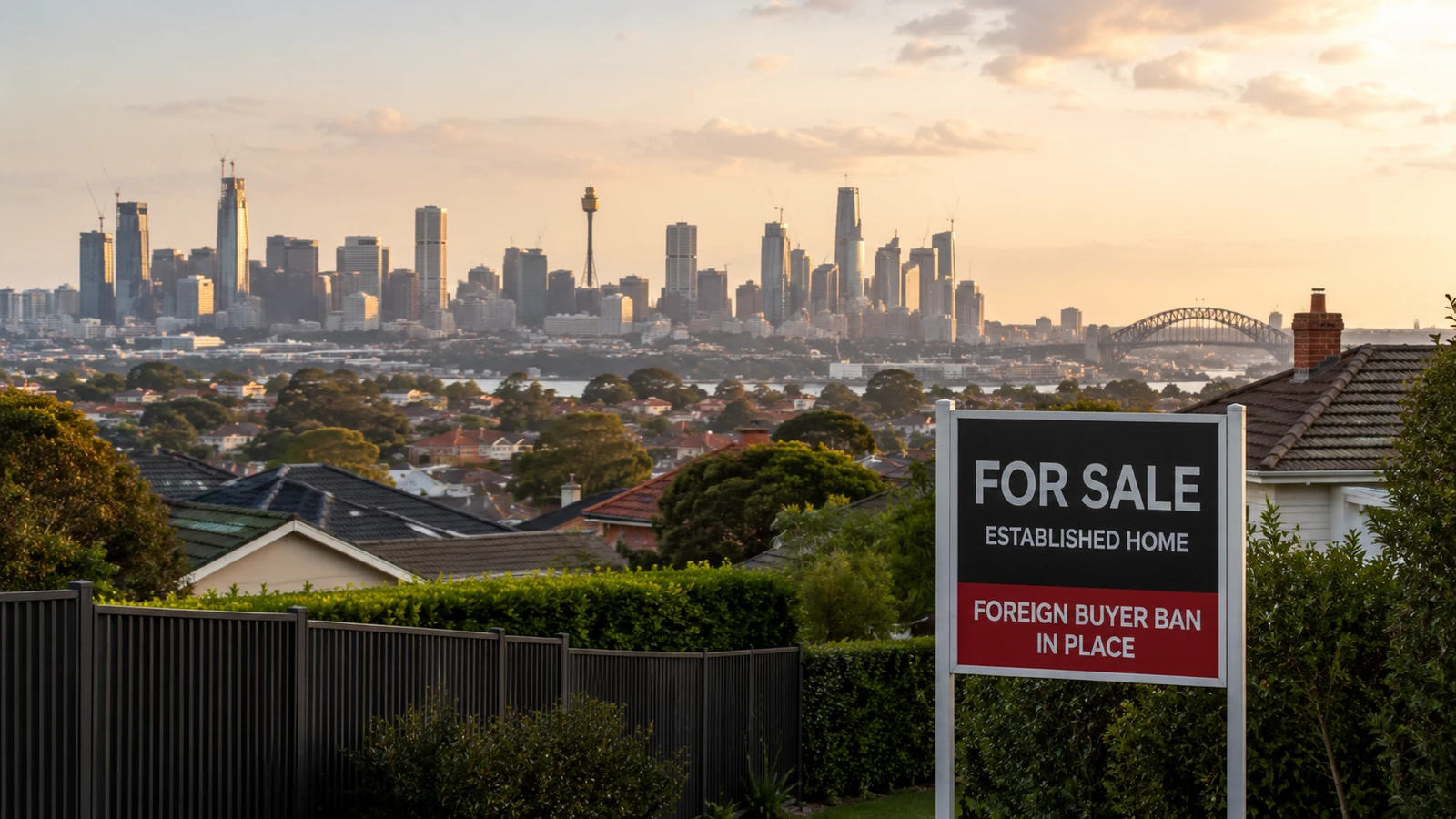
Australia’s foreign buyer ban has been extended, and on the surface, the politics are easy to understand.
Local buyers are stretched. Supply is short. Rents are high. So blocking foreign buyers from purchasing established homes looks like a clean affordability move.
But housing policy rarely works cleanly.
The Government is extending the temporary ban on foreign purchases of established residential dwellings until 30 June 2029, according to the Australian Taxation Office. The ban applies from 1 April 2025 and has limited exceptions.
That is the headline.
The harder question is whether the policy meaningfully improves affordability, or whether it mostly shifts pressure around a market still struggling to build enough homes.
What the ban actually does
The policy restricts foreign persons from buying established dwellings in Australia.
In plain English, that means the rule is aimed at existing homes, not the construction of new ones.
That distinction matters.
The Government wants to reduce competition for existing homes while keeping foreign capital pointed towards new supply. In theory, that gives local buyers more room in the established market without discouraging housing development.
It is a neat policy design on paper.
But the real market is less tidy. Buyers do not compete in one national pool. A first-home buyer looking for an older apartment near work is not always competing with the same buyer considering a new townhouse or off-the-plan unit.
The ban may reduce some demand for established homes. It does not automatically create more homes.
That is the part most people miss.
The affordability case is politically strong
The case for the foreign buyer ban is simple.
If fewer non-resident buyers can bid for established homes, local buyers face less competition at the margin. In expensive markets, the marginal buyer matters. They can be the person who pushes an auction from affordable to just out of reach.
For a first-home buyer already dealing with higher repayments, thin listings and strict serviceability tests, even a small reduction in competition can feel meaningful.
There is also a fairness argument.
Established homes already exist. If Australia is short of housing, the Government wants those homes available primarily to people living here, paying local wages and trying to secure shelter in the same market.
That argument will land with many readers because affordability pressure is no longer theoretical. It is showing up in delayed home ownership, longer commutes, larger deposits, and more households staying in the rental market for longer.
Australian Property Review has already covered why the national housing shortfall could keep pressure on prices. The National Housing Supply and Affordability Council has forecast 938,000 new dwellings over the five-year Housing Accord period against a 1.2 million target, leaving a projected shortfall of 262,000 homes.
So yes, the affordability logic is easy to sell.
The evidence test is harder.
The supply problem has not gone away
Australia’s housing problem is not just who can buy.
It is also what exists to buy.
The foreign buyer ban changes demand for established homes. It does not fix planning delays, infrastructure bottlenecks, construction costs, labour shortages, builder insolvencies, finance constraints or feasibility problems.
Those are the things that decide whether more homes get built.
The Government is trying to pair the ban with supply-side funding. Budget reporting points to a $2 billion Local Infrastructure Fund designed to help unlock new housing by funding enabling infrastructure through states, territories, councils and utilities. The same reporting said the fund was linked to the delivery of around 65,000 new homes over the decade.
That is the more important side of the story.
A foreign buyer ban can change who competes for existing homes. Infrastructure funding can change whether land becomes buildable. The second lever is slower, messier and less politically punchy, but it matters more for long-term affordability.
Here’s the catch.
If Australia blocks more demand from existing homes but fails to unlock enough new homes, affordability gains may be limited. Prices can still rise if local demand remains strong and supply remains tight.
Quick take
The foreign buyer ban may help some local buyers at the margin, especially in established-home markets where foreign demand was active. But affordability will still be decided by supply, credit, wages, rates and the speed of new housing delivery.
Where this could help buyers
The policy is most likely to help where foreign buyers were genuinely competing for the same established homes as local buyers.
That may include some inner-city apartments, prestige homes, university-linked locations and suburbs with strong temporary resident demand.
But the effect will not be even.
In many outer-suburban family markets, the bigger forces are likely to remain local wages, borrowing power, listings, land release, construction costs and interest rates.
This is why the ban should not be read as a national price reset.
It is more likely to be a pressure valve in some markets than a circuit-breaker for affordability across the country.
A buyer in western Sydney, Melbourne’s middle ring or Brisbane’s growth corridors may still face the same practical problem: not enough suitable homes at prices their lender will support.
That brings credit back into the story.
Australian Property Review has already examined how lending rules can reshape the market before buyers notice. See our analysis of APRA debt-to-income limits and borrower risk for the credit side of this debate.
The second-order effect investors should watch
The foreign buyer ban could push more attention towards new dwellings.
That is partly the point.
Foreign investment rules have generally been designed to steer offshore capital into new housing rather than established homes. If that capital helps developers pre-sell projects, it can support new supply.
But there is a trade-off.
Some apartment projects rely on pre-sales to secure finance. If policy settings, taxes, funding costs or buyer restrictions make those projects harder to launch, the supply pipeline can weaken.
That is not an argument against the ban. It is an argument for watching the full chain.
A project does not get built because a headline says “more supply”. It gets built when the developer can make the numbers work, secure approvals, fund construction, manage risk and find buyers.
If foreign capital is still allowed and encouraged into new builds, the policy can support supply. If broader conditions scare off buyers or lenders, the supply benefit can fade.
This is where policy design matters.
The Government needs to show that it is not just blocking one type of demand. It needs to prove it can get homes approved, serviced, financed and completed.
What changed and what did not
What changed is the timeline.
The ban is no longer just a short two-year intervention. It now extends to 30 June 2029, which means it will sit across a longer stretch of the housing cycle.
What did not change is the underlying affordability equation.
Home prices still depend on borrowing power, wages, listings, construction rates, investor activity, migration, rental pressure and confidence.
The RBA still matters. So do lenders. So do state planning systems.
That is why this policy should be treated as one lever, not the lever.
If rates fall, credit loosens and buyer demand lifts, the absence of some foreign buyers may not be enough to stop price pressure in supply-constrained markets.
If unemployment rises, lending tightens or construction slows further, the ban will not protect buyers from broader market risk either.
Who wins and who loses?
The likely winners are local buyers competing in markets where foreign demand for established homes was material.
That does not mean prices fall. It may simply mean fewer competing bids.
The next group that could benefit is the Government itself. Politically, this is a visible affordability measure. It is easy to explain and easy to defend.
The uncertain group is developers.
If foreign capital is redirected towards new dwellings and vacant land that genuinely adds stock, developers may benefit. If the broader investment mood weakens, projects may still struggle.
The group that should be careful is buyers assuming this policy suddenly makes the market cheap.
It does not.
A buyer still needs to pressure-test repayments, insurance, strata, maintenance, vacancy risk if investing, and the chance that borrowing conditions change.
For investors, the policy also sits beside other rule changes. Australian Property Review has covered how negative gearing bank serviceability changes can affect borrowing power even before formal tax changes begin. That same principle applies here: policy can move behaviour before the full effect appears in prices.
What would prove the policy is working?
The foreign buyer ban should be judged on evidence, not applause.
Useful signals include:
- Whether foreign purchases of established dwellings fall materially.
- Whether local buyer participation improves in affected markets.
- Whether new dwelling investment remains strong.
- Whether housing completions lift, not just approvals.
- Whether affordability improves relative to income, not just sentiment.
The fifth point matters most.
A policy can be popular and still have a small effect if prices keep rising faster than wages.
For affordability to improve in a durable way, Australia needs more homes in the places people need them, at prices households can finance without becoming dangerously stretched.
That is harder than banning one buyer group.
The practical take
If you are a buyer, do not assume the foreign buyer ban changes your budget.
Start with the numbers your lender will actually use. Then look at stock levels in your target suburb, days on market, auction depth and comparable sales over the past 60 to 90 days.
If you are an investor, watch whether capital keeps moving into new builds, because that is where policy is trying to direct demand.
And if you are reading this as an affordability story, keep your eye on completions. Not promises. Not announcements. Completed homes.
That is where the housing shortage either starts to ease or keeps rolling into the next cycle.
Start here: pressure-test your borrowing capacity before assuming policy relief will do the heavy lifting.
Subscribe to the free Australian Property Review newsletter