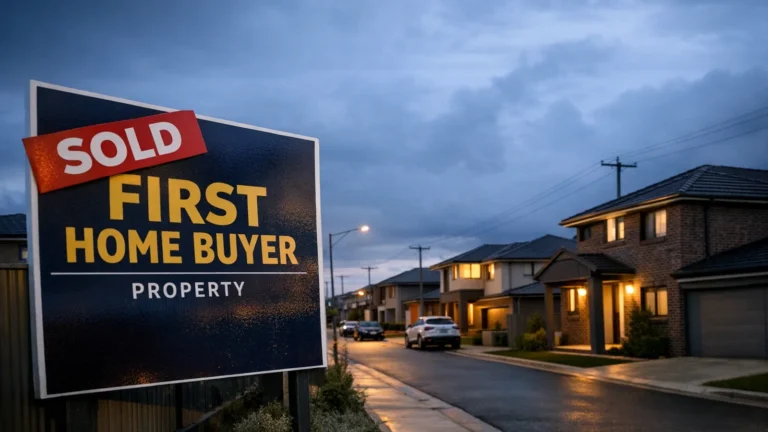
The ACT is about to remove one of the biggest upfront costs facing first home buyers.
From 1 July 2026, first home buyers in the Australian Capital Territory will no longer pay stamp duty. The change, announced as part of the 2026–27 ACT Budget, makes the Territory the first Australian jurisdiction to abolish stamp duty for all first home buyers.
That is the clean headline.
The market story is less clean.
ACT stamp duty relief will lower the cash hurdle for eligible buyers. It may help some households buy sooner. It may also change the way vendors, developers and competing buyers behave.
So the question is not only who saves money.
It is whether the saving stays with the buyer.
What the ACT is changing
The main reform is simple: from 1 July 2026, first home buyers in the ACT will pay no stamp duty.
The exemption is being expanded beyond first home buyers too. The ACT Government says stamp duty relief will also apply to pensioners, eligible National Disability Insurance Scheme participants and buyers who have not owned property in the past five years.
There is also a separate push aimed at new housing.
Owner-occupiers buying new unit-titled homes will not pay stamp duty. Existing concessions for owner-occupiers buying off-the-plan units will continue. The exemption will also extend to turn-key units, which means newly built units that were not sold off the plan.
In plain English, the ACT is trying to do two things at once.
It wants to reduce the upfront cost of buying.
It also wants to steer more demand into new homes, apartments, townhouses and medium-density housing rather than only established detached homes.
That second part matters.
Stamp duty cuts can help buyers at settlement. But unless more homes are built, the benefit can leak into higher prices.
Who gets the clearest win?
First home buyers with tight deposits are the obvious winners.
Stamp duty is painful because it is paid upfront. It is not just another repayment spread across 25 or 30 years. For a buyer already trying to cover a deposit, legal costs, moving costs, inspections and loan fees, stamp duty can be the number that delays the purchase.
Removing it gives buyers more room.
That room can be used in several ways:
- buying sooner
- reducing the amount borrowed
- keeping a larger cash buffer
- covering moving and settlement costs
- avoiding the temptation to stretch for the absolute top of pre-approval
The best use is usually not to bid the full saving away at auction.
That is the trap.
A buyer who saves on stamp duty but then pays more for the property may not be better off. They may simply move the cost from a tax bill into a bigger mortgage.
Australian Property Review has covered a related first-home buyer risk here: https://www.apreview.com.au/negative-equity-first-home-buyers/
The same principle applies. The entry price still matters. A policy saving does not remove valuation risk.
The catch: buyer savings can become vendor pricing power
Here’s the catch.
When governments reduce buying costs, buyers often feel wealthier before they actually own anything.
That can change behaviour.
A buyer who previously had a hard ceiling may lift their offer. A vendor may hold firmer. A developer may have more confidence to price new stock. Agents may frame the reform as extra buying capacity.
None of that means the policy is bad.
It means the benefit depends on supply.
If more homes come to market and construction responds, the reform can improve access without simply inflating prices. If listings stay tight, some of the saving may be competed away.
This is the uncomfortable trade-off in most buyer assistance policies.
They help individuals.
They can also lift demand.
The ACT’s stronger argument is that it is not only cutting stamp duty. It is also trying to back more supply.
Why “missing middle” housing is part of the same story
The ACT Government is also cutting the lease variation charge by 50% for a limited period on eligible missing middle developments.
Missing middle housing means the homes between detached houses and high-rise towers. Think terraces, townhouses, low-rise apartments and multi-unit housing on residential blocks.
That may sound like planning jargon, but it is central to the policy.
Canberra’s affordability problem is not only that buyers face taxes. It is that many households are forced to choose between expensive detached homes and smaller apartments, with too few options in between.
If the missing middle reforms work, more buyers could have realistic choices.
A downsizer might move from a larger family home into a well-located townhouse or unit. That could free up a larger home for a growing family. A first home buyer might choose a lower-maintenance new unit rather than chasing an older house beyond their budget.
That is the second-order effect the government is relying on.
The policy does not only need buyers to save money. It needs households to move into homes that better match their stage of life.
Quick take
ACT stamp duty removal is a real upfront saving for first home buyers, but it is not a free pass to overpay. The buyer who benefits most is the one who treats the saving as a buffer, not an excuse to lift their limit.
What changed and what did not
What changed is the upfront cost.
For eligible ACT first home buyers, stamp duty will no longer be a barrier from 1 July 2026. That can bring forward buying decisions and reduce the cash needed at settlement.
What did not change is borrowing capacity.
Banks will still test income, expenses, debt, credit history and repayment buffers. The RBA cash rate, lender serviceability rules, wages and household spending will still decide how much many buyers can borrow.
The other thing that did not change is the supply problem.
Canberra still needs enough new homes in the right places, at prices households can actually afford. Tax reform can help. Planning reform can help. But builders still face labour costs, finance costs, materials costs, approval delays and market risk.
That is why this reform should not be read as a simple affordability fix.
It is a useful lever.
It is not the whole machine.
How buyers should pressure-test the saving
A first home buyer in Canberra should ask one blunt question before using the reform:
Would I still buy this property at this price if the stamp duty saving disappeared tomorrow?
If the answer is no, the buyer may be relying too heavily on the concession.
A better way to use the reform is to run three numbers.
First, calculate the purchase price without the policy saving.
Second, calculate the repayment if interest rates are higher than expected or income changes.
Third, keep part of the stamp duty saving as a cashflow buffer rather than rolling the whole benefit into a bigger offer.
That buffer matters.
The first year of ownership usually costs more than buyers expect. Repairs, appliances, insurance, strata adjustments, furniture and moving costs can arrive quickly. A buyer who uses every dollar at settlement may enter ownership with less flexibility than they think.
Australian Property Review has also written about wider tax-policy risk for property owners and buyers. The common thread is simple: policy changes incentives, but households still need a plan that survives the market response.
What could derail the reform’s impact?
The base case is positive but limited.
First home buyers get meaningful upfront relief. Some buy sooner. Developers get a clearer signal to build more unit-titled and medium-density housing. Downsizers get more options. The ACT continues shifting away from stamp duty over time.
The upside case is stronger.
If planning changes unlock more townhouses, terraces and low-rise homes in useful locations, the stamp duty reform could support a healthier housing mix. More choice could reduce pressure on detached houses and give buyers better entry points.
The downside case is also real.
If supply does not respond quickly, the saving may be absorbed into higher prices. If construction costs remain high, new projects may still struggle. If buyers treat the exemption as extra borrowing capacity, some could enter the market with thinner buffers.
The risk is not that first home buyers get help.
The risk is that the help arrives faster than the homes.
The practical take for Canberra buyers
For first home buyers, the ACT stamp duty change is worth taking seriously.
But do not treat it as permission to chase.
Use it to improve the deal, not just win the deal.
That means setting a purchase ceiling before inspections, keeping a cash buffer after settlement and comparing new units, townhouses and established homes on total cost, not just the headline price.
For investors and property professionals, the bigger watchpoint is supply. If missing middle approvals lift and new unit stock becomes more attractive to owner-occupiers, Canberra’s buyer mix could shift over the next few years.
For policymakers, the test is delivery.
Removing stamp duty is easy to understand. Building enough well-located homes is harder.
Start here: before bidding, calculate your true post-settlement buffer after deposit, legal costs, moving costs and the stamp duty saving.
Subscribe to the free Australian Property Review newsletter for weekly property signals
General info, not financial advice.