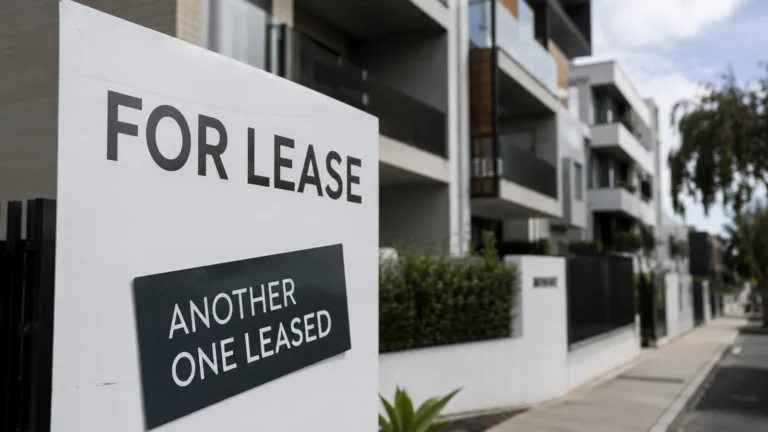
CGT changes property investors face are no longer just a tax-office debate. They are becoming a market-confidence test.
Labor’s proposed capital gains tax and negative gearing overhaul is moving through Parliament at the same time auction markets are showing fresh weakness, business groups are warning about investment risk, and one early supporter of the budget package is urging the government to stay open to further changes.
That mix matters.
Tax reform can be justified on fairness grounds. Housing affordability is stretched, younger buyers are frustrated, and investor incentives have long shaped where capital flows.
But the timing is awkward. If the policy changes reduce investor appetite before new housing supply can respond, the short-term effect may be less clean than the politics suggests.
The policy argument has shifted
The original case for Labor’s tax package was simple enough.
Reduce tax advantages for investors buying established homes. Redirect more capital toward new housing. Make it easier for first-home buyers to compete. Improve the long-term fairness of the tax system.
That is the public argument.
Now, the debate has widened.
The Committee for Economic Development of Australia, which initially backed the budget reform direction, has called for the government to listen closely to business concerns if the package starts to weigh on investment and productivity.
CEDA’s broader warning is that Australia is drifting on productivity, private investment, innovation and business formation. In plain English, the economy is not generating enough new growth engines.
That is where the CGT debate becomes bigger than property.
If investors, small business owners and founders think the after-tax reward for taking risk is shrinking, some will delay decisions. Others will restructure. Some will simply do less.
That does not prove the policy is wrong. It does mean the design matters.
Auction markets are sending a warning
The housing market is not falling apart everywhere. But auction data is flashing caution.
Preliminary capital-city clearance rates reportedly fell to 47 per cent last week, with Brisbane around 33 per cent, Sydney around 47 per cent and Melbourne near 51 per cent.
Preliminary numbers can move once final results land. They are not perfect. But they do tell us something useful about confidence.
Auctions are a real-time test of urgency. When buyers are confident, they compete. When sellers are confident, they hold their reserve. When both sides become uncertain, clearance rates fall and more campaigns stall.
Australian Property Review has already covered why softer auction clearance rates can warn sellers before official price indexes catch up.
Here’s the catch.
The tax changes may not be the only reason buyers are stepping back. Interest rates, serviceability limits, stretched affordability and weak sentiment are still doing plenty of work.
But policy uncertainty can add one more reason to wait.
Quick take
The market is now dealing with three pressures at once:
- high borrowing costs are still limiting what buyers can pay
- tax reform is making investor returns harder to model
- weaker auctions suggest buyers are becoming more selective
The reform may help some first-home buyers over time, but the transition period could be messy if investors freeze before new supply arrives.
Why business groups are pushing back
Business groups are not only worried about landlords.
Their concern is that changing capital gains tax settings can affect broader investment behaviour. That includes people selling businesses, founders taking risk, and owners deciding whether to expand, hire or hold back.
That is why the debate has moved beyond housing.
The Albanese government argues the reform will reduce distortions and support younger Australians trying to buy a home. The opposition and major business groups argue it could reduce risk-taking, investment and productivity.
Both sides are talking about incentives. They just disagree on which incentive matters more.
Supporters see the current system as too generous to asset owners. Critics see the proposed changes as a tax on productive risk.
For property investors, the practical issue is narrower but still important: what happens to the after-tax return?
Negative gearing affects the holding period. Capital gains tax affects the exit. When both move at once, the whole investment case changes.
Australian Property Review has already looked at why investors were freezing decisions ahead of the budget.
The part most people miss
The biggest risk is not an instant investor sell-off.
It may be a quieter change in behaviour.
Some investors may stop buying established homes. Some may shift toward new builds if the rules favour them. Some may hold older assets for longer if selling becomes less attractive. Others may wait until the Senate process is settled.
That can create second-order effects.
If fewer investors buy established dwellings, first-home buyers may face less competition in some markets. That is the upside case.
But if fewer investors add rental stock, vacancy risk could worsen in tight rental markets. If developers do not get enough pre-sales, some apartment projects may struggle to stack up. If small business owners think the tax reward for building and selling a business is weaker, the productivity debate gets louder.
None of that is certain. It depends on the final law, exemptions, start dates, grandfathering and how banks, accountants and investors respond.
Australian Property Review has also explained how CGT changes can create tax-bunching issues for ordinary investors selling after a long holding period.
What changed and what didn’t
What changed is the pressure on Labor.
CEDA’s position matters because it is not simply an anti-tax-reform voice. It backed the budget direction, but is now saying the government should remain willing to adjust if investment harm becomes clear.
Business groups are also trying to widen the frame from “property tax concessions” to “investment confidence”.
What did not change is the housing affordability problem.
Australia still has a supply shortage. First-home buyers are still stretched. Rents remain a pressure point. And the tax system still favours some asset owners more than younger households trying to enter the market.
That is the hard trade-off.
A cleaner housing market may require less tax support for established-property speculation. But a weaker investment market can also mean fewer homes, fewer projects and fewer rental options if the transition is poorly handled.
What would change the risk profile
The next few weeks matter because the market needs detail, not slogans.
For investors, the key questions are:
- Will the final CGT settings apply only to future assets or also affect existing holdings?
- How will negative gearing rules treat established homes, new builds, trusts, companies and jointly owned assets?
- Will there be clear grandfathering?
- Will the Senate deal change the start date or scope?
- Will banks adjust investor lending assumptions once the rules are clearer?
The base case is that uncertainty remains until the final legislation is settled.
The downside case is that the rules land quickly but leave too many unanswered questions, forcing investors and advisers to pause.
The upside case is that the final design gives enough certainty for buyers, builders and lenders to keep moving.
What property investors should do now
This is not the moment for panic buying or panic selling.
It is the moment to pressure-test the numbers.
A simple rule of thumb: if a property only works because of today’s tax treatment, it does not have enough margin for policy risk.
Investors should model three versions of any deal:
- current rules
- weaker negative gearing benefits
- a lower after-tax capital gain on exit
That does not require a forecast. It requires a buffer.
The same applies to sellers. If auction clearance rates keep weakening, vendors may need to separate “last year’s price expectation” from “this month’s buyer depth”.
For buyers, softer auction markets may create negotiation room. But weaker sentiment is not the same as value. A cheaper price can still be a poor deal if rent, repayments, strata costs, land tax and future tax settings do not stack up.
Bottom line
Labor’s CGT and negative gearing changes are being sold as a housing fairness reform. Business groups are framing them as an investment and productivity risk.
The truth may sit in the transition.
If the policy reduces demand for established investment properties without damaging new supply, first-home buyers may benefit. If it freezes investor decisions, slows projects or hits business risk-taking, the result could be messier.
Start here: before making a new purchase, ask your accountant or licensed adviser to model the deal under weaker CGT and negative gearing settings, not just today’s rules.
Subscribe to the free Australian Property Review newsletter for weekly housing market signal, policy shifts and investor risk checks.
General info, not financial advice.