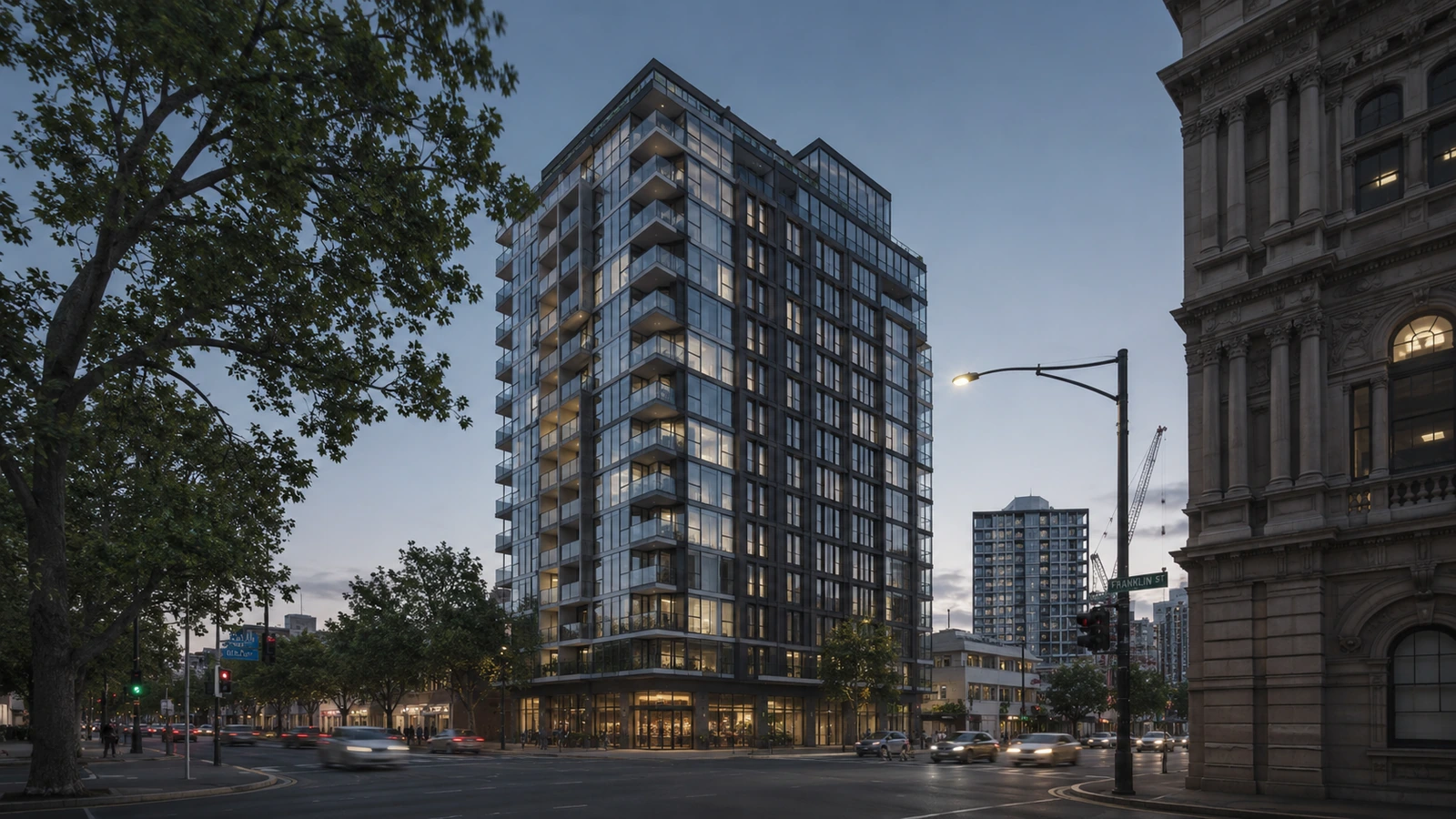
A proposed Adelaide CBD apartment tower has moved a step closer to construction after state planners conditionally approved a 13-storey mixed-use project on Franklin Street.
The project, proposed for 260 Franklin Street on the corner of Gray Street, would add 95 homes to Adelaide’s city centre if it proceeds. That includes studios, one-bedroom, two-bedroom, three-bedroom and four-bedroom apartments, with about 15 per cent of the dwellings allocated to affordable housing.
That sounds like a straightforward supply win.
Here’s the catch: conditional approval is not the same as completed homes.
The State Commission Assessment Panel has granted planning consent, but several matters still need to be resolved before the development can move to full approval and construction. Those include building materials and finishes, stormwater management and landscaping.
For a city trying to add more well-located housing, the approval matters. But the real test is whether projects like this can move from planning paperwork to cranes, completions and occupied apartments.
What has actually changed
The main change is that the Franklin Street project has cleared a major planning hurdle.
The proposed building would include 10 residential levels, ground-floor retail, a residential lobby, communal space and 67 car parks. Levels one and two are expected to be used for parking and storage, while residential apartments would sit above.
The development is being led by South Australian-owned Beausight Investments. The company has previously delivered an Adelaide CBD apartment project on South Terrace.
What has not changed is the broader challenge facing the housing market.
Australia does not just need approvals. It needs feasible approvals. That means projects that can be financed, built, sold or leased at prices that match buyer and renter demand.
Australian Property Review has covered this wider issue before in our analysis of housing infrastructure and Australia’s housing target. Planning consent helps, but infrastructure, labour, finance and construction costs still decide whether supply arrives on time.
Why this site matters
The location is the important part.
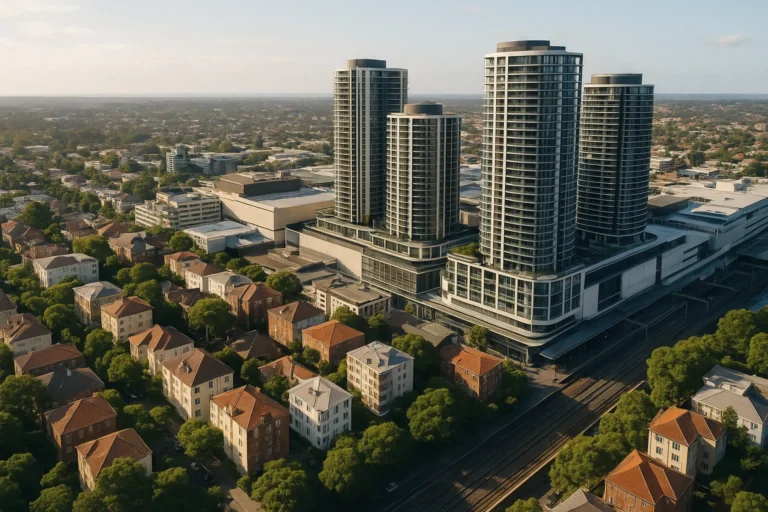
The project sits in Adelaide’s western CBD, close to the Royal Adelaide Hospital, university campuses and major employment hubs. In plain English, this is the kind of site planners usually want to see used more efficiently.
More homes near jobs and services can reduce pressure on fringe suburbs. It can also support renters and buyers who want to live close to work, study, transport and health precincts.
That does not automatically make every apartment project a success.
The mix matters. A project dominated by smaller dwellings will suit some groups more than others. Students, health workers, professionals and downsizers may see the appeal. Larger families may still find the offering limited, even with a small number of three and four-bedroom apartments included.
That is the trade-off with CBD apartment supply. It can add density where services already exist, but it does not solve every affordability or family-housing problem.
Key numbers:
95 proposed homes
13 storeys
67 car parks
About 15 per cent affordable housing
Construction must start within two years of development approval
The approval is only one part of the pipeline
For investors and buyers, the most useful way to read this approval is as a pipeline signal, not a market turning point.
A single 95-home project will not change Adelaide’s housing market on its own. But it does show where supply pressure is being directed: more apartments, more infill housing and more density near employment centres.
That is consistent with the broader policy push across Australia. Governments want more homes in existing urban areas because expanding outwards is expensive, slow and infrastructure-heavy.
Australian Property Review recently looked at similar supply questions in Tasmania’s housing deal and the supply bottleneck. The same rule applies here: approvals are useful, but completions are what change vacancy, rents and affordability.
Now, the part most people miss.
Planning approval can improve the supply outlook without immediately improving affordability. If construction starts in 2027, as the developer hopes, the actual homes would still arrive later. In the meantime, Adelaide’s rental and buyer markets will still be shaped by interest rates, migration, wages, listings and existing vacancy levels.
What could slow it down
The main risks are practical, not political.
First, the reserved planning matters still need to be resolved. Materials, finishes, stormwater and landscaping may sound technical, but they can affect cost, timing and final design.
Second, construction costs remain a major pressure point for apartment projects. Even when demand exists, higher labour, materials, insurance and finance costs can weaken feasibility.
Third, buyer demand has to meet the product. If prices land too high for local incomes, the project may still appeal to some buyers but miss the affordability mark for others.
Fourth, affordable housing allocation needs to be watched in practice. A 15 per cent commitment is meaningful, but the final outcome depends on delivery, eligibility settings and whether the affordable homes are genuinely integrated across the building.
This is why the approval should be treated as positive but not conclusive.
What it means for investors and buyers
For property investors, the Franklin Street project is another sign that Adelaide’s CBD and inner-city apartment market is moving further into the supply conversation.
That does not mean investors should rush into nearby apartments. The better move is to pressure-test the local rental market.
Look at comparable rents, vacancy, strata costs, building age, apartment size, car parking, tenant depth and resale demand. A new tower can support an area, but it can also add competition for existing landlords if several projects arrive in the same window.
For owner-occupiers, the key question is different.
Does the apartment match your real lifestyle needs for five to seven years, or are you buying mainly because the location feels convenient today? That matters because apartment resale performance can vary sharply by floor plan, building quality, body corporate costs and the amount of competing stock nearby.
For policymakers, this approval is a reminder that supply policy is not just about rezoning. It is about whether the system can convert approval into delivery.
Australian Property Review explored this tension in our piece on zoning reform and housing supply. The lesson is simple: more permissive planning can help, but it still has to meet market feasibility.
The bottom line
The Adelaide CBD apartment tower is a useful supply signal for the city’s west end.
It would add 95 proposed homes, include an affordable housing component and place more residents close to jobs, hospitals, universities and services. That is the kind of infill housing most capital cities say they want.
But the market should not confuse a conditional approval with a solved housing problem.
The base case is that the project adds momentum to Adelaide’s inner-city housing pipeline. The upside case is that it moves through remaining approvals, starts construction in 2027 and adds well-located apartments into a tight market. The downside case is that conditions, costs or feasibility slow the project before it becomes real supply.
Start here: if you are watching Adelaide property, track approvals, starts and completions separately. Approvals show intent. Starts show confidence. Completions show supply.
Subscribe to the free Australian Property Review newsletter for weekly property signals.
General info, not financial advice.