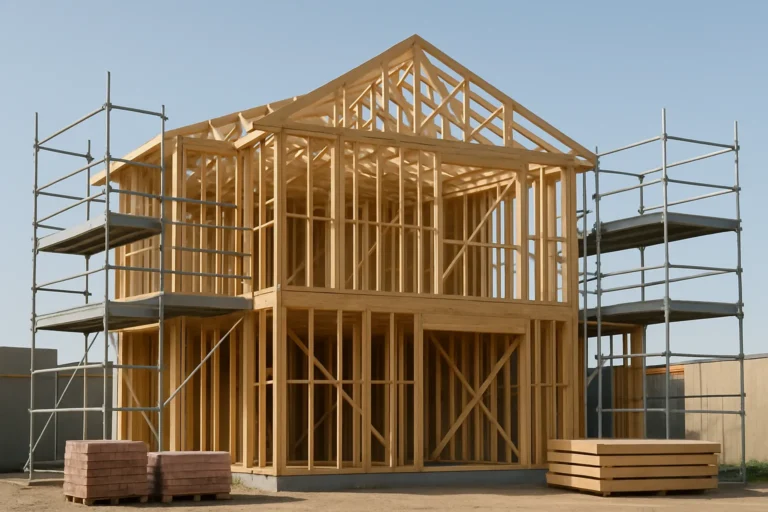
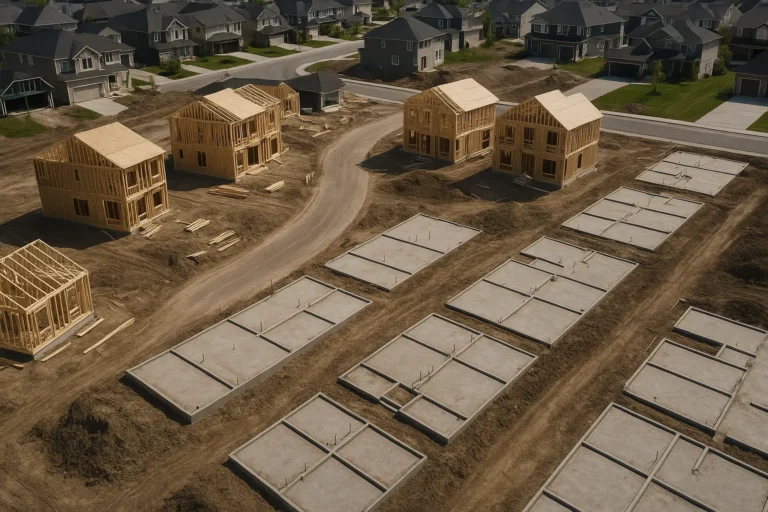
A developer building exactly the kind of housing Australia says it needs most, medium-density townhouses and units, has gone into administration mid-project. The collapse isn’t just another construction insolvency. It’s a test case for whether the policy assumption underpinning the National Housing Accord, that the market will respond to demand signals and build 1.2 million homes, actually holds.
Bathla specialised in medium-density: duplexes, townhouses, low-rise apartment blocks in middle-ring suburbs. Not luxury, not CBD high-rise. The missing middle that zoning reform and the Accord are designed to unlock. The company went under while building those projects, unable to secure finance or make the economics work at current construction costs and borrowing rates.
The timing matters. State and federal governments have spent two years rezoning land, fast-tracking approvals, and announcing co-investment schemes to encourage exactly this kind of development. The assumption: if you remove planning barriers and signal demand, supply will follow. Bathla’s failure suggests the barriers aren’t just regulatory.
Why this project type is under pressure
Medium-density sits in a structural squeeze. Construction costs per square metre are higher than detached housing because of shared walls, services, and compliance. But sale prices per dwelling are lower than high-rise apartments, which can command premiums for views and amenity. The margin is thin.
Add two more pressures: debt serviceability and presale thresholds. Lenders typically require 70–80 per cent presales before releasing construction finance. In a falling or flat market, buyers aren’t committing off-the-plan to a townhouse they can buy completed next door for similar money. Without presales, no finance. Without finance, projects stall or fold, even if the developer has equity and a site.
Interest rates compound the problem. A project financed at 7–9 per cent (construction debt now, not a home loan) needs higher margins to service debt during the 12–18 month build. If the market softens or costs blow out mid-construction, the developer either injects more equity or walks. Bathla appears to have run out of runway.
The catch
The homes policy says we need are also the hardest to finance right now. Medium-density requires:
- Higher presale rates than detached housing (lenders want 70–80%, not 50%)
- Tighter margins than high-rise (no height/view premium to absorb cost blowouts)
- Faster sales cycles than the current market supports (buyers can wait for completed stock)
- Lower debt servicing costs than current construction finance rates allow
If any one of those breaks, the project becomes unviable. Right now, all four are under pressure.
Who this affects beyond one builder
Bathla’s collapse is a signal, not an outlier. Other medium-density specialists are facing the same funding and margin constraints. If they can’t get projects off the ground, the Accord’s supply assumptions, which rely heavily on this segment to fill the gap between detached housing and high-rise, are too optimistic.
The immediate impact: purchasers with deposits on Bathla projects now join the unsecured creditor queue. Lenders with exposure to the partly-built sites face recovery decisions: finish the projects (and fund the shortfall) or sell the sites and crystallise a loss. Either way, the next developer looking to finance a similar project will find lenders more cautious and presale thresholds higher.
The second-order effect is slower. If medium-density becomes unfundable at scale, the missing middle stays missing. Detached housing in the outer suburbs continues (land is cheaper, presales easier, builders can self-fund more of the construction). High-rise in the inner city continues where offshore equity or institutional capital can bypass traditional construction lenders. But the townhouse and low-rise projects that were supposed to add density to middle-ring suburbs, the ones zoning reform was designed to enable, don’t get built, or get built more slowly than forecast.
That doesn’t mean no new supply. It means supply skews toward the segments that can get financed, not the segments policy wants.
What would need to change for this to work
For medium-density to become viable at the scale the Accord assumes, one or more of these has to shift:
- Construction finance rates fall materially (needs RBA cuts or competition from non-bank lenders willing to take lower margins)
- Presale thresholds drop (needs lenders to accept higher project risk or government-backed completion guarantees)
- Sale prices rise faster than build costs (needs stronger buyer demand or constrained competing stock)
- Government co-investment fills the funding gap (needs actual capital deployed, not just announced schemes with eligibility criteria most projects can’t meet)
None of those are impossible. But none are happening at scale right now. Construction finance hasn’t cheapened, if anything, developer exposure has made lenders more risk-averse. Presale thresholds are rising, not falling, as private credit funds face their own liquidity tests. Sale prices are flat to down in most middle-ring markets. Government co-investment schemes exist on paper but haven’t mobilised capital at the speed or scale needed to change the funding equation for projects in the pipeline now.
The base case: medium-density supply underperforms the Accord’s targets unless financing conditions ease or policy shifts from zoning reform to direct capital support.
What to watch over the next 12 months
Three things will signal whether this is a one-off or a structural problem:
- Presale rates and time-on-market for new medium-density projects. If townhouse and low-rise developments are taking longer to hit presale thresholds, or launching with lower buyer interest than 12 months ago, more will stall.
- Lender appetite for construction debt. Track whether banks and non-banks are tightening loan-to-value ratios, lifting presale requirements, or pulling back from medium-density altogether. Development finance risk is already testing those assumptions.
- Government co-investment uptake. If state housing agencies or the federal government’s programs actually deploy capital into stalled or at-risk projects, that could stabilise the segment. If uptake stays low because eligibility or return hurdles are too high, it confirms the programs aren’t fit for purpose.
The risk: policymakers assume supply will self-correct once zoning is fixed, and miss that the binding constraint has shifted from planning to finance. If that happens, the Accord’s 1.2 million homes become a stretch target built on assumptions that stopped holding two years ago.
If you’re tracking whether Australia can actually build its way out of the shortage, watch the medium-density funding market more closely than the zoning announcements. The former is where projects live or die. The latter just sets the ceiling.
Subscribe to the weekly newsletter for updates on construction finance, developer risk, and what’s actually getting built versus what’s getting approved.
General info, not financial advice.