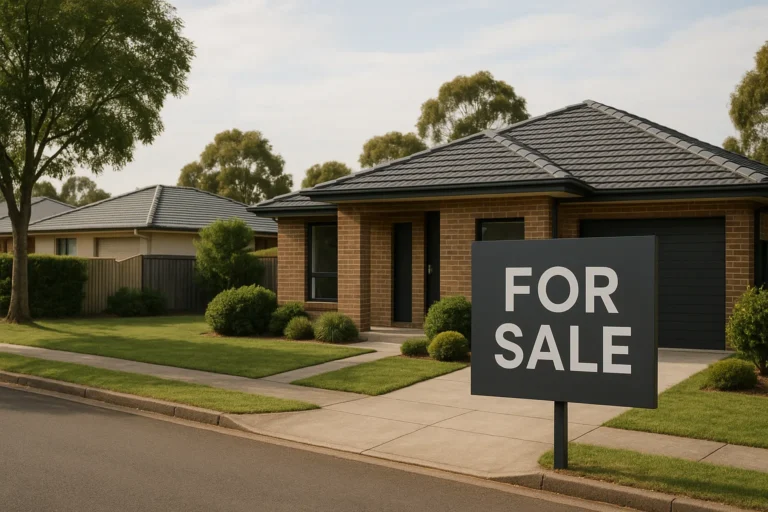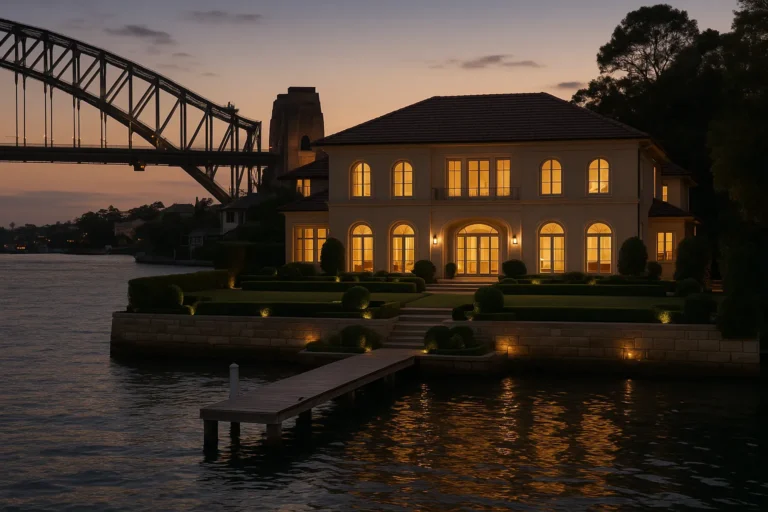
The sale tells a story the city-wide medians won’t. A property that last traded during the 2023 peak just resold for $4.8 million, the same price it fetched two years ago. That’s not stagnation. That’s a full reversal at a price point where owners rarely accept retreat.
The gap between what’s happening in the top quartile and what the headline median figures show has widened to the point where they describe two separate markets. While city-wide price growth holds flat or edges up in most capitals, premium stock, properties above the 75th percentile, is repricing. Not loudly, not fast, but unmistakably.
What the top end is doing differently
Median price movements smooth out extremes. A handful of prestige sales can lift a suburb’s median even as the bulk of stock sits longer and sells for less. But quartile data isolates what’s happening at each price tier, and the upper bracket is under pressure.
Premium property price correction shows up in three ways: days on market stretching from 30 to 60-plus, vendor price expectations meeting reality only after multiple campaign extensions, and a growing number of off-market withdrawals where sellers pull listings rather than accept revised values. The $4.8m sale is a visible marker of the third behaviour flipping to acceptance.
The mechanics: buyers at this price point are equity-dependent, rate-sensitive despite higher incomes, and have alternatives. Unlike the median band where supply constraints and population growth create urgency, the top quartile has inventory, competition from new luxury developments, and a buyer pool that can afford to wait.
Key numbers
- Premium stock (top quartile) days on market up 40-60% year-on-year in Sydney, Melbourne prestige pockets
- Auction clearance rates for properties above $3m: 45-50% versus 65-70% for sub-$1.5m stock (Domain, CoreLogic metro auction data)
- Vendor price revisions: 8-12% downward movement common in initial 90 days for prestige listings that don’t sell first campaign
- Finance constraints: serviceability buffers tighten faster at higher borrowing amounts, even with larger deposits
Where this matters and where it doesn’t
The correction is not uniform. Tightly-held inner prestige enclaves with scarcity, harbour/water access, heritage zones with no new supply, are holding better than outer prestige suburbs or newer luxury developments where comparable stock exists.
If you’re transacting below $2 million in a capital city, the dynamics described here likely don’t apply. That’s still median-to-upper-median territory where competition, serviceability constraints and rental yield calculations drive different behaviour. The buyer pool is larger, the finance is tighter, and supply still lags demand in most markets.
But if you’re holding or considering premium stock, the assumption that “prestige always holds value” is being tested. The top quartile moves slower in both directions, but it moves.
Scenarios over the next six months
Base case: premium listings continue to sit longer, vendors who need to sell accept 2023 pricing or lower, buyers extract concessions (longer settlements, inclusions, price). No panic, just a grinding reversion to value.
Upside case for vendors: rates stabilise or cut, equity markets rally, high-income buyer confidence returns. The correction pauses around current levels rather than deepening. Likely needs a policy tailwind or offshore capital returning.
Downside case: rates hold elevated longer than expected, credit tightens further for large loans, or a cluster of prestige forced sales (divorce, offshore relocation, business liquidity events) flood a narrow market segment. The $4.8m loss becomes common, not notable.
Pressure points to watch
Three things accelerate or stall this correction:
- Equity market volatility, high-net-worth buyers finance premium purchases from portfolios and business equity, not just wages. A sustained equity pullback removes pre-approved buyers.
- Serviceability rule changes, any adjustment to buffers or assessment rates hits large loans disproportionately. A 0.5% shift in the buffer can remove $200k+ in borrowing capacity at the top end.
- Offshore buyer sentiment, prestige markets in Sydney and Melbourne still rely on offshore capital for 15-20% of transactions above $3m. Visa settings, currency moves, and offshore economic conditions all matter.
If you’re holding premium stock
Don’t assume 2023 pricing is the floor. If you need to sell in the next 12 months, price realistically from the start. Extended campaigns and price revisions signal distress to buyers, who then wait for further drops.
If you’re upgrading into the premium band, you have negotiating power for the first time since 2020. Vendors are more willing to accept terms (longer settlements, subject-to-sale clauses) that were off the table two years ago.
If you’re an investor assessing premium stock for yield, the numbers rarely stack up. Prestige property is a capital growth play, and capital growth is stalled. Rental yields at this price point sit at 2-3%, well below borrowing costs.
Subscribe to the weekly newsletter for data-driven market signals that cut through the headlines.
General info, not financial advice.