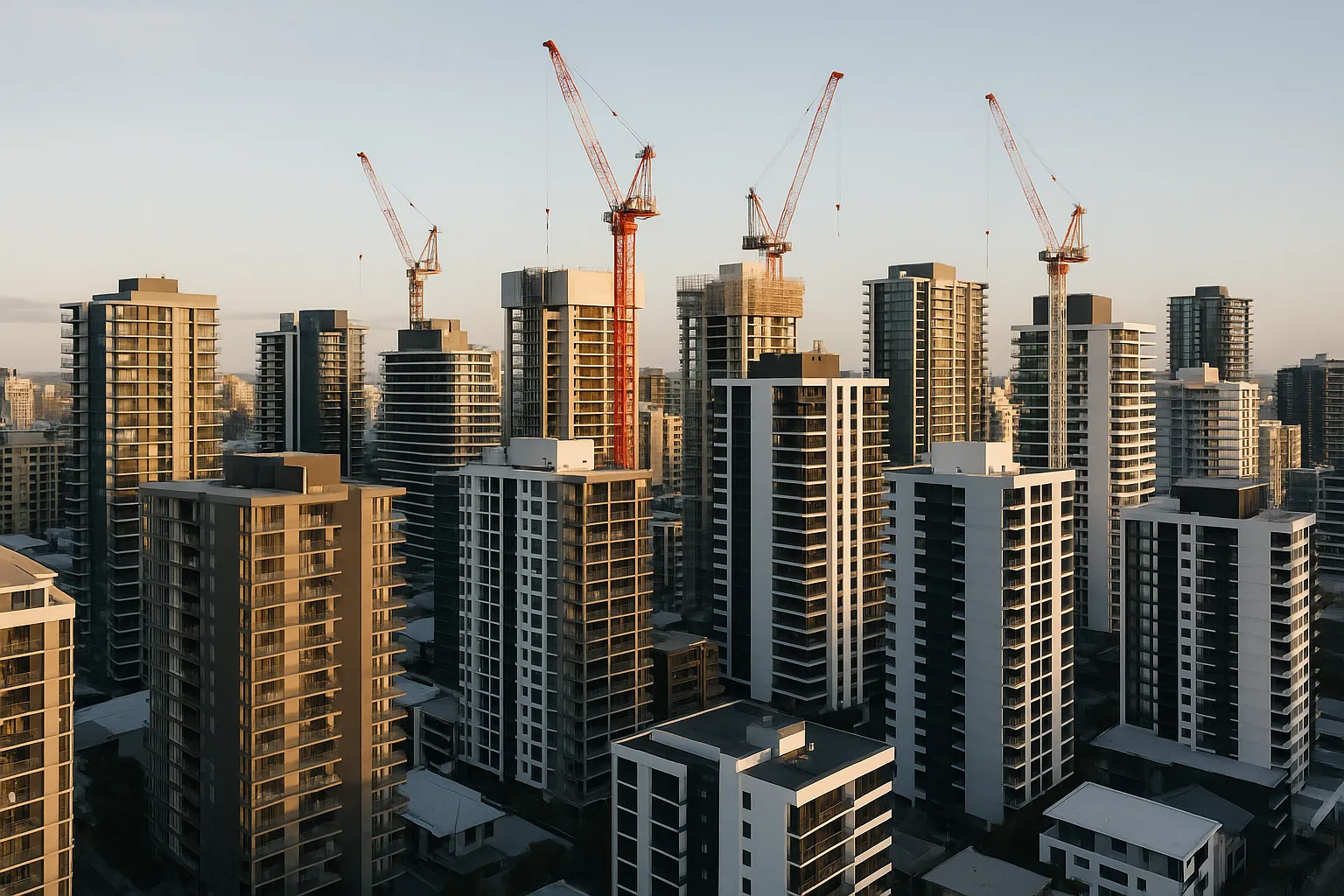
Queensland has rezoned 108 hectares in Bowen Hills, 3km from Brisbane’s CBD, with planning changes designed to unlock 27,000 dwellings over the life of the precinct. Height limits jump from 30 storeys to 50, and the area gets priority development status that strips layers of approval process. The driver is proximity to Victoria Park, the core Olympic venue precinct for 2032, which will house the main stadium, aquatic centre and showgrounds.
The question is whether planning permission translates to actual construction at anything close to that headline figure, and over what timeframe.
What the numbers represent
Brisbane’s housing shortfall sits around 45,000 to 50,000 dwellings depending on which measure you use, so 27,000 homes would theoretically cover half to 60% of the gap. But that’s the total capacity of the precinct over its full life, not a delivery schedule. The rezoning adds 4,000 dwellings to the 23,000 already planned, meaning most of this supply was already in the pipeline before the latest changes.
For context, Brisbane approves roughly 18,000 to 22,000 dwellings per year across the entire metro area. Bowen Hills delivering 27,000 homes would require the precinct to account for a meaningful share of city-wide construction for a decade or more, assuming nothing else in the supply chain breaks.
The feasibility filter
Priority development area status removes planning friction, but it doesn’t change construction costs, site acquisition prices, or debt serviceability for developers. Bowen Hills sits on expensive inner-city land, which means high break-even rents or sale prices even with taller buildings spreading fixed costs across more units.
Current Brisbane apartment presales are running at 15% to 25% of stock in many projects, well below the 50% to 60% lenders typically require before releasing construction finance. Rezoning a site to 50 storeys doesn’t help if no one can fund the build or pre-sell enough units to get started.
The industry group quoted in the source material flagged “feasibility realities” as a constraint, which is code for: planning approval is necessary but not sufficient.
The Olympic lens
Olympics-linked planning changes carry political momentum that standard housing reform doesn’t, which explains why Brisbane has rezoned two major precincts in twelve months while similar supply unlocks in other cities take years. Woolloongabba, rezoned in late 2025 for 16,000 homes, saw development applications jump 466% within a year of the changes going live.
That’s a meaningful signal. Applications are not completions, but they indicate developers see commercial viability in the new parameters. Whether construction follows at scale depends on presale demand, which depends on price points, which brings us back to feasibility.
The Olympic deadline creates a construction schedule anchor, but venue builds don’t automatically generate enough residential demand to absorb 27,000 dwellings. The precinct will attract some infrastructure workers and short-term accommodation conversions, but the bulk of that supply needs long-term owner-occupiers or investors, not event-driven demand.
Timeline and capacity constraints
If the precinct delivers 2,000 to 3,000 dwellings per year once construction ramps up, you’re looking at a nine to thirteen-year horizon to reach 27,000 homes. That assumes continuous demand, no major credit tightening, and no supply chain or labour bottlenecks worse than current conditions.
Brisbane’s construction sector is already running near capacity, with apartment completions constrained by labour availability and material lead times. Adding a large inner-city precinct doesn’t automatically expand the number of cranes or trades available city-wide. It shifts where construction happens, which may pull resources from other projects rather than increasing total output.
The catch
Rezoning unlocks potential supply, but actual delivery depends on presale rates, construction finance, and whether the market can absorb thousands of apartments at prices that cover build costs. If feasibility doesn’t work, planning permission just creates vacant development sites.
How this compares to standard planning reform
Olympics-driven rezoning is faster and more visible than incremental planning changes, but it’s geographically narrow. Bowen Hills and Woolloongabba together target 43,000 dwellings across two precincts, which matters for those neighbourhoods but doesn’t address supply constraints in middle and outer suburbs where most demand sits.
Standard planning reform, like allowing mid-rise apartments or townhouses across broader residential zones, spreads supply potential across more locations and price points. It’s slower to implement and lacks the headline appeal of an Olympic precinct, but it’s more likely to match where people actually want to live and what they can afford.
The Olympics creates political urgency that unlocks rezoning in specific areas. Whether that translates to housing affordability depends on whether those areas attract enough construction capital and buyer demand to turn approvals into keys.
Downside scenarios
If presale demand stays weak or construction costs rise faster than sale prices, developers defer projects and the precinct delivers well below 27,000 dwellings. If interest rates stay elevated or lending tightens further, investor and upgrader demand pulls back, leaving fewer buyers for inner-city apartments.
If the Olympics generates less long-term economic activity than forecast, the precinct risks becoming a cluster of approved but unbuilt sites, similar to other large-scale rezonings that took a decade longer than planned because market conditions didn’t support the pace.
Upside case
If Brisbane’s population growth holds at current rates and construction costs stabilise, the precinct could deliver 20,000 to 25,000 dwellings over twelve to fifteen years, making a material dent in the city’s shortfall. If the Olympics drives sustained infrastructure investment and job growth in surrounding precincts, demand could support higher density and faster absorption than standard urban infill.
Practical take
If you’re tracking Brisbane supply, watch development application volumes in Bowen Hills over the next twelve months. A sustained increase, like Woolloongabba’s 466% jump, signals developers see commercial viability. If applications stay flat or approvals sit unbuilt, the rezoning is permission without delivery.
For investors or upgraders considering inner Brisbane apartments, the supply increase creates price pressure once stock arrives, but that’s years out. Shorter-term, focus on presale rates in current projects as a proxy for demand strength.
Want the weekly read on supply, policy and what actually moves prices? Subscribe to the Australian Property Review newsletter.
General info, not financial advice.