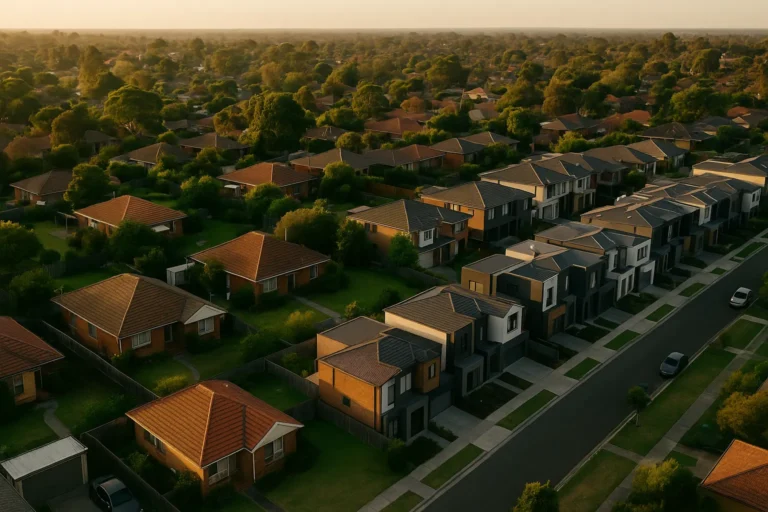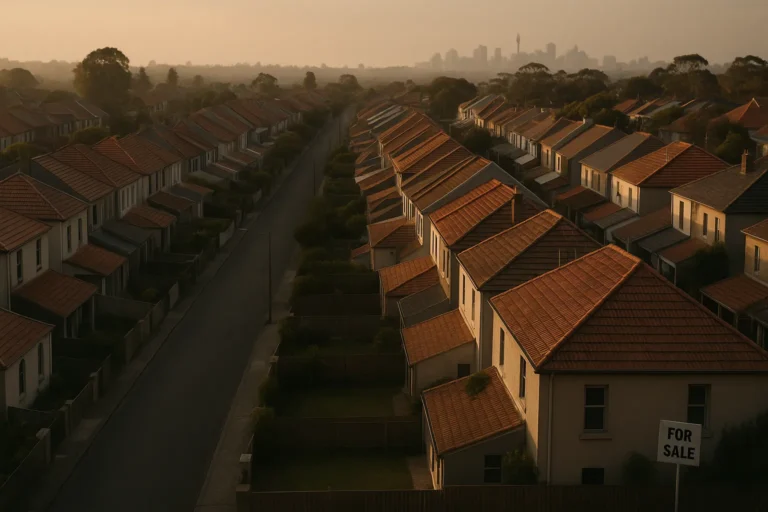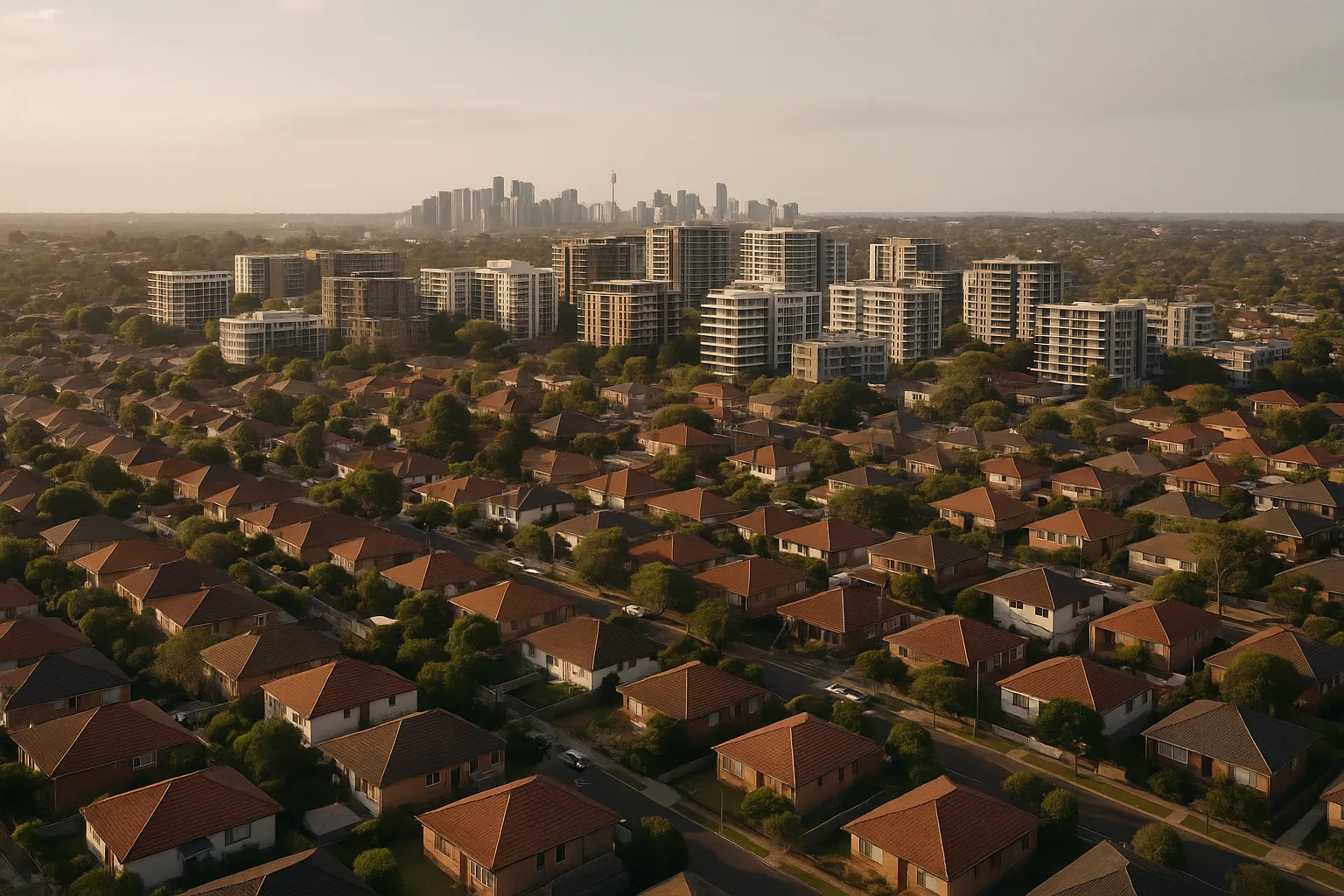
Families ready to trade up face a structural problem: the jump from a starter property to a family home now costs $270,000 more in Sydney than it did two years ago, even though overall prices have softened across much of the market.
The reason is supply, not demand. There aren’t enough four-bedroom detached homes in the middle-ring suburbs where families want to land, and what little stock does come on is absorbed fast. Meanwhile apartments and smaller dwellings sit longer, pushing the price gap wider.
This isn’t cyclical. It’s a mismatch between what gets built and what households with kids actually need when they outgrow a two-bedroom unit or terrace.
What’s actually changing
Two years ago, the median price difference between a two-bedroom apartment and a four-bedroom house in Sydney’s middle ring sat around $600,000. Today that gap is $870,000, according to recent transaction data.
At the same time, overall median house prices across Sydney dropped 3-5% year-on-year depending on the postcode. Units fell further, some by 8-10%.
So the market is cooling, but the upsizing ladder is steeper. That’s the catch.
The driver: construction approvals for detached homes in established suburbs are down 18% over two years. Medium-density townhouses and apartments still get built, but families with two or three kids rarely consider a three-bedroom apartment a long-term solution when schools, storage and outdoor space matter.
The mechanics in plain English
Supply constraints don’t hit every segment equally. When there’s less of something people need and can’t easily substitute, the price holds or rises even if the broader market softens.
Families who already own a unit can’t easily pivot to another city or wait five years. School zones, work commutes and ageing parents anchor them. So they compete for limited stock, and sellers know it.
Meanwhile, investors and downsizers dominate the apartment market, and they’re more price-sensitive. When rates rise or yields compress, they pull back, and prices adjust faster.
The result: a two-speed market where affordability improves at the entry level but mobility gets harder once you’re in.
Who this hits hardest
Young families who bought units or terraces in 2020-2021 are the obvious group. They have equity, serviceability, and a reason to move. But the next rung is $200,000-$300,000 further away than they planned.
That delay has second-order effects. Families stay in units longer, taking up stock that would otherwise turn over to first-home buyers. First-home buyers face more competition for the same limited entry-level supply, pushing them toward outer suburbs or deferrals.
Downsizers who planned to sell a family home and pocket the difference also face a thinner buyer pool. If fewer families can afford to upsize, detached homes in the $1.5-2 million band sit longer, even in good school zones.
Key numbers
- $270,000: additional cost to upsize from a two-bedroom apartment to a four-bedroom house in Sydney’s middle ring compared to two years ago
- 18%: drop in construction approvals for detached homes in established suburbs over the past two years
- 3-5%: year-on-year fall in median house prices across Sydney, while the upsizing gap widened
- 8-10%: steeper price falls for apartments in some postcodes, creating a wider gap between entry and family home pricing
What could narrow the gap
Three scenarios:
-
Base case: the gap stays wide for another 12-18 months. Planning approvals stay tight, construction costs keep medium-density projects marginal, and families either wait or compromise on location.
-
Upside: state planning reforms land, medium-density townhouse projects pencil again, and supply starts flowing in 18-24 months. The gap compresses slowly as more family-friendly stock hits the market.
-
Downside: rates stay higher for longer, more families defer upsizing entirely, and the lack of transaction volume pushes the gap even wider as the small amount of stock that does trade skews to motivated buyers paying full price.
The most likely path is base case with a slow drift toward upside if WA planning reforms land $29.8m, but will they clear the real bottleneck? becomes a national template. But that’s a 2027-2028 story, not a 2026 one.
Pressure points over the next six months
Watch construction approval data. If detached home approvals stay below 2022 levels through mid-2026, the supply constraint is structural, not cyclical.
Second indicator: days on market for four-bedroom houses in middle-ring suburbs (Ryde, Strathfield, Marrickville, Epping). If they’re moving in under 30 days while units sit for 60-plus, the gap widens further.
Third: rental vacancy rates for three- and four-bedroom homes. If vacancy drops below 1.5%, it signals families who can’t buy are staying put as renters, which delays turnover and keeps upward pressure on sale prices when stock does come through.
Practical take
If you’re holding a unit or smaller home and planning to upsize within two years, the math is harder now than it was. The gap is real, and it’s unlikely to compress quickly without a supply response that isn’t visible yet in the approvals pipeline.
Three options:
-
Wait and save harder: aim for a larger deposit to offset the higher gap, but accept that prices may not fall enough to make the trade easier.
-
Compromise on location: look one or two suburbs further out where the supply constraint is less severe and the upsizing gap is $100,000-$150,000 narrower.
-
Lock in rate certainty now: if you can serviceably make the jump, fixing your rate removes one variable. But don’t stretch beyond a 10% cashflow buffer, this gap reflects a supply problem, not a demand surge, so there’s no FOMO case for overpaying.
If the gap feels unworkable, track planning approvals and medium-density project announcements in your target suburb. A rezoning or townhouse development starting construction could shift the picture in 18 months, but it’s a wait-and-see trade-off.
For weekly analysis on what’s moving the Sydney property market and what it means for your next decision, subscribe to the Australian Property Review newsletter.
General info, not financial advice.