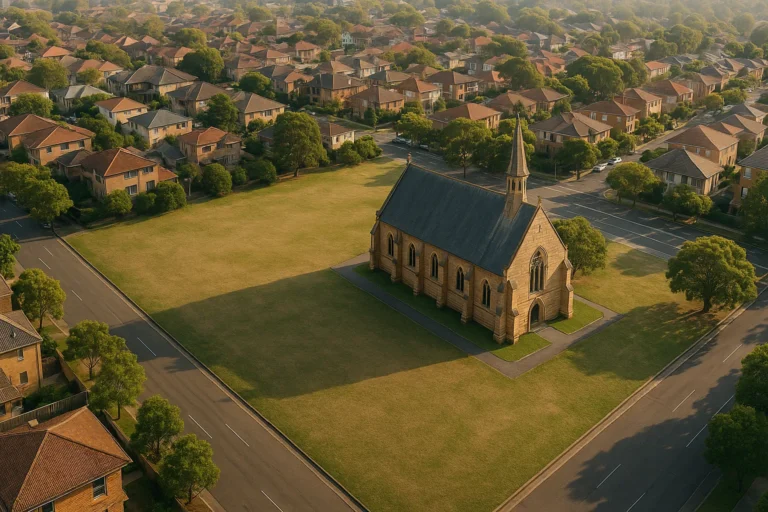
An heir to a major property family wants to develop long-held suburban land parcels across Australian cities. The holdings sit in inner-ring suburbs where zoning has shifted dramatically since the sites were first acquired, often decades ago.
The question isn’t whether these sites can now support higher-density housing. Under current rules, most can. The question is what took so long, and what Australia’s housing stock would look like if planning settings had allowed that density twenty or thirty years earlier.
The scale of untapped inner-ring sites
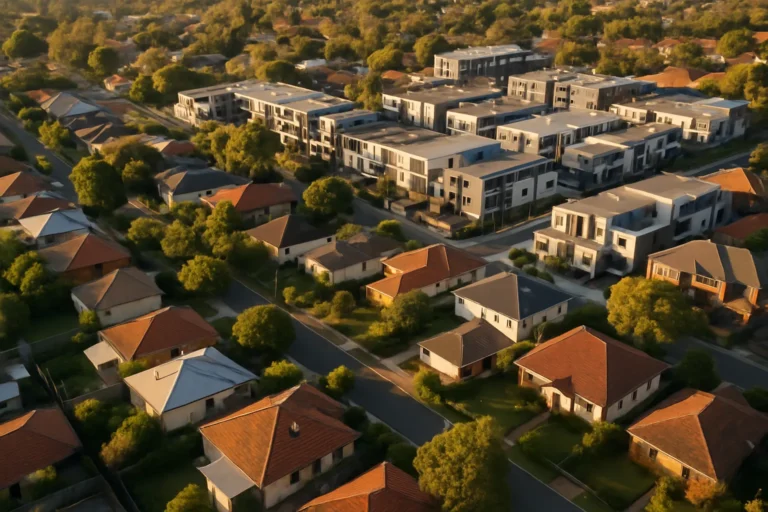
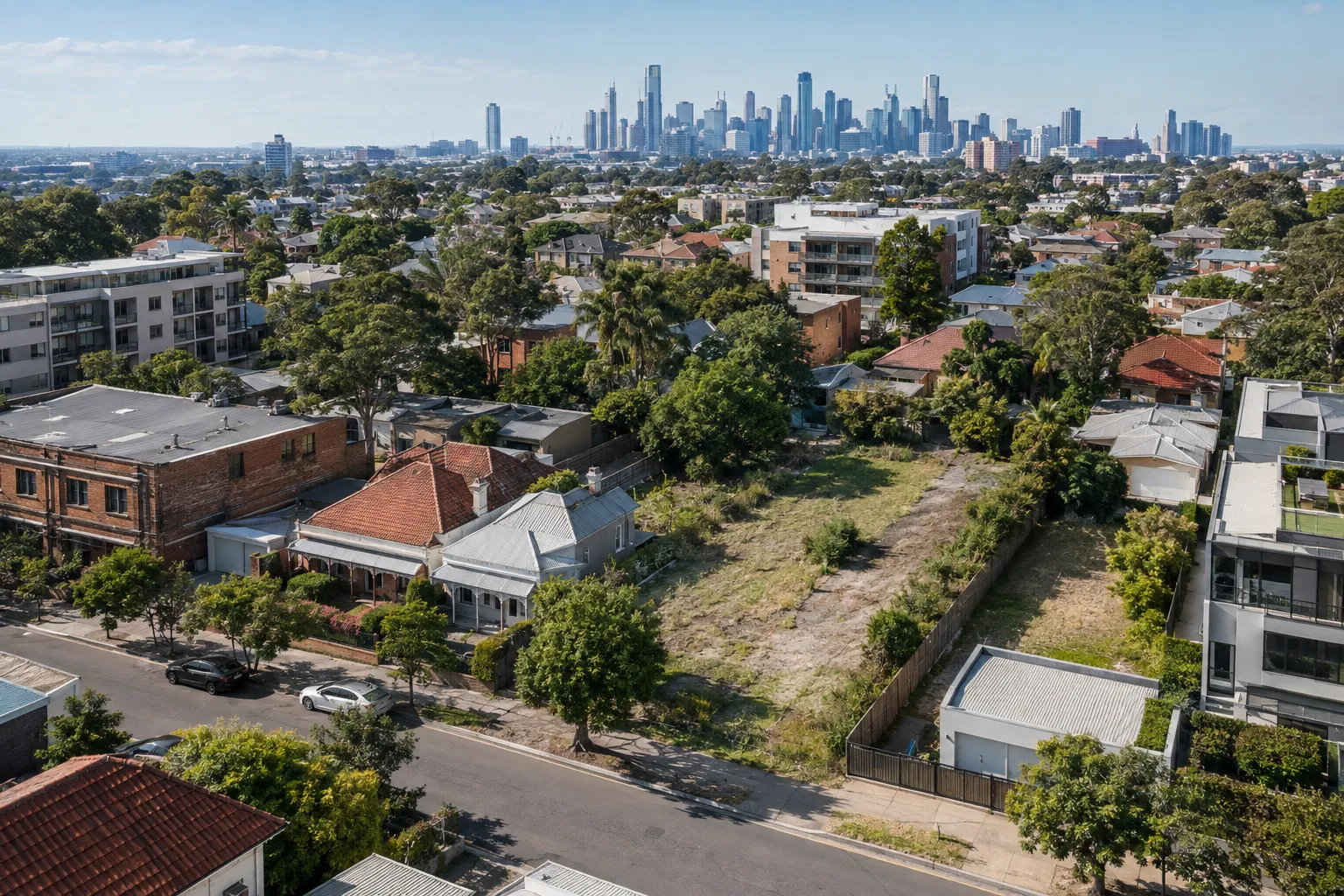
Suburban landbanks assembled in the mid-to-late 20th century often occupy prime positions: close to transport, jobs, and existing infrastructure. Many sit within 10-15 kilometres of a CBD, exactly where demand for additional housing is strongest.
When planning controls finally shift to permit medium-density or mixed-use development, these sites become viable overnight. The land was always there. The infrastructure was always there. What changed was the regulatory permission to build more than a single dwelling or low-rise commercial building.
The catch
- Planning approvals can take 18-36 months even when zoning permits the use, delaying the supply response.
- Sites held for decades may carry legacy lease or covenant restrictions that complicate redevelopment.
- Landbanking ties up capital for years with no income, so only well-capitalised owners can afford to wait out planning cycles.
- The opportunity cost is measurable: every year a well-located site sits underdeveloped is a year the housing system didn’t gain those dwellings.
What the zoning counterfactual reveals
If medium-density zoning had been in place fifteen years ago across inner suburbs, today’s supply shortfall would be smaller. Not eliminated, construction takes time, and approvals always lag demand, but measurably smaller.
The delay wasn’t a function of land availability. It was a function of planning settings that prevented landowners from building what the market would support.
That creates a strange dynamic: landbanking looks like speculation when zoning is restrictive, but it’s also the only strategy that keeps viable sites available for future development once rules change. If those parcels had been subdivided into small freehold lots under old zoning, assembling them for higher-density projects today would be exponentially harder.
Upside scenarios and constraints
Base case: suburban landbanks in inner-ring suburbs deliver a meaningful but one-time supply boost over the next 5-10 years as planning approvals work through the system. Expect a mix of townhouses, low-rise apartments, and mixed-use buildings where commercial zoning overlaps.
Upside: faster planning pathways (code-assessed, pre-approved typologies) compress the approval window and bring supply forward. Sites near new transport infrastructure (metro stations, light rail) unlock first.
Downside: approvals stall on heritage overlays, council resistance, or infrastructure-levy disputes. Projects that do proceed skew toward higher price points because land-holding costs push up the breakeven.
What zoning reform unlocks versus what it delays
When a suburb shifts from low-density to medium-density zoning, land values jump immediately. That’s good for landowners. It’s neutral-to-negative for renters and first-home buyers in the short term, because the price signal reflects future development potential, not current supply.
The actual housing supply arrives years later, after approvals, financing, and construction. The gap between zoning change and completed dwellings is where planning policy either accelerates or delays the market’s response to demand.
Suburban landbanks held through multiple planning cycles illustrate that gap clearly. The land was always capable of supporting more housing. The system just didn’t allow it until recently.
Practical implications for supply policy
If Australia wants faster housing supply responses, the focus can’t only be on releasing greenfield land at the urban fringe. Infill development on well-located, already-serviced sites delivers housing where people want to live, with lower infrastructure costs per dwelling.
The catch is political: medium-density zoning in established suburbs faces resident opposition, and planning approvals remain slow and discretionary in most councils. That’s why landbanks sit undeveloped for so long, even when market demand is clear.
The supply windfall from unlocking these sites is real, but it’s also a one-time correction. Once the backlog of underdeveloped inner-ring land is built out, the next wave of supply depends on whether planning settings keep up with demand or fall behind again.
What to watch
Approval timelines in inner-ring councils over the next 12-24 months will signal whether the zoning changes translate into actual construction starts. If approvals remain slow or conditional, expect landowners to hold rather than develop, and the supply response will lag.
If planning pathways streamline and infrastructure-levy disputes settle, you’ll see a wave of medium-density projects start within 18-36 months. That’s the base case.
For buyers and renters, the timing matters. New supply arriving in 2027-2028 helps affordability in 2028-2029, not today. The price impact shows up when projects complete and settle, not when they’re announced.
If this breakdown helped clarify the supply-versus-planning trade-off, subscribe to the newsletter for weekly analysis on housing policy and market structure.
General info, not financial advice.