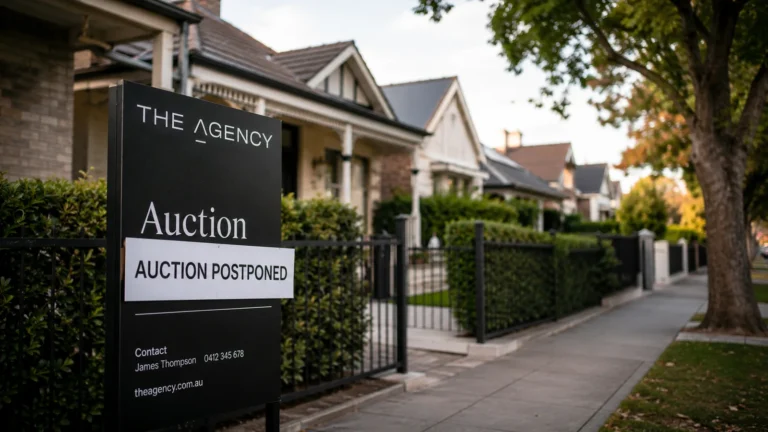
Victoria logged a 55.2 per cent auction clearance rate last week, the second-highest in four months, yet scheduled auctions are down 24 per cent year-on-year and the city’s median house price sits at $964,000, below the trough of spring 2021’s lockdowns. The divergence between a rising clearance rate and falling transaction volume signals selective buying at the affordable end, not broad market confidence, and analysts expect further price falls over the next quarter.
The clearance rate was the strongest since early May, just before the federal budget announced negative gearing and capital gains tax changes. Those changes, combined with expectations of further interest rate pressure and a sharp decline in new listings (down 17 per cent year-on-year in August), have kept buyer numbers thin across most price brackets.
What’s propping up the clearance rate
The seemingly strong clearance figure reflects two dynamics working in opposite directions. First, vendors pulling back: only 947 auctions are scheduled this week, compared to more than 1,200 at the same point last year. Fewer properties going under the hammer means clearance rates can rise even as absolute transaction numbers fall, a smaller denominator lifts the percentage.
Second, the sub-$950,000 segment remains relatively active, driven by the federal government’s 5 Per Cent Deposit Scheme. First-home buyers using the scheme are competing for entry-level stock, which keeps clearance rates higher in that price band. Above $950,000, however, buyer numbers are consistently thinner, with buyers’ advocates reporting an average of just two to 2.5 bidders for renovated properties in sought-after locations.
The result: clearance rates that look resilient on the surface but mask a market where most sellers are either withdrawing or accepting prices below what they paid.
The reserve price disclosure law and its timing risk
From October 1, Victorian homeowners will be required to declare a reserve price seven days before auction. The law includes a two-week grace period, but the timing, mid-spring, when listings typically peak, adds another layer of uncertainty for vendors already weighing whether to sell into a softening market.
The disclosure requirement is designed to reduce under-quoting and give buyers clearer price signals, but it also removes a tactical lever vendors have used to manage buyer expectations during the auction campaign. For sellers in weakening suburbs or holding properties that have already declined in value, the obligation to state a reserve a week out increases the risk of a public pass-in if market sentiment shifts between declaration and auction day.
Buyers’ advocates report that many would-be downsizers, typically older owners of large family homes in established suburbs, are deferring listings rather than testing the market under the new rules. That’s contributing to the 17 per cent year-on-year drop in new listings and further tightening the supply of stock that upgrading families want to buy.
The catch
- Clearance rates can rise while absolute sales volumes fall, fewer auctions mean a smaller denominator
- The sub-$950,000 segment is being held up by the 5 Per Cent Deposit Scheme, not broad buyer confidence
- Reserve price disclosure from October 1 adds timing risk for vendors in softening suburbs
- Many downsizers are pulling back, reducing the supply of larger family homes that upgraders are seeking
Who’s still buying and who’s waiting
First-home buyers using the deposit scheme are the most active cohort, competing for stock priced close to the scheme’s eligibility cap. Above that threshold, however, buyer numbers thin sharply. Upgraders face a double bind: they need to sell their current property into a falling market to fund the next purchase, and many are choosing to wait rather than crystallise a loss.
Investors, meanwhile, are largely sidelined. The combination of negative gearing changes, uncertain rental yields in a slowing market, and the prospect of further rate rises has pushed most into a holding pattern. Developers and larger-scale buyers have pulled back even more sharply, with industry figures describing current conditions as unlike anything seen in nearly four decades.
The result is a market where transactions are concentrated at the entry level, while mid-market and premium properties sit longer or withdraw before auction.
What could change the trajectory
The Reserve Bank meets on September 29. If the cash rate holds steady and forward guidance softens, indicating that the next move is more likely a cut than a hike, buyer confidence could stabilise, particularly among upgraders and investors who have been waiting for a clearer signal. A rate cut in the December or February meetings would shift serviceability calculations and bring some sidelined buyers back into the market.
Conversely, if the RBA signals further tightening or holds rates higher for longer than expected, the current softness will likely deepen. In that scenario, the sub-$950,000 segment would remain the only pocket of activity, and median prices would continue drifting lower as the mix shifts toward cheaper stock.
The reserve price disclosure law is unlikely to change the market’s direction on its own, but it will accelerate the timeline for vendors who were planning to test the market with flexible expectations, they’ll either commit to a realistic reserve a week out or pull the listing entirely.
Practical next step
If you’re holding a property in Melbourne and considering selling before year-end, run the numbers on what a realistic reserve looks like under the new disclosure rules, and compare that to your breakeven price (purchase price plus holding costs, less depreciation). If the gap is manageable and you have a genuine reason to sell, downsizing, job relocation, cashflow pressure, then commit to a spring campaign with a defensible reserve. If the gap is large and your timeline is flexible, waiting until the RBA’s direction is clearer (post-September meeting, ideally post-December) will give you better information about where the floor is.
For buyers, the next six to eight weeks are the window to secure stock before the reserve disclosure law beds in and vendors either adjust expectations or withdraw. Focus on properties that have been listed for more than 30 days and where the vendor has a clear motivation to sell, they’re the ones most likely to meet the market. House unit price gap Melbourne hits $110k: what buyers miss covers how the price spread between houses and units is shifting as the downturn continues, and what that means for buyers choosing between property types.
If you want the weekly signal on what’s shifting in the Melbourne market, subscribe to the newsletter.
General info, not financial advice.