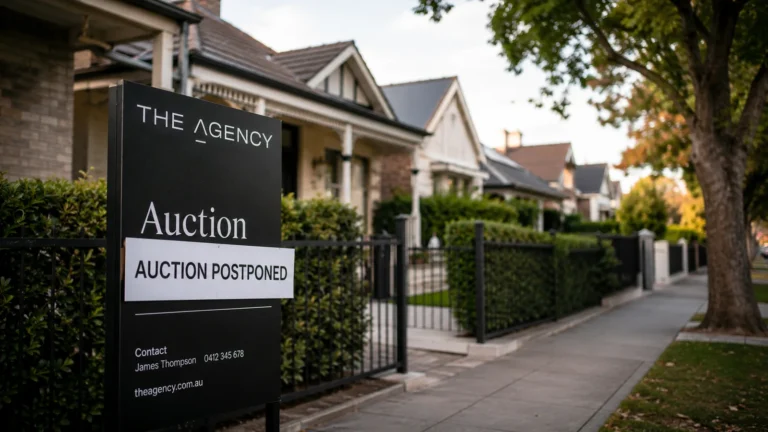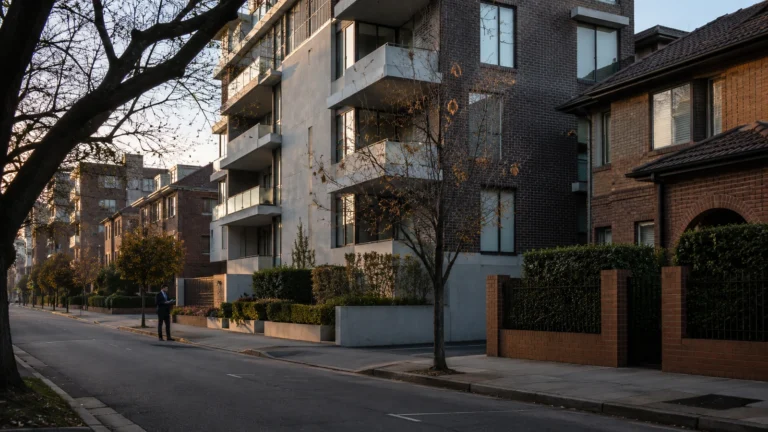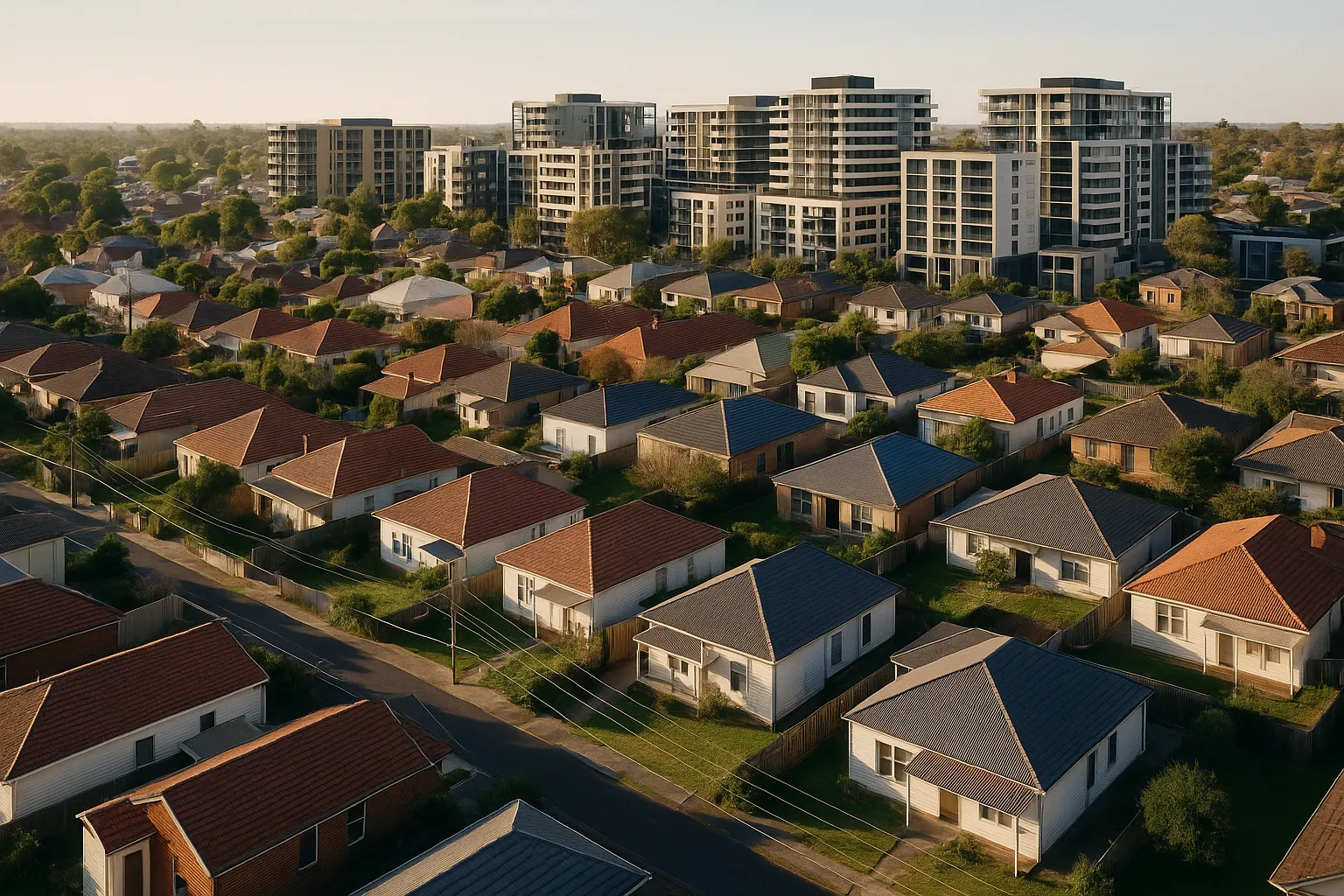
Melbourne’s house-unit price gap ballooned during the market’s recent slide, a $110,000 spread according to recent analysis. That’s wider than the historical norm, and it tells you more about what buyers want (and what supply can’t deliver) than any single suburb’s median does.
The usual story is simple: houses cost more than units because they come with land. But the size of that premium isn’t fixed, it expands and contracts with credit conditions, buyer demographics, and how much apartment stock hits the market at once. Right now, it’s stretched.
Why the gap widened when prices fell
Downturns don’t hit all property types equally. Units, especially in oversupplied precincts, move faster and drop harder when sentiment turns, because they’re the marginal stock. Buyers with deposit flexibility or upgrading capacity shift into houses when affordability improves, leaving units to compete on price alone.
At the same time, Melbourne’s apartment pipeline kept delivering during the correction. New completions, many pre-sold years earlier, entered a market where buyer appetite had already shifted. That pushed unit medians down faster than detached housing, even as house supply stayed tight in established suburbs where most buyers actually want to be.
The share house renters over 40 cohort isn’t typically in the market for new two-bedroom units in growth corridors, they’re after cheaper rentals or trying to exit the market entirely. So the demand profile doesn’t match what’s being built.
Who pays the premium and why
Families, upsizers, and anyone planning to hold for more than five years will pay the house premium if they can get the debt. The value proposition is land, scarcity in inner/middle rings, and school-zone access, none of which units deliver.
First-home buyers and investors split. If serviceability is tight, a unit is the entry point. But if the household can stretch another $50k-$80k in borrowing, the house becomes the logical choice, because the land component holds its value better through the next cycle, and renovation upside exists.
The catch: that stretched borrowing assumption only works if rates don’t climb and income holds. If either breaks, the house premium traps people in properties they can’t afford to hold or sell without loss.
What tightens the spread, and what doesn’t
Three scenarios compress the gap:
-
Rate cuts that improve unit serviceability faster than houses. If borrowing capacity rises but wages don’t, buyers bid up units because they’re the marginal purchase they can now afford. That’s the 2019 playbook.
-
A construction slowdown that chokes off new apartment supply. Fewer completions mean less downward pressure on unit medians. Builder insolvency rates are climbing, see how contract type decides who survives cost blowouts, but most of that pain is hitting detached housing, not high-rise apartment builders.
-
A demographic shift that puts more single-person and two-person households in the market. If downsizers, separating couples, and younger singles become the dominant cohort, unit demand structurally improves. That’s a decade story, not a twelve-month one.
What doesn’t close the gap: general price growth. If the whole market lifts, the house-unit spread can stay wide or widen further, because the same forces (land scarcity, family buyer preference) that created it in the first place are still there.
The catch
- The $110k figure is a citywide median gap, it’s much wider in the inner east (where house supply is locked down by zoning) and narrower in growth corridors (where both houses and units are new and land is cheaper).
- If you’re comparing a house in Reservoir to a unit in Docklands, you’re not comparing like with like, location drives more of the price than typology does.
- Unit buyers in oversupplied precincts face a double risk: capital growth lags and rental yields compress if vacancy climbs. The headline price discount can disappear in hold costs over five years.
Red flags if you’re deciding between the two
House red flags: borrowing at the top of your capacity to get into the asset class, ignoring renovation/maintenance costs, assuming the land premium guarantees capital growth (it doesn’t, location still matters more than type).
Unit red flags: buying in a precinct with 500+ apartments completing in the next 18 months, assuming strata costs stay flat (they don’t), ignoring rental vacancy rates (if it’s above 4%, your yield assumptions are too high).
If the interest-rate outlook turns and borrowing costs climb again, the house-unit spread could widen further, because units become the only option for marginal buyers, and competition for houses thins out. The gap is a credit story as much as it is a preference story.
Bottom line for buyers
The house-unit price gap tells you where the market’s centre of gravity is right now, and it’s with families, upsizers, and hold-forever buyers who want land. If you’re not in that cohort, paying the premium doesn’t make sense unless you’re confident the suburb’s supply constraints will keep tightening.
If you’re buying a unit, the discount is real, but only if you’re in a precinct where supply is moderating and tenant demand is stable. Otherwise, you’re catching a falling knife and calling it a bargain.
Start here: map the next 18 months of apartment completions in your target suburb (local council data or RP Data), compare that to current vacancy rates, and see whether the discount is a structural opportunity or a liquidity trap. Subscribe to the newsletter for the quarterly supply tracker.
General info, not financial advice.