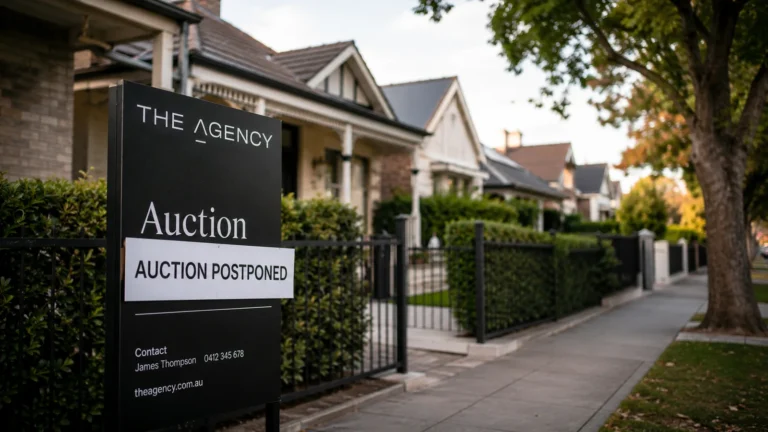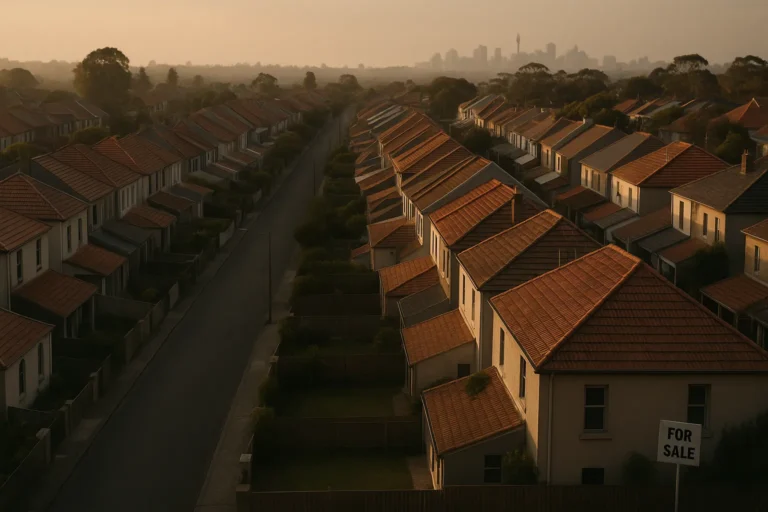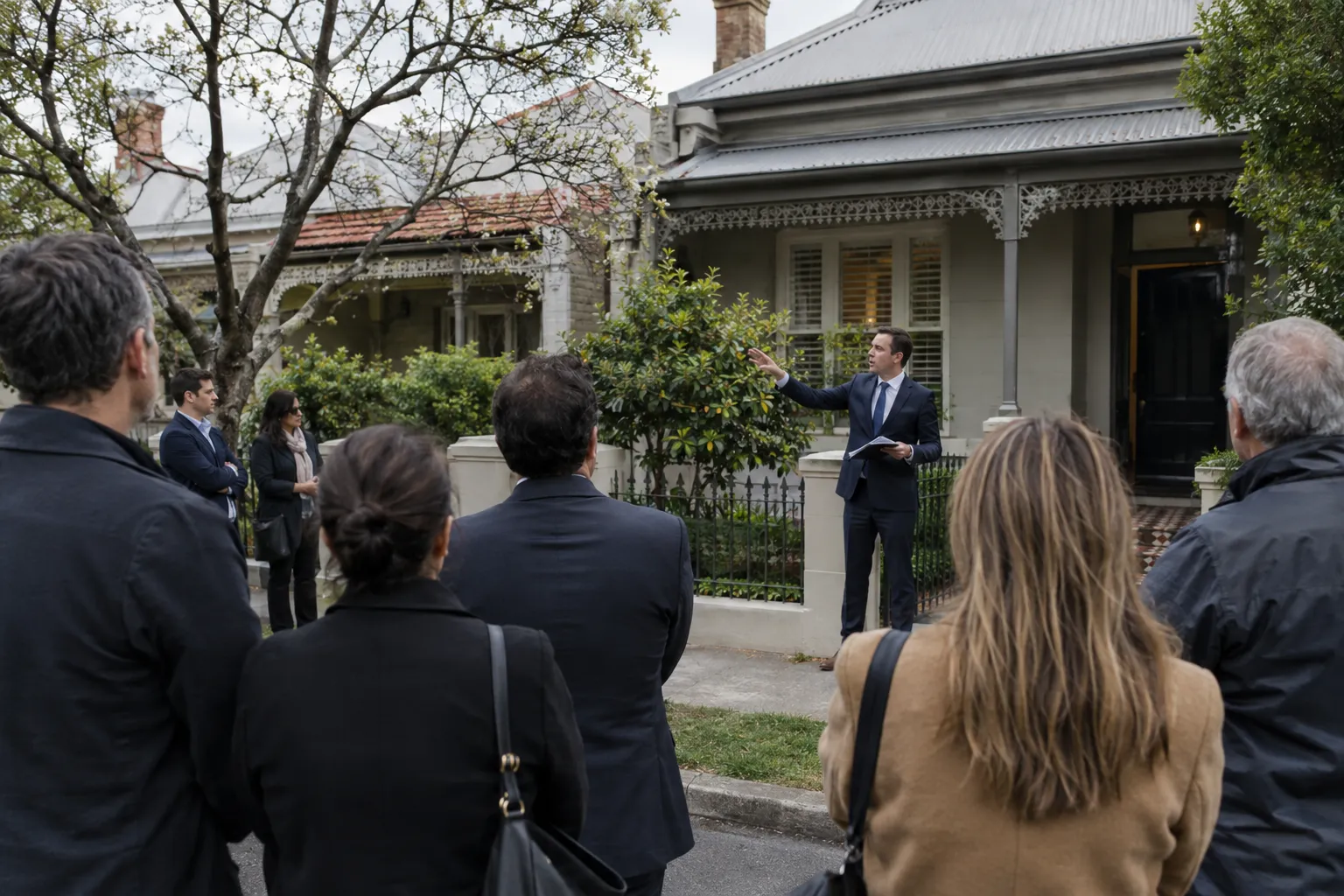
Sydney’s weekend auction market softened to its weakest clearance result in 10 weeks, while a Tamarama property accepted a $9 million discount from its original asking price. The two data points don’t sit in isolation, they’re opposite ends of the same market dynamic, and the timing matters.
Tuesday brings the RBA’s next rate decision. The question isn’t whether that’s driving caution, it is, but whether vendors across all price brackets are now losing the ability to hold firm on price, not just borrowers stretched on serviceability.
Clearance rates and what drives them lower
Auction clearance rates measure the proportion of properties that sold on auction day, as a percentage of those scheduled. A falling rate typically signals one or more of three things: fewer genuine buyers turning up, buyers bidding lower than vendor reserves, or vendors pulling listings mid-auction when bids don’t meet expectations.
Sydney’s clearance rate fell to its lowest point in 10 weeks. That’s not a crash, it’s a drift lower from already-soft spring conditions. The number itself tells you buyer activity is cooling, but the shape of that cooling matters more: is it demand freezing up, or vendors testing price ceilings that no longer exist?
The luxury discount at Tamarama suggests the latter. A $9 million haircut on a prestige property isn’t a distressed sale or a family emergency, it’s a vendor accepting that the market moved and their original asking price didn’t.
Who hesitates and why
Buyers waiting for clarity on rates is the surface-level read. Dig one layer deeper: the buyers who would normally act regardless of the RBA, upgraders with equity, downsizers cashing out, investors chasing yield in a rental-tight market, are also stepping back. That’s not rate sensitivity. That’s price resistance.
When a prestige vendor drops $9 million, it signals they’d rather transact now at a lower number than wait for conditions to improve. That’s the opposite of what prestige sellers did six months ago, when similar properties were held off-market or withdrawn if bids fell short.
The shift isn’t about affordability stress at the luxury end, it’s about liquidity. Buyers at every price tier are asking the same question: if I wait four weeks, does the vendor come back with a better number? The clearance rate data says yes, often enough to make waiting rational.
Where pricing power sits now
Vendor pricing power is the ability to hold a price guide and either transact at that level or withdraw without cost. Spring 2026 is eroding that power faster than spring 2025 did, and it’s showing up in two places: clearance rates drifting lower, and individual high-profile discounts that wouldn’t have happened 12 months ago.
The Tamarama example isn’t an outlier, it’s a bellwether. Prestige property in Sydney has shown resilience even as mid-tier stock softened, but that resilience was based on scarce supply and patient vendors. When a vendor at that price point moves quickly and discounts heavily, it tells you the cost of waiting, holding costs, opportunity cost, or simple uncertainty, outweighs the benefit of holding firm.
Mid-tier vendors are watching. If a $9 million discount is the price of certainty at the top end, what does that mean for a vendor trying to hold a $2.3 million guide in the inner west? Sydney’s clearance rate drop has already forced price guide reductions in suburbs like Enmore, and the spring campaign is only halfway through.
The catch
- A falling clearance rate doesn’t automatically mean falling prices, it can mean vendors pulling stock before it fails to sell, which reduces volume but doesn’t show up in median price data immediately.
- Luxury discounts don’t predict mid-tier discounts on a one-to-one basis, prestige stock moves for liquidity and tax reasons that don’t apply to most homeowners.
- The RBA’s Tuesday decision could shift sentiment in either direction, a hold extends the current drift, a cut might bring buyers forward, a hike (unlikely but possible) freezes both sides harder.
What this looks like over the next month
Base case: clearance rates stay soft through October, vendors who need to transact cut guides by 5-10 per cent to secure buyers, stock that doesn’t need to sell gets pulled and re-listed in 2027. Median prices drift lower in volume suburbs, hold flat in tightly-supplied prestige pockets.
Downside: the RBA holds or surprises with a hike, spring momentum stalls entirely, vendors capitulate on price rather than carry holding costs into summer. Clearance rates fall further, discounting spreads from prestige into mid-tier stock, and buyers who were waiting get confirmation their strategy worked.
Upside: the RBA cuts 25 basis points, buyer sentiment flips quickly, spring campaign finishes stronger than it started. Clearance rates recover to mid-60s, vendors who held firm get rewarded, and the current softness looks like a brief pause rather than a turning point.
The risk no one’s pricing in: vendors and buyers both wait, volume collapses, and clearance rates stay low not because of price disagreement but because nothing’s being tested. That scenario doesn’t resolve pricing, it just delays the question.
What to watch in the next four weeks
Clearance rates themselves, but also the gap between scheduled auctions and reported results. If that gap widens, it means more vendors are pulling stock mid-campaign rather than testing the market, a sign that pricing power has shifted materially.
The number of high-value transactions that close, not just list. Melbourne’s clearance rate uptick didn’t translate to price support because volume collapsed, and Sydney could follow the same pattern if vendors withdraw rather than discount.
RBA commentary on Tuesday. If the language softens toward a November cut, buyer sentiment could recover quickly. If the RBA signals a prolonged hold, the current drift continues and vendors face a choice: accept the market’s price, or carry the property into 2027.
Practical next step
If you’re buying: don’t assume every vendor will discount like Tamarama, but do assume pricing power has shifted. Make offers below guide where the property’s been listed for three-plus weeks, and use the agent behaviour shifts documented this spring as leverage in negotiations.
If you’re selling: test the market now, don’t wait for summer. Spring campaigns that start strong can finish weak if rates stay elevated, and the cost of a failed auction is higher in a softening market than a rising one. Price for the market you have, not the one you want.
If you’re holding: watch clearance rates and transaction volume, not just median prices. A market can soften substantially before it shows up in headline price data, and by the time medians move, the trade-offs have already shifted.
Subscribe to the newsletter for weekly clearance rate analysis and vendor strategy updates through the rest of spring.
General info, not financial advice.