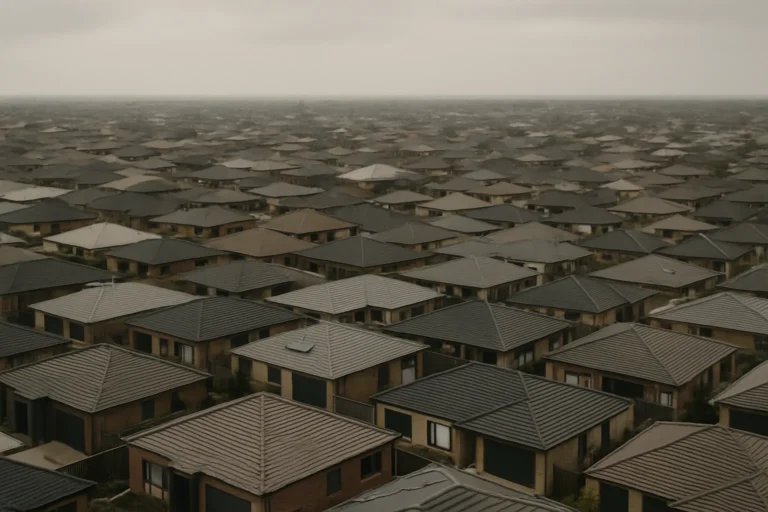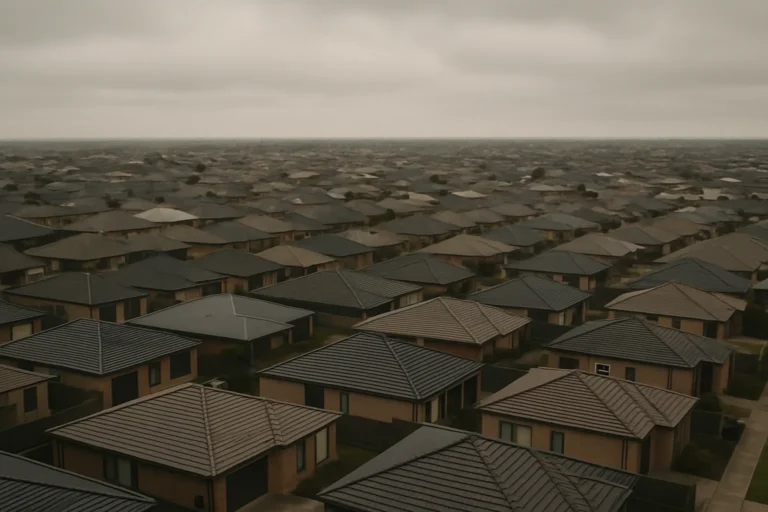
A one per cent drop in house prices typically pulls around 0.03 to 0.05 per cent out of household consumption within the same quarter, according to long-run RBA estimates. That ratio sounds small until you scale it: a ten per cent house price correction translates to a 0.3 to 0.5 per cent contraction in consumer spending, and the discretionary categories, home improvement, furniture, non-essential retail, take the biggest hit.
The Bunnings proxy is blunt but useful. When perceived housing wealth shrinks, households defer the kitchen reno, skip the deck extension, hold off on the new couch. The reverse wealth effect is real, it shows up in retail sales data within months, and it compounds: less spending means weaker GDP growth, which feeds back into employment and borrowing confidence.
How the wealth effect multiplies
Housing represents around 60 per cent of household wealth in Australia. When property values fall, the balance sheet effect is immediate even if no transaction occurs. Owners feel poorer, equity buffers narrow, and discretionary spending gets pulled back as a precaution.
The consumption response is not uniform. Leveraged households with thin equity and variable-rate mortgages cut fastest. Outright owners or those with large buffers adjust more slowly, but they still adjust. The aggregate hit to spending becomes visible in categories like:
- Home improvement and building materials
- Furniture and homewares
- Appliances and electronics
- Dining out and entertainment
- Elective renovations and extensions
These are the first budget lines households trim when they perceive their net worth shrinking.
The discretionary spending lag
The consumption response to house price movements lags by one to two quarters on average. Prices start falling, owners notice equity erosion, and spending adjusts over the following six months. That lag matters for policy timing: by the time household spending data confirms the wealth effect, the price correction is already well underway.
Renovation activity is the most sensitive proxy. PropTrack and industry surveys show that home improvement spending tracks closely with year-on-year house price growth. A sustained ten per cent price decline historically coincides with a fifteen to twenty per cent contraction in discretionary renovation budgets, the extension gets deferred, the landscaping waits, the bathroom reno becomes a quick cosmetic fix instead.
The catch
The wealth effect works both ways, but it is asymmetric. Rising house prices lift consumption slowly and cautiously, households take time to believe the gain is permanent. Falling prices cut spending faster, because the loss feels immediate and the downside risk feels open-ended.
What it means beyond the property value
The paper loss on a house price decline is only the starting point. The real economic cost is the consumption contraction that follows, which hits GDP, employment in discretionary sectors, and business investment. A ten per cent national house price correction does not just reduce household wealth by ten per cent, it also shaves 0.3 to 0.5 per cent off consumer spending, which flows through to retailers, tradespeople, and the broader economy.
For households, the practical impact is:
- Tighter discretionary budgets even if income is stable
- Deferred non-essential spending and home improvements
- Reduced willingness to take on new debt or upgrade
- Lower perceived financial security, even without a cashflow shock
For the economy, the impact is:
- Weaker retail sales and services spending
- Slower GDP growth and employment in consumer-facing sectors
- Reduced demand for building materials, furniture, appliances
- Amplified downside risk if house prices fall sharply or persistently
Scenarios and thresholds
The wealth effect threshold is not fixed. It depends on how far prices fall, how fast, and from what starting equity position.
Base case: A five per cent national house price decline over twelve months would trim household consumption by around 0.15 to 0.25 per cent, concentrated in discretionary categories. Renovation spending contracts ten to fifteen per cent. GDP growth slows modestly but does not contract.
Downside case: A fifteen per cent national decline over eighteen months, matching the 2017-2019 Sydney/Melbourne correction, would pull 0.45 to 0.75 per cent out of consumer spending. Renovation activity contracts twenty-five to thirty per cent. Employment in construction, retail, and hospitality weakens. The RBA would likely cut rates aggressively to offset the demand shock.
What could amplify it: A sharp rise in unemployment, a credit crunch that limits refinancing, or a large cohort of forced sales would multiply the wealth effect. Conversely, rising wages or rate cuts could partially offset the consumption drag.
What to watch next
The wealth effect plays out over quarters, not weeks. The sequence to track is: house price momentum → perceived equity change → discretionary spending adjustment → GDP and employment data.
Key indicators:
- CoreLogic and PropTrack monthly price indices
- ABS retail sales, especially household goods and building materials
- Home improvement retailer earnings and guidance
- Consumer confidence surveys (Westpac-MI, ANZ-Roy Morgan)
- RBA household spending and savings ratio updates
If house prices fall ten per cent or more over the next year, expect discretionary spending to contract noticeably by mid-2027. The renovation budget gets cut first, but the broader consumption slowdown follows.
Start here
If you are carrying a mortgage with thin equity, build a cashflow buffer now before the wealth effect tightens discretionary budgets further. If you are planning a renovation or upgrade, pressure-test the decision against a scenario where your property value falls another five to ten per cent and borrowing conditions tighten.
Subscribe to the newsletter for the weekly signal on housing, rates, and what moves next.
General info, not financial advice.