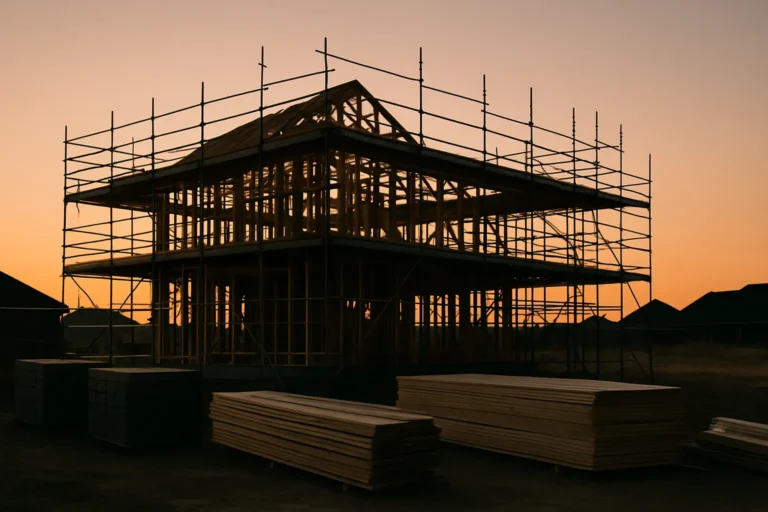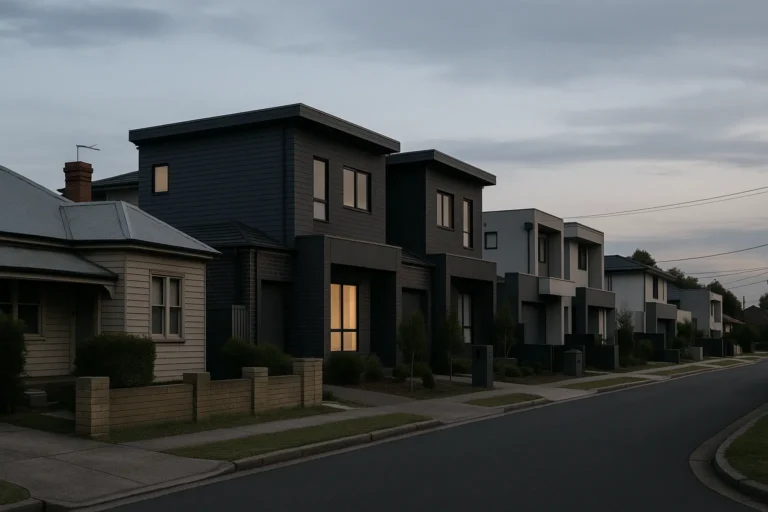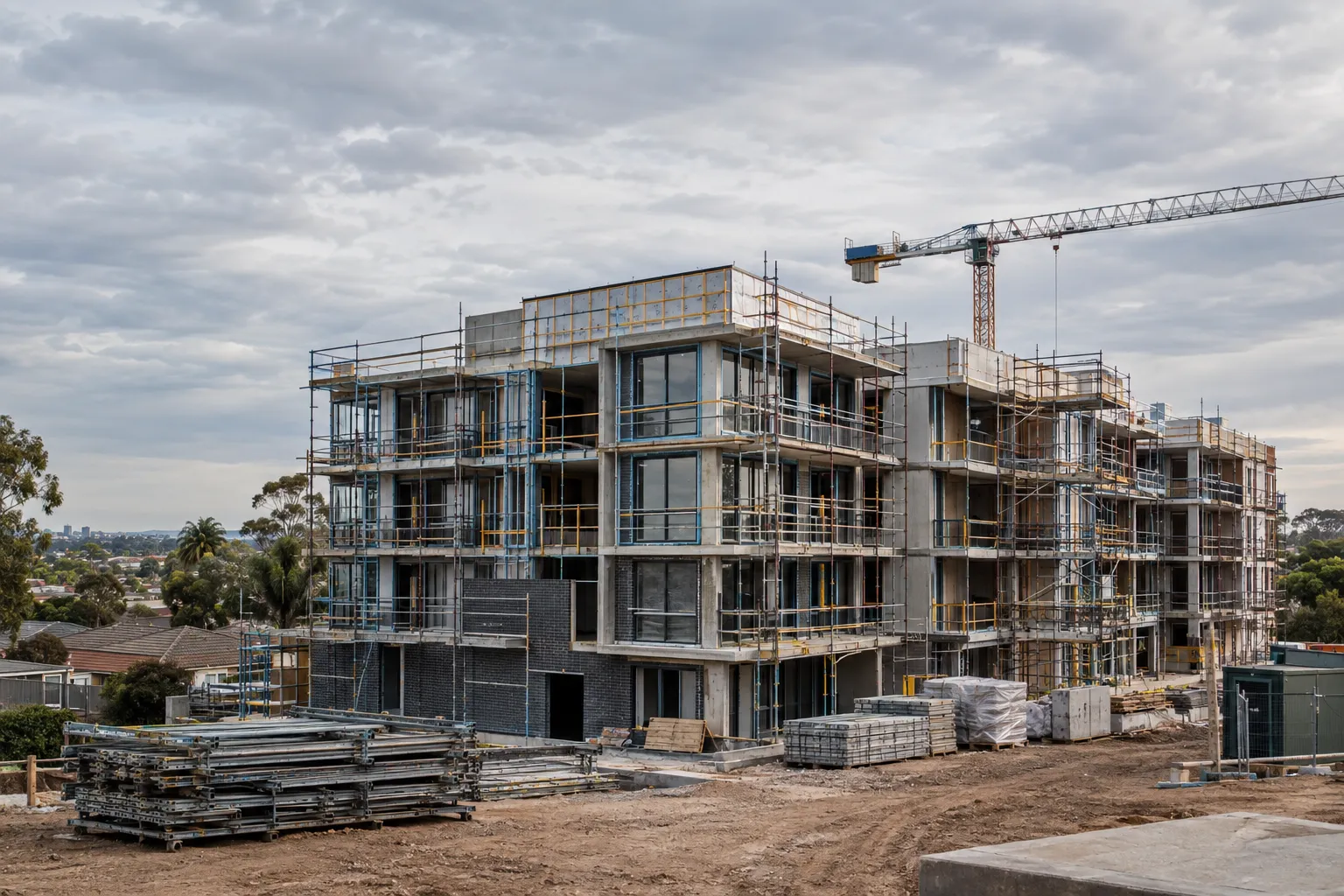
The Reserve Bank lifted the cash rate to 4.6 per cent in late September 2026, the highest level since 2011. For property investors watching supply pipelines, the immediate question is which project types absorb the hit first, and how many disappear before breaking ground.
Independent modelling commissioned by an industry body estimates the combined impact of recent budget settings and the rate environment will remove 10,700 new homes from the next four years of supply, shed 4,700 construction jobs, and lift rents by up to ten dollars per week. That figure predates this latest rate move, so the actual drag is likely steeper.
Which projects lose viability first
Apartment developments carry the longest construction timelines and the highest interest-during-construction bills. A twelve-month build funded at 4.6 per cent plus margin means developers pay roughly 6 to 7 per cent on drawn-down debt for the full year before a single unit settles. When pre-sale thresholds slip, buyers waiting to see if rates peak, projects that pencilled at 4.1 per cent no longer clear the hurdle rate.
Detached housing on subdivided land moves faster (six to nine months from slab to handover) so the interest clip is smaller. Build-to-rent sits somewhere between: longer hold periods than build-to-sell, but rental income starts before the last unit completes, partially offsetting the carry cost. The risk there is yield compression if rents stall while debt service rises.
The compounding cost problem
Interest is one line in the pro forma. Construction materials inflation has run ahead of finished-dwelling price growth in most precincts outside the top quartile, and labour shortages mean wages are rising faster than productivity. The gap between cost to build and likely sale price (or capitalised rental yield for BTR) has narrowed to the point where margin is tight even at 4.1 per cent, another 50 basis points pushes some projects into the red before they pour footings.
Developers respond in three ways: shelve the project, proceed at smaller scale (fewer storeys, fewer units), or push ahead and accept a thinner return in the hope rates fall before settlement. The first two reduce near-term supply. The third increases completion risk if presales don’t hold or the developer’s balance sheet weakens mid-build.
The catch
- Interest rates now highest in 15 years, compounding material and labour cost pressure
- Apartment projects most exposed due to long construction periods and high interest-during-construction bills
- Modelling shows 10,700 fewer homes over four years before this latest rate rise
- Rent forecast to lift $10/week as supply tightens further
- Build-to-rent partially insulated by rental income during construction, but yield compression remains a risk
Trade-offs no policy lever solves quickly
The RBA raised rates because inflation remains elevated, and the economy lacks the spare capacity to grow without adding price pressure. Cutting rates prematurely risks re-igniting inflation; holding them here or lifting further chokes off the construction activity needed to ease the housing shortage that itself feeds rental inflation. There is no neat path through.
Expanding the construction workforce would add productive capacity and relieve wage pressure, but training pipelines take years and migration settings are tightening. Productivity improvements, prefab, modular build, planning reform that shortens approval timelines, reduce per-dwelling cost and time, but adoption is patchy and regulatory change is slow.
What this means for buyers, renters, investors
Fewer starts over the next 12 to 18 months means tighter supply when those projects would have settled (late 2027 into 2028). Apartment construction costs are already forcing a luxury bias that blocks mid-market supply, and this rate move reinforces that skew, only high-margin, top-end projects clear the viability bar.
For renters, reduced supply and modest rental income growth for landlords (who also face higher mortgage costs) means upward rent pressure persists. For investors considering new stock, fewer competing projects may support prices in the medium term, but settlement risk rises if the developer’s funding gets pulled mid-construction.
Construction labour shortages are running at 141,000 workers even as unemployment ticks up, and construction inflation is splitting the sector as rate-cut expectations stall, both dynamics that tighten the squeeze on project margins further.
Risks over the next six months
If the RBA signals another move up, more marginal projects disappear. If inflation softens faster than expected and cuts begin by mid-2027, some shelved projects may restart, but the lag between decision and delivery means supply lost now doesn’t return for two years minimum.
The other variable is presale appetite. If buyers wait for rate certainty, developers can’t meet bank presale thresholds (typically 70 per cent for apartments), and projects stall regardless of headline viability. Business lending demand has jumped 11 per cent, but it’s driven by cashflow needs rather than growth investment, a pattern that suggests developers are managing liquidity, not expanding pipelines.
Next move for anyone tracking supply
Watch council DA approvals and construction commencement data over the next two quarters. A drop in starts (not just approvals, which can sit idle) confirms projects are being shelved. Check whether your target suburb has a heavy apartment pipeline, those projects face the highest abandonment risk. If you’re an investor considering off-the-plan, verify the developer’s track record and funding arrangements; settlement risk is higher in a rising-rate environment where margins are thin.
Subscribe to the Australian Property Review newsletter for weekly data on construction starts, rate movements, and supply-pipeline updates.
General info, not financial advice.